Category: Survey

  • 150+ Frequently Asked Questions About Family with Answers

    150+ Frequently Asked Questions About Family with Answers

    Family is one of the most important aspects of life. It provides us with love, support, and a sense of belonging. But family can also be complicated, challenging, and sometimes confusing. That’s why there are many frequently asked questions about family-related issues, such as relationships, parenting, health, finances, and more.

    If you are looking for answers to some of the most common and frequently asked questions about family, this article compiles a list of 150+ questions and answers that cover a wide range of topics; from family history and traditions to family conflicts and problems.

    Whether you want to learn more about your own family, improve your family communication, or deal with family stress, you will find helpful and practical advice here.

    So, without further ado, let’s dive into the 150+ frequently asked questions about family with answers. We hope you enjoy reading this article and find the information you need.

    What Kind of Questions Do We Ask Our Parents about our Family History?

    Children must ask their parents some important questions about their family history in general.

    These questions include:

    1. Where do our ancestors originate from?
    2. What is our ethnic background?
    3. What customs or traditions have been passed down?
    4. Are there any unique family rituals?
    5. How has our family been impacted by historical events?
    6. Were there any significant family stories during specific eras?
    7. What jobs or professions have been common in our family?
    8. Have there been any notable achievements or challenges in your career?
    9. Where have our family members lived over the generations?
    10. Any special stories about family homes or ancestral properties?
    11. How did our parents and grandparents meet?
    12. Are there any memorable love stories within the family?
    13. How have family values and priorities evolved over generations?
    14. What changes in lifestyle or mindset have been observed?
    15. Are there any hereditary health conditions in the family?
    16. What health challenges have family members faced in the past?
    17. What are some memorable family celebrations or milestones?
    18. How do we typically commemorate important events?
    19. Are there any long-lost family connections to explore?
    20. Have there been efforts to reconnect with distant relatives?

    See also: 30 Frequently Asked Interview Questions For A Project Manager In Nigeria

    Discussion Questions about Family

    Below are 10 discussion questions about family with their answers.

    Question 1: What role does communication play in our family? 

    Answer: Open communication fosters understanding and strengthens family bonds.

    Question 2: How do we handle conflicts within the family? 

    Answer: We strive for resolution through calm discussions, ensuring everyone feels heard.

    Question 3: What family values are most important to us? 

    Answer: Respect, honesty, and support are core values that guide our family.

    Question 4: How do we balance individuality and togetherness?

    Answer: We encourage personal growth while cherishing shared experiences to maintain a healthy balance.

    Question 5: What traditions do we hold dear in our family?

    Answer: Celebrating birthdays, and holidays, and creating lasting traditions are integral to our family culture.

    Question 6: How do we support each other’s goals and aspirations?

    Answer: We actively encourage and assist one another in pursuing personal and professional dreams.

    Question 7: How do we navigate technology use within the family?

    Answer: We establish boundaries and maintain open communication about screen time and online activities.

    Question 8: What role does humor play in our family dynamics?

    Answer: Humor is a key element, lightening moments of tension and fostering a positive atmosphere.

    Question 9: How do we handle decision-making within the family?

    Answer: We involve everyone in discussions, seeking consensus and considering each member’s perspective.

    Question 10: How do we show appreciation for each other in everyday life?

    Answer: Expressing gratitude and acknowledging each other’s efforts contribute to a supportive and loving family environment.

    Questions About Family for Beginners

    Below are 10 questions about family for beginners with their answers.

    Question 1: What is a family?

    Answer: A group of people related by blood, marriage, or adoption.

    Question 2: Who are the primary members of a nuclear family?

    Answer: Parents and their children.

    Question 3: What is the role of grandparents in a family?

    Answer: The older generation provides wisdom, support, and connection.

    Question 4: How do families celebrate holidays together?

    Answer: Through shared traditions, meals, and festivities.

    Question 5: What does “family dynamics” refer to?

    Answer: Interactions, relationships, and patterns within a family.

    Question 6: How can families support each other during tough times?

    Answer: Through communication, empathy, and shared responsibilities.

    Question 7: What is the purpose of family rules?

    Answer: To establish boundaries and promote a harmonious environment.

    Question 8: What are siblings?

    Answer: Brothers and sisters within the same family.

    Question 9: How do families spend quality time together?

    Answer: Engaging in activities like games, outings, or meals.

    Question 10: Why is communication important in a family?

    Answer: It fosters understanding, resolves conflicts, and strengthens bonds.

    See also: 30 Frequently Asked Bank Interview Questions In Nigeria

    Research Questions About Family Problems

    Below are 10 research questions about family problems with their sample answers.

    Question 1: How does communication breakdown contribute to family conflicts?

    Answer: Poor communication can lead to misunderstandings, resentment, and unresolved issues.

    Question 2: What impact does financial stress have on family relationships?

    Answer: Financial strain often contributes to tension and can strain familial bonds.

    Question 3: How do cultural differences influence family dynamics and potential conflicts?

    Answer: Cultural disparities may lead to misunderstandings and clashes in values and expectations.

    Question 4: What role does substance abuse play in family problems?

    Answer: Substance abuse can strain relationships, erode trust, and contribute to dysfunctional family dynamics.

    Question 5: How do mental health issues affect family interactions and stability?

    Answer: Mental health challenges can strain relationships and require support and understanding from family members.

    Question 6: What impact does divorce or separation have on children within a family?

    Answer: Divorce can lead to emotional challenges for children, impacting their well-being and future relationships.

    Question 7: How does domestic violence affect the overall health of a family unit?

    Answer: Domestic violence can cause severe emotional and physical trauma, leading to a breakdown in family cohesion.

    Question 8: What role does parenting style play in shaping family dynamics?

    Answer: Different parenting styles can contribute to conflicts or harmony within the family.

    Question 9: How do unresolved family conflicts impact the mental health of individual family members?

    Answer: Unresolved conflicts can lead to stress, anxiety, and other mental health issues for family members.

    Question 10: How do external factors, such as work-related stress, impact family relationships?

    Answer: External stressors can spill over into family life, affecting communication and overall family well-being.

    Questions About Family Values

    Below are 10 questions about family values with their sample answers.

    Question 1: What core values do you believe define your family?

    Answer: [Open-ended response]

    Question 2: How do family values influence decision-making within your household?

    Answer: They serve as guiding principles in our choices and actions.

    Question 3: In your family, what is considered the most important value to uphold?

    Answer: Respect for one another’s perspectives and differences.

    Question: 4 How are family values communicated and reinforced among members?

    Answer: Through open discussions, shared experiences, and leading by example.

    Question 5: Have there been instances where family values were challenged, and how were they addressed?

    Answer: Yes, through open communication, compromise, and finding common ground.

    Question 6: How do family values contribute to the overall sense of unity and cohesion?

    Answer: They create a shared foundation that fosters a strong sense of belonging.

    Question 7: Are there specific rituals or traditions in your family that embody its values?

    Answer: Yes, our annual family gatherings and celebrations reflect our values of togetherness and support.

    Question 8: How do family values adapt or evolve?

    Answer: They may evolve as circumstances change, but the core values remain a constant guide.

    Question 9: In what ways do family members contribute to shaping and upholding shared values?

    Answer: By actively participating in discussions, making collective decisions, and embodying those values in their actions.

    Question 10: How do your family’s values align with broader societal values?

    Answer: While influenced by societal norms, our family values are unique and reflect our collective identity.

    See also: 250+ Best Memorial Day Trivia Questions and Answers (Easiest to Hardest)

    Questions About Family Trusts

    Below are 10 frequently asked questions about family trusts with their answers.

    Question 1: What is a family trust, and how does it differ from an individual trust?

    Answer: A family trust is a legal arrangement that holds and manages assets for the benefit of family members, providing flexibility and tax advantages.

    Question 2: How can a family trust protect and preserve wealth for future generations?

    Answer: By allowing for the controlled distribution of assets and minimizing estate taxes.

    Question 3: What role do trustees play in managing a family trust?

    Answer: Trustees are responsible for overseeing trust assets and ensuring they are distributed according to the terms of the trust.

    Question 4: How does a family trust facilitate the passing of assets to heirs?

    Answer: Through controlled and organized distribution, avoiding probate and streamlining the transfer of assets.

    Question 5: Can a family trust be customized to address specific family needs and goals?

    Answer: Yes, family trusts are flexible and can be tailored to meet unique family circumstances and objectives.

    Question 6: What types of assets can be included in a family trust?

    Answer: Real estate, investments, businesses, and other valuable assets can be held within a family trust.

    Question 7: How does a family trust provide privacy for the family’s financial affairs?

    Answer: Unlike a will, a family trust is private, preventing public disclosure of asset details.

    Question 8: What steps are involved in setting up a family trust?

    Answer: Consultation with legal and financial professionals, drafting a trust document, and transferring assets into the trust.

    Question 9: Can a family trust be altered or revoked after its creation?

    Answer: Yes, the terms of a family trust can typically be amended or revoked by the grantor.

    Questions About Family Planning Methods

    Below are 10 frequently asked questions about family planning methods with their answers.

    Question 1: What is a common hormonal method of family planning for women?

    Answer: Birth control pills.

    Question 2: Name a reversible, long-acting contraceptive method for women.

    Answer: Intrauterine Device (IUD).

    Question 3: What surgical procedure is available for permanent contraception in men?

    Answer: Vasectomy.

    Question 4: What is a barrier method of contraception that is often used by both men and women?

    Answer: Condoms.

    Question 5: Which fertility awareness method involves tracking basal body temperature to identify fertile days?

    Answer: Natural Family Planning (NFP).

    Question 6: What hormonal method is injected every three months to prevent pregnancy?

    Answer: Depo-Provera (birth control shot).

    Question 7: Name a non-hormonal, barrier method for women that is inserted before intercourse.

    Answer: Diaphragm.

    Question 8: What emergency contraceptive pill can be taken within 72 hours after unprotected sex?

    Answer: Plan B (morning-after pill).

    Question 9: Which family planning method involves surgical blocking of the fallopian tubes in women?

    Answer: Tubal ligation.

    Question 10: What method involves periodic abstinence from sexual intercourse to prevent pregnancy?

    Answer: Calendar method.

    See also: 250+ Best Math Trivia Questions and Answers (Easiest to Hardest)

    Family Feud Questions About Family

    Below are 10 family feud questions with their answers.

    Question 1: Name a common family pet.

    Answer: Dog.

    Question 2: What is a popular family vacation destination?

    Answer: Disney World.

    Question 3: Name a traditional family game.

    Answer: Monopoly.

    Question 4: What is a common family dinner dish?

    Answer: Spaghetti.

    Question 5: Name a family-friendly movie.

    Answer: The Lion King.

    Question 6: What is a typical family weekend activity?

    Answer: Movie night.

    Question 7: Name a family member often responsible for discipline.

    Answer: Parent/Mom/Dad.

    Question 8: What is a common family holiday tradition?

    Answer: Decorating the Christmas tree.

    Question 9: Name a family-friendly board game.

    Answer: Scrabble.

    Question 10: What is a staple item in a family refrigerator?

    Answer: Milk.

    See also: 20 Frequently Asked Optiva Capital Partners Interview Questions

    Survey Questions About Family Relationships

    Below are 10 survey questions about family relationships.

    1. On a scale of 1 to 10, how would you rate your overall satisfaction with your family relationships?
    2. How often do you engage in open and honest communication with your family members?
    3. In times of conflict, how likely are family members to seek resolution through calm discussion?
    4. To what extent do family traditions contribute to a sense of unity and belonging?
    5. How supported do you feel in pursuing personal goals or aspirations within your family?
    6. How satisfied are you with balancing individual autonomy and family togetherness in your household?
    7. How often do you express appreciation for your family members in your daily interactions?
    8. In your opinion, how does technology impact the quality of family relationships?
    9. On a scale of 1 to 10, how well do family members handle decision-making collaboratively?
    10. To what extent do you believe family relationships contribute to your overall well-being and happiness?

    See also: 250+ Best Holiday Trivia Questions and Answers (Easiest to Hardest)

    Open-ended Questions About Family

    Below are 10 open-ended questions about family.

    1. How would you describe the atmosphere in your family home?
    2. What values are most important to your family and why?
    3. How do you handle conflicts or disagreements within your family?
    4. What unique traditions or rituals does your family practice?
    5. In your opinion, what makes a family strong and connected?
    6. How do you support each other’s individual goals and aspirations?
    7. Can you share a memorable family story or moment that defines your bond?
    8. How has technology impacted communication and interaction in your family?
    9. What role do extended family members play in your family life?
    10. How do you navigate changes and transitions as a family unit?

    Frequently Asked Interview Questions About Family Members

    Below are 10 frequently asked interview questions about family members with their sample answers.

    Question 1: Can you share a memorable family tradition or ritual?

    Answer: Our annual family reunion where we gather for games, food, and shared memories.

    Question 2: How has a family member influenced your values or beliefs?

    Answer: My grandfather’s resilience has shaped my belief in perseverance and hard work.

    Question 3: Describe a challenging moment your family faced and how it was resolved.

    Answer: Financial struggles were overcome through collective budgeting and support.

    Question 4: What role does communication play in your family dynamics?

    Answer: Open communication is key; we regularly check in on each other’s well-being.

    Question 5: Can you discuss a family member’s significant achievement or milestone?

    Answer: My sister’s graduation marked a proud moment, showcasing determination and success.

    Question 6: How do you handle disagreements or conflicts within the family?

    Answer: We engage in open discussions, seeking compromise and understanding.

    Question 7: Share a humorous or lighthearted family story or memory.

    Answer: Our chaotic but fun camping trip where we learned to embrace unexpected adventures.

    Question 8: Discuss a family member’s unique talent or passion.

    Answer: My cousin’s musical talent adds a unique and joyful dimension to family gatherings.

    Question 9: How has technology impacted your family interactions and relationships?

    Answer: Virtual family chats have strengthened connections despite physical distances.

    Question 10: Describe a family trip or outing that holds special significance.

    Answer: Our road trip to the coast created lasting memories, fostering a sense of togetherness.

    See also: 250+ Best Game of Thrones Trivia Questions and Answers (Easiest to Hardest)

    Frequently Asked Interview Questions About Family Background

    Below are 10 frequently asked interview questions about family background with their sample answers.

    Question 1: What is your family’s cultural background or heritage?

    Answer: We have a rich mix of cultural influences, with roots in both Irish and Chinese traditions.

    Question 2: Can you share any unique family customs or rituals?

    Answer: Sunday dinners where we cook and share a meal are cherished family traditions.

    Question 3: How has your family been shaped by historical events or experiences?

    Answer: Our family’s resilience during challenging times, like the Great Depression, has influenced our values.

    Question 4: Are there any notable family achievements or milestones?

    Answer: Celebrating my parents’ 50th wedding anniversary was a significant and joyous family milestone.

    Question 5: What professions or occupations have been common in your family?

    Answer: Many family members have pursued careers in education, emphasizing the value of knowledge.

    Question 6: Have there been any long-standing family connections or relationships?

    Answer: Our family has maintained close ties with relatives abroad, fostering a global sense of kinship.

    Question 7: How has your family’s living situation or location changed over the years?

    Answer: From rural beginnings, our family has transitioned to urban living, adapting to new environments.

    Question 8: Are there any family stories or legends passed down through generations?

    Answer: The tale of a courageous ancestor who overcame adversity has been an inspiring narrative.

    Question 9: How does your family celebrate cultural or religious holidays?

    Answer: Our diverse celebrations include both traditional practices and modern adaptations.

    Question 10: Have there been efforts to trace or connect with distant relatives?

    Answer: Yes, we’ve engaged in genealogy research, discovering and reconnecting with extended family members.

    See also: 250+ Best St Patrick’s Day Trivia Questions and Answers (Easiest to Hardest)

    Trivia Questions About Family

    Below are 10 trivia questions about the family with their answers.

    Question 1: What is the term for a family tracing its lineage through both maternal and paternal ancestors?

    Answer: Bilateral descent.

    Question 2: Which family member is considered a collaterally related kin?

    Answer: Cousins.

    Question 3: What is the common term for the study of family history and descent?

    Answer: Genealogy.

    Question 4: In genetics, what is the name of the family of genes inherited together from one parent?

    Answer: Haplotype.

    Question 5: What term describes a family unit consisting of parents and their children living together?

    Answer: Nuclear family.

    Question 6: Which U.S. holiday is dedicated to honoring fathers and fatherhood?

    Answer: Father’s Day.

    Question 7: What is the legal term for the process of terminating parental rights to a child?

    Answer: Termination of parental rights (TPR).

    Question 8: In psychology, what is the term for the emotional bond between infants and their primary caregivers?

    Answer: Attachment.

    Question 9: What type of family consists of three or more generations living together?

    Answer: Extended family.

    Question 10: Which family structure involves a single parent raising their child or children?

    Answer: Single-parent family.

    See also: 250+ Best Greek Mythology Vacation Trivia Questions and Answers (Easiest to Hardest)

    Trivia Questions About Family Members

    Below are 10 trivia questions about family members with their answers.

    Question 1: What term describes relatives from both maternal and paternal sides?

    Answer: Extended family.

    Question 2: In genetics, what do we inherit from one parent, consisting of a group of genes?

    Answer: Haplotype.

    Question 3: Which U.S. holiday honors fathers and fatherhood?

    Answer: Father’s Day.

    Question 4: In psychology, what bond forms between infants and their primary caregivers?

    Answer: Attachment.

    Question 5: What is the legal process of terminating parental rights?

    Answer: Termination of parental rights (TPR).

    Question 6: Which family structure involves a single parent raising their child or children?

    Answer: Single-parent family.

    Question 7: What is the term for a family tracing lineage through both maternal and paternal lines?

    Answer: Bilateral descent.

    Question 8: What is the study of family history and descent called?

    Answer: Genealogy.

    Question 9: What type of family unit consists of parents and their children living together?

    Answer: Nuclear family.

    Question 10: How many generations typically make up an extended family?

    Answer: Three or more.

    See also: 250+ Best Halloween Trivia Questions for Kids with Answers (Easiest to Hardest)

    Bible Trivia Questions About Family

    Below are 10 Bible trivia questions about family with their answers.

    Question 1: Who were the first family members mentioned in the Bible?

    Answer: Adam and Eve.

    Question 2: Which biblical figure had 12 sons, who became the ancestors of the Twelve Tribes of Israel?

    Answer: Jacob (Israel).

    Question 3: What famous father-son duo survived the Great Flood on the ark?

    Answer: Noah and his son Shem.

    Question 4: Who was the father of the prodigal son in Jesus’ parable?

    Answer: The father’s name is not mentioned in the parable.

    Question 5: In the Bible, which couple faced challenges in conceiving before the birth of their son Isaac?

    Answer: Abraham and Sarah.

    Question 6: Which Old Testament figure is known for his wisdom and authored the Book of Proverbs?

    Answer: Solomon, the son of David.

    Question 7: Whose wife turned into a pillar of salt when she looked back at the city of Sodom?

    Answer: Lot’s wife.

    Question 8: In the New Testament, which family welcomed Jesus as a baby, presenting him with gifts?

    Answer: The Magi (Wise Men).

    Question 9: What siblings were known for their musical talents and worship in the Bible?

    Answer: Miriam, Aaron, and Moses.

    Question 10: Who was the mother of John the Baptist in the New Testament?

    Answer: Elizabeth, cousin of Mary.

    FAQs

    How does family influence your life?

    The social support we receive from our loved ones can contribute to feelings of self-worth. Additionally, fostering an environment of encouragement, optimism, and safety may enhance self-esteem and assist in shaping views of self and compassion toward others.

    How does family shape you as a person?

    Our families play a crucial role in shaping our values and identity. They can help us become more confident, compassionate, and curious, or they can make us more insecure, selfish, and closed-minded. The good news is that we have some control over how we let our families influence us.

    What is the purpose of families?

    These bonds are important because family helps us get through the most disastrous times and the best times. Family is important because they can offer support and security coupled with unconditional love; they will always look to see and bring out the best in you even if you cannot see it for yourself.

    What are the positive and negative effects of family?

    Positive family dynamics, such as open communication, support, and affection, can foster healthy development and positive self-esteem. Negative family dynamics, such as conflict, neglect, and abuse, can lead to psychological distress and negative outcomes. The impact of family dynamics can continue into adulthood.

    What does a good family look like?

    Several common features of healthy, happy families include cohesiveness, open communication, parents leading by example, conflict management, and setting clear expectations and limits.

    Conclusion

    You have just read 150+ frequently asked questions about family with answers. We hope you found this article informative, useful, and enjoyable.

    Whether you want to learn more about your family history, improve your family relationships, or cope with family challenges, we hope you got some valuable insights and tips from our experts.

    References

    Recommendations

  • 125+ 360 Survey Questions With Sample Templates

    125+ 360 Survey Questions With Sample Templates

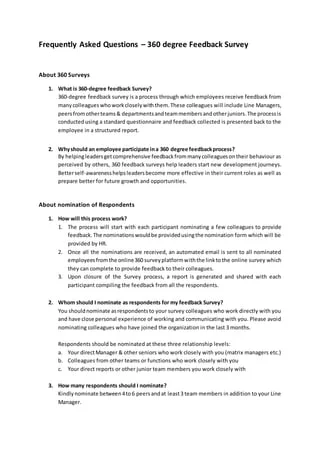
    Gathering feedback is essential for business success and productivity. Using 360 Survey Questions to derive feedback will give you the desired result.

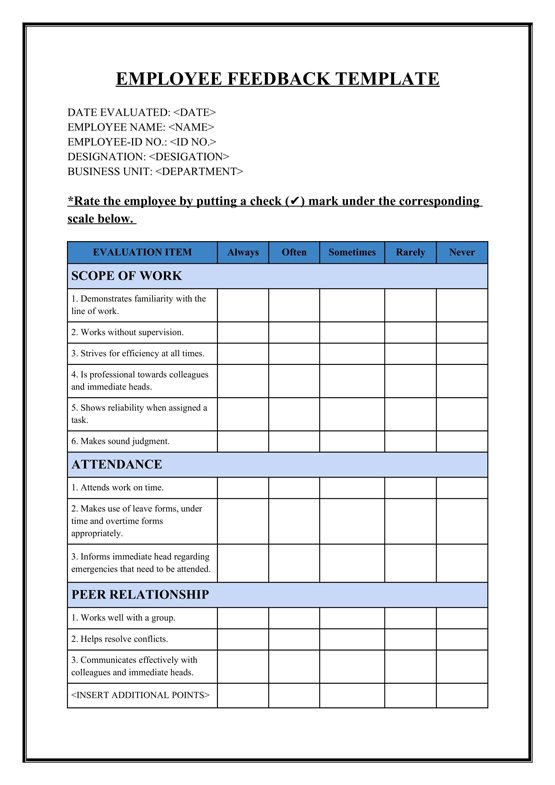
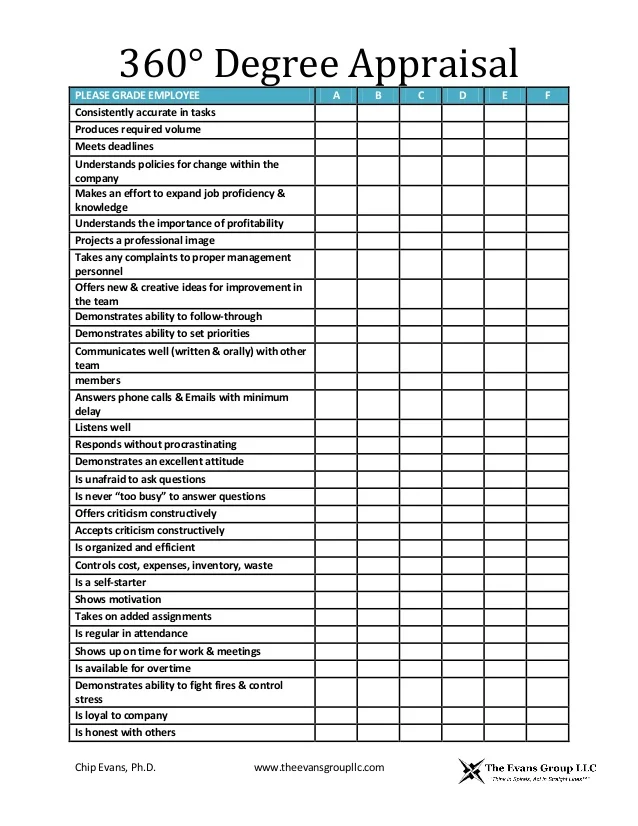
    A 360 survey is a powerful tool for gathering feedback on an individual’s performance and effectiveness from a variety of perspectives, including peers, managers, direct reports, and even clients in some cases. 

    These surveys provide a holistic view of an individual’s strengths, weaknesses, and areas for improvement. Explore the content to see the available 360 Survey Questions With Samples for leaders, managers, and employees.

    What is a 360 survey question?

    A 360 survey question is designed to elicit specific, actionable feedback on an individual’s performance in various areas. These questions can be open-ended, allowing for qualitative descriptions, or closed-ended, using rating scales or multiple-choice options for quantitative analysis.

    Related Post: 250+ Best Birthday Trivia Questions and Answers (Easiest to Hardest)

    What are the benefits of 360 survey questions?

    • Increased self-awareness: Individuals gain insights into how others perceive their performance and behavior.
    • Improved performance: Feedback helps identify areas for development and set specific goals for improvement.
    • Enhanced communication: The process encourages open and honest communication within teams and organizations.
    • Stronger relationships: Feedback fosters trust and understanding among colleagues.
    • Data-driven decision-making: Insights inform professional development, promotions, and team dynamics.

    How do you conduct a 360 assessment?

    • Define Goals: Clearly define the objectives of the assessment and what you hope to achieve.
    • Select Participants: Choose individuals who have significant interaction with the subject (e.g., direct reports, peers, managers, clients).
    • Choose a Platform: Select a secure and anonymous platform for collecting feedback.
    • Develop Questions: Use a mix of open-ended and closed-ended questions that align with your goals.
    • Collect Feedback: Ensure confidentiality and encourage honest, constructive feedback.
    • Analyze Results: Analyze the feedback objectively and identify key themes.
    • Provide feedback: Share results with the individual, offering constructive feedback and support.
    • Develop Action Plan: Create a development plan based on the feedback and set SMART goals.

    Preparing for 360 Feedback

    • Set realistic expectations: Understand that feedback may not always be positive.
    • Be open-minded: Approach feedback with a willingness to learn and grow.
    • Seek clarification: Ask for specific examples to understand the context of feedback.
    • Focus on actionable insights: Identify concrete steps for improvement.
    • Maintain professionalism: Avoid defensiveness and focus on learning from the feedback.

    What are the 5 questions to ask in a performance review?

    1. How effectively does this leader communicate vision and goals?
    2. Does this leader create a supportive and inclusive environment for team members?
    3. How well does this leader delegate tasks and empower others?
    4. Does this leader provide timely and constructive feedback?
    5. How effectively does this leader hold team members accountable?

    Related Post: 250+ Best Simpsons Trivia Questions and Answers (Easiest to Hardest)

    What are the Qualities of a Good 360 Review?

    • Confidentiality: Participants’ identities should be protected.
    • Anonymity: This encourages honest and open feedback.
    • Fairness: Questions should be balanced and avoid bias.
    • Actionable feedback: Feedback should be specific and provide concrete suggestions for improvement.
    • Focus on behavior: Feedback should focus on observable actions rather than personality traits.

    360 Survey Questions and Sample Answers

    Leadership 360 Survey Questions

    1.     How effectively does this leader communicate the organization’s vision and goals to the team?

    ·         Sample Answer: The leader communicates the organization’s vision and goals effectively.

    2.     Does this leader provide clear direction and guidance to team members?

    ·         Sample Answer: Yes, the leader provides clear direction and guidance.

    3.     How well does this leader inspire and motivate team members to achieve their best?

    ·         Sample Answer: The leader effectively inspires and motivates team members.

    4.     Does this leader demonstrate integrity and ethical behavior in their actions?

    ·         Sample Answer: Yes, the leader demonstrates integrity and ethical behavior.

    5.     How well does this leader handle conflict and resolve disputes within the team?

    ·         Sample Answer: The leader handles conflict and resolves disputes effectively.

    6.     To what extent does this leader demonstrate empathy and understanding towards team members?

    ·         Sample Answer: The leader demonstrates empathy and understanding towards team members.

    7.     Does this leader effectively manage and allocate resources to achieve team objectives?

    ·         Sample Answer: Yes, the leader effectively manages and allocates resources.

    8.     How well does this leader foster a culture of innovation and creativity within the team?

    ·         Sample Answer: The leader fosters a culture of innovation and creativity effectively.

    9.     Does this leader demonstrate resilience and composure in challenging situations?

    ·         Sample Answer: Yes, the leader demonstrates resilience and composure.

    10.   How well does this leader promote diversity and inclusivity within the team?

    ·         Sample Answer: The leader promotes diversity and inclusivity effectively.

    11.   How effectively does this leader empower team members to take ownership of their work and decisions?

    ·         Sample Answer: The leader empowers team members to take ownership effectively.

    12.   Does this leader demonstrate a commitment to personal and professional development?

    ·         Sample Answer: Yes, the leader demonstrates a commitment to personal and professional development.

    13.   How well does this leader foster a culture of accountability and responsibility within the team?

    ·         Sample Answer: The leader fosters a culture of accountability and responsibility effectively.

    14.   Is this leader able to adapt their leadership style to different team members and situations?

    ·         Sample Answer: Yes, the leader adapts their leadership style effectively.

    15.   How well does this leader advocate for the needs and concerns of their team to higher management?

    ·         Sample Answer: The leader advocates for the needs and concerns of their team effectively.

    16.   How well does this leader foster a culture of continuous improvement and learning within the team?

    ·         Sample Answer: The leader fosters a culture of continuous improvement and learning effectively.

    17.   Is this leader accessible and approachable for team members to discuss concerns or ideas?

    ·         Sample Answer: Yes, the leader is accessible and approachable for discussions.

    18.   How effectively does this leader promote teamwork and collaboration across departments or units?

    ·         Sample Answer: The leader promotes teamwork and collaboration effectively.

    19.   Does this leader demonstrate resilience and adaptability in the face of organizational changes?

    ·         Sample Answer: Yes, the leader demonstrates resilience and adaptability.

    20.   How well does this leader prioritize the well-being and professional development of team members?

    ·         Sample Answer: The leader prioritizes well-being and professional development effectively.

    Related Post: 250+ Best SpongeBob Trivia Questions and Answers (Easiest to Hardest)

    360 Survey Questions for Managers

    21.   Does this manager provide adequate support and resources for team members to succeed in their roles?

    ·         Sample Answer: Yes, the manager provides adequate support and resources.

    22.   How well does this manager delegate tasks and empower team members?

    ·         Sample Answer: The manager delegates tasks and empowers team members effectively.

    23.   Does this manager provide constructive feedback and recognition to team members?

    ·         Sample Answer: Yes, the manager provides constructive feedback and recognition.

    24.   How effectively does this manager foster collaboration and teamwork within the team?

    ·         Sample Answer: The manager fosters collaboration and teamwork effectively.

    25.   Is this manager open to receiving feedback and suggestions from team members?

    ·         Sample Answer: Yes, the manager is open to receiving feedback and suggestions.

    26.   Is this manager accessible and approachable for team members seeking assistance or guidance?

    ·         Sample Answer: Yes, the manager is accessible and approachable.

    27.   Does this manager effectively prioritize tasks and manage time to meet deadlines?

    ·         Sample Answer: The manager effectively prioritizes tasks and manages time.

    28.   How well does this manager provide opportunities for professional development and growth?

    ·         Sample Answer: The manager provides opportunities for professional development and growth effectively.

    29.   Does this manager foster a positive work culture and team morale?

    ·         Sample Answer: Yes, the manager fosters a positive work culture and team morale.

    30.   How effectively does this manager handle performance issues and provide constructive feedback?

    ·         Sample Answer: The manager handles performance issues and provides constructive feedback effectively.

    31.   Does this manager provide sufficient training and development opportunities to enhance team skills?

    ·         Sample Answer: Yes, the manager provides sufficient training and development opportunities.

    32.   How well does this manager recognize and reward individual and team achievements?

    ·         Sample Answer: The manager recognizes and rewards achievements effectively.

    33.   Is this manager proactive in identifying and addressing potential obstacles or challenges for the team?

    ·         Sample Answer: Yes, the manager is proactive in addressing obstacles or challenges.

    34.   How effectively does this manager promote a healthy work-life balance for team members?

    ·         Sample Answer: The manager promotes a healthy work-life balance effectively.

    35.   Does this manager demonstrate a commitment to fostering diversity and inclusion within the team?

    ·         Sample Answer: Yes, the manager demonstrates a commitment to fostering diversity and inclusion.

    36.   Is this manager receptive to feedback from team members and willing to make changes as needed?

    ·         Sample Answer: Yes, the manager is receptive to feedback and willing to make changes.

    37.   How well does this manager foster a culture of open communication and transparency within the team?

    ·         Sample Answer: The manager fosters open communication and transparency effectively.

    38.   Does this manager effectively advocate for resources and support needed by the team to succeed?

    ·         Sample Answer: Yes, the manager effectively advocates for resources and support.

    39.   How well does this manager handle and resolve conflicts among team members?

    ·         Sample Answer: The manager handles conflicts and resolves them effectively.

    40.   Is this manager able to maintain a balance between achieving goals and supporting the well-being of team members?

    ·         Sample Answer: Yes, the manager maintains a balance effectively.

    Employee 360 Survey Questions

    41.   How well does this employee communicate with peers and superiors?

    ·         Sample Answer: The employee communicates effectively with peers and superiors.

    42.   Does this employee demonstrate initiative and proactiveness in their work?

    ·         Sample Answer: Yes, the employee demonstrates initiative and proactiveness.

    43.   How well does this employee handle challenges and adapt to change?

    ·         Sample Answer: The employee handles challenges and adapts to change effectively.

    44.   Is this employee receptive to feedback and willing to learn and grow?

    ·         Sample Answer: Yes, the employee is receptive to feedback and willing to learn and grow.

    45.   How effectively does this employee collaborate with others to achieve team goals?

    ·         Sample Answer: The employee collaborates effectively with others.

    46.   Does this employee demonstrate strong problem-solving skills and critical thinking abilities?

    ·         Sample Answer: Yes, the employee demonstrates strong problem-solving skills and critical thinking abilities.

    47.   How well does this employee handle pressure and tight deadlines?

    ·         Sample Answer: The employee handles pressure and tight deadlines effectively.

    48.   Is this employee adaptable to changes in work processes or procedures?

    ·         Sample Answer: Yes, the employee is adaptable to changes in work processes.

    49.   Does this employee effectively communicate feedback or concerns to supervisors or management?

    ·         Sample Answer: The employee effectively communicates feedback or concerns.

    50.   How well does this employee collaborate with cross-functional teams or departments?

    ·         Sample Answer: The employee collaborates well with cross-functional teams.

    51.   How well does this employee contribute to a positive and collaborative work environment?

    ·         Sample Answer: The employee contributes well to a positive and collaborative environment.

    52.   Does this employee take the initiative to seek out additional responsibilities or challenges?

    ·         Sample Answer: Yes, the employee takes the initiative to seek out additional responsibilities.

    53.   How effectively does this employee handle feedback and constructive criticism?

    ·         Sample Answer: The employee handles feedback and criticism effectively.

    54.   Is this employee proactive in seeking opportunities for skill development and growth?

    ·         Sample Answer: Yes, the employee is proactive in seeking skill development opportunities.

    55.   How well does this employee support and assist their colleagues when needed?

    ·         Sample Answer: The employee supports and assists colleagues effectively.

    56.   How well does this employee contribute to a positive team culture through their attitude and actions?

    ·        Sample Answer: The employee contributes positively to team culture.

    57.   Does this employee demonstrate adaptability and resilience in navigating work challenges?

    ·         Sample Answer: Yes, the employee demonstrates adaptability and resilience.

    58.   How effectively does this employee communicate updates and progress on assigned tasks or projects?

    ·         Sample Answer: The employee communicates updates and progress effectively.

    59.   Is this employee proactive in seeking opportunities for skill development and growth?

    ·         Sample Answer: Yes, the employee is proactive in seeking growth opportunities.

    60.   How well does this employee collaborate with peers to achieve common goals?

    ·         Sample Answer: The employee collaborates well with peers.

    Related Post: 250+ Best Thanksgiving Trivia Questions and Answers (Easiest to Hardest)

    360 Survey Questions for Teachers

    61.   How effectively does this teacher engage students and create a positive learning environment?

    ·         Sample Answer: The teacher engages students and creates a positive learning environment effectively.

    62.   Does this teacher effectively communicate course materials and concepts?

    ·         Sample Answer: Yes, the teacher effectively communicates course materials and concepts.

    63.   How well does this teacher provide constructive feedback and support to students?

    ·         Sample Answer: The teacher provides constructive feedback and support to students effectively.

    64.   Is this teacher knowledgeable in their subject area and able to answer students’ questions effectively?

    ·         Sample Answer: Yes, the teacher is knowledgeable and able to answer questions effectively.

    65.   Does this teacher effectively manage classroom dynamics and behavior?

    ·         Sample Answer: Yes, the teacher effectively manages classroom dynamics and behavior.

    66.   Does this teacher provide timely and constructive feedback on student assignments and assessments?

    ·         Sample Answer: Yes, the teacher provides timely and constructive feedback.

    67.   How effectively does this teacher use technology and multimedia resources in teaching?

    ·         Sample Answer: The teacher effectively uses technology and multimedia resources.

    68.   Does this teacher encourage student participation and engagement in classroom discussions?

    ·         Sample Answer: Yes, the teacher encourages student participation and engagement.

    69.   How well does this teacher manage conflicts or disagreements among students in the classroom?

    ·         Sample Answer: The teacher manages conflicts or disagreements effectively.

    70.   Is this teacher receptive to student feedback and suggestions for improving the learning experience?

    ·         Sample Answer: Yes, the teacher is receptive to student feedback and suggestions.

    71.   Does this teacher create a safe and inclusive learning environment for all students?

    ·         Sample Answer: Yes, the teacher creates a safe and inclusive environment.

    72.   How well does this teacher communicate learning objectives and expectations to students?

    ·         Sample Answer: The teacher communicates objectives and expectations effectively.

    73.   Is this teacher responsive to individual student needs and learning styles?

    ·        Sample Answer: Yes, the teacher is responsive to individual student needs.

    74.   How effectively does this teacher manage classroom disruptions and maintain focus on learning?

    ·         Sample Answer: The teacher manages disruptions and maintains focus effectively.

    75.   Does this teacher demonstrate enthusiasm and passion for teaching?

    ·         Sample Answer: Yes, the teacher demonstrates enthusiasm and passion.

    76.   Does this teacher provide timely and meaningful feedback to students to support their learning journey?

    ·         Sample Answer: Yes, the teacher provides timely and meaningful feedback.

    77.   How effectively does this teacher differentiate instruction to meet the diverse needs of students?

    ·         Sample Answer: The teacher differentiates instruction effectively.

    78.   Is this teacher proactive in seeking professional development opportunities to enhance teaching practices?

    ·         Sample Answer: Yes, the teacher is proactive in seeking professional development.

    79.   How well does this teacher foster a sense of community and belonging among students in the classroom?

    ·         Sample Answer: The teacher fosters a sense of community effectively.

    80.   Does this teacher demonstrate a passion for their subject matter and inspire students to learn?

    ·         Sample Answer: Yes, the teacher demonstrates passion and inspires students.

    360 Feedback Questions with Sample Answers to Ask Peers

    1. How effectively does the individual collaborate with team members on projects?
      • The individual consistently seeks input from team members and actively participates in collaborative efforts to achieve common goals.
    2. Does the individual demonstrate strong leadership skills when necessary?
      • Yes, the individual shows leadership qualities by taking initiative, providing guidance, and motivating team members when needed.
    3. To what extent does the individual contribute to a positive work environment?
      • The individual consistently maintains a positive attitude, supports colleagues, and fosters a collaborative and inclusive atmosphere.
    4. How well does the individual handle constructive criticism from peers?
      • The individual demonstrates openness to feedback, takes constructive criticism positively, and uses it as an opportunity for growth and improvement.
    5. Is the individual approachable and supportive when peers seek assistance?
      • Yes, the individual is readily available to offer support, guidance, and assistance to peers, fostering a supportive team environment.

    360 Feedback Questions with Sample Answers for Effective Communication

    1. How does the individual convey information and ideas?
      • The individual communicates effectively, using clear and concise language to convey complex ideas and information to peers.
    2. Does the individual actively listen to others during discussions and meetings?
      • Yes, the individual demonstrates active listening skills by paying attention to others’ perspectives, asking clarifying questions, and providing constructive feedback.
    3. How well does the individual communicate across different channels (e.g., email, phone, in-person)?
      • The individual adapts communication style effectively across various channels, ensuring clarity and understanding in all interactions.
    4. Does the individual provide timely and relevant updates on project progress?
      • Yes, the individual consistently communicates project updates promptly and effectively, keeping all stakeholders informed of progress and any potential issues.
    5. Is the individual receptive to feedback on their communication style and willing to make improvements?
      • The individual actively seeks feedback on their communication style, welcomes suggestions for improvement, and demonstrates a commitment to refining their communication skills.

    360 Feedback Questions and Sample Answers for Understanding Problem-Solving Skills

    1. How effectively does the individual analyze problems and identify potential solutions?
      • The individual demonstrates strong analytical skills, thoroughly evaluating problems from multiple perspectives and proposing creative and practical solutions.
    2. Does the individual proactively seek solutions to challenges, or do they wait for direction?
      • The individual takes initiative in addressing challenges, proactively seeking solutions and taking ownership of problem-solving efforts.
    3. To what extent does the individual involve others in problem-solving processes?
      • The individual actively collaborates with team members, soliciting input and involving others in problem-solving efforts to leverage diverse perspectives and expertise.
    4. How well does the individual adapt to unexpected obstacles and changes in plans?
      • The individual demonstrates flexibility and resilience in the face of unexpected obstacles, quickly adjusting plans and strategies as needed to overcome challenges.
    5. Is the individual receptive to feedback on their problem-solving approach and willing to explore alternative solutions?
      • Yes, the individual welcomes feedback on their problem-solving approach, remains open to alternative solutions, and continuously seeks opportunities for improvement.

    360 Feedback Questions and Sample Answers for Interpersonal Skills

    1. How effectively does the individual build and maintain positive relationships with colleagues?
      • The individual excels in building strong relationships based on trust, respect, and collaboration, contributing to a harmonious team dynamic.
    2. Does the individual demonstrate empathy and understanding towards others’ perspectives and feelings?
      • Yes, the individual shows empathy towards colleagues, actively listening to their concerns and offering support and understanding when needed.
    3. To what extent does the individual resolve conflicts and address interpersonal issues within the team?
      • The individual handles conflicts diplomatically, addressing interpersonal issues promptly and effectively to maintain a cohesive team environment.
    4. How well does the individual provide constructive feedback to peers in a respectful and supportive manner?
      • The individual offers constructive feedback constructively and respectfully, focusing on actionable suggestions for improvement while acknowledging strengths.
    5. Is the individual able to adapt their communication style to effectively interact with different personalities?
      • Yes, the individual demonstrates versatility in communication, adjusting their approach to effectively engage with colleagues of diverse backgrounds and personalities.

    Closed-Ended 360-Degree Feedback Questions and Sample Answers

    1. On a scale of 1 to 5, how would you rate the individual’s collaboration skills?
      • 4. The individual consistently collaborates effectively with team members, contributing positively to team projects and initiatives.
    2. Does the individual actively seek feedback from peers to improve their performance? (Yes/No)
      • Yes, the individual actively seeks feedback from peers and demonstrates a willingness to learn and grow professionally.
    3. Would you describe the individual as a strong communicator? (Yes/No)
      • Yes, the individual communicates effectively, conveying information clearly and fostering open dialogue with peers.
    4. How often does the individual demonstrate leadership qualities in their interactions with peers?
      • The individual demonstrates leadership qualities occasionally, particularly in situations requiring guidance or decision-making.
    5. On a scale of 1 to 5, how well does the individual handle conflicts and disagreements within the team?
      • 4. The individual handles conflicts diplomatically, facilitating constructive resolutions and maintaining a positive team dynamic.
    6. Does the individual demonstrate a willingness to take on new challenges and responsibilities? (Yes/No)
      • Yes, the individual is proactive in seeking out new challenges and opportunities for growth, demonstrating a strong commitment to personal and professional development.
    7. How often does the individual seek input and feedback from peers before making decisions?
      • The individual frequently seeks input and feedback from peers, valuing diverse perspectives and ensuring informed decision-making.
    8. Would you describe the individual as adaptable to changing circumstances and priorities? (Yes/No)
      • Yes, the individual demonstrates adaptability in responding to changing circumstances and priorities, adjusting plans and strategies as needed to achieve objectives.
    9. On a scale of 1 to 5, how effectively does the individual prioritize tasks and manage their time?
      • 4. The individual demonstrates strong time management skills, effectively prioritizing tasks and meeting deadlines with minimal supervision.
    10. Does the individual demonstrate a commitment to fostering a positive and inclusive team culture? (Yes/No)
      • Yes, the individual actively contributes to fostering a positive and inclusive team culture, promoting collaboration, respect, and diversity.
    11. How often does the individual seek feedback on their performance from peers?
      • The individual consistently seeks feedback on their performance from peers, demonstrating a commitment to continuous improvement and development.
    12. Would you describe the individual as a proactive problem-solver? (Yes/No)
      • Yes, the individual proactively identifies and addresses problems, taking initiative to find solutions and prevent issues from escalating.
    13. On a scale of 1 to 5, how effectively does the individual communicate project updates and important information to peers?
      • 5. The individual communicates project updates and important information clearly and promptly, keeping team members informed and aligned.
    14. Does the individual demonstrate resilience in the face of setbacks or challenges? (Yes/No)
      • Yes, the individual demonstrates resilience, maintaining a positive attitude and persevering in the face of setbacks or challenges.
    15. How often does the individual seek opportunities to recognize and appreciate the contributions of their peers?
      • The individual regularly seeks opportunities to recognize and appreciate the contributions of their peers, fostering a culture of recognition and appreciation within the team.

    Related Post: 250+ Best Music Trivia Questions and Answers (Easiest to Hardest)

    360 Survey Questions Samples

    What is a 360-degree questionnaire?

    A 360-degree feedback survey typically includes a series of questions that are answered using a rating scale.

    How do you create a 360 feedback survey?

    Keep them simple, use an easily understandable language, and avoid any bias in formulating them.

    What is another name for 360 reviews?

    multi-rater feedback, multi-source feedback, or multi-source assessment

    Conclusion

    360 surveys offer a valuable tool for self-reflection, performance improvement, and building stronger relationships.

    By asking the right questions and conducting the process effectively, you can unlock the full potential of this powerful feedback mechanism.

    References

     Recommendations

  • 50 Best Employee Satisfaction Survey Questions With Samples

    50 Best Employee Satisfaction Survey Questions With Samples

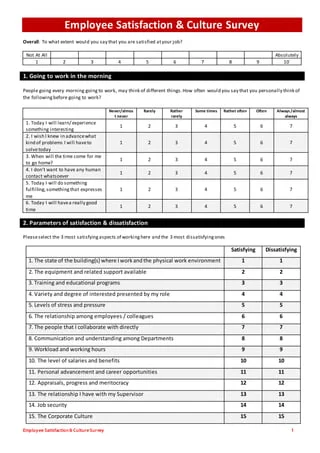
    Employee satisfaction surveys are valuable tools for understanding your workforce’s well-being and identifying areas for improvement. It aids the collection of feedback for the growth of your organization. 

    By gathering honest feedback with these employee satisfaction survey questions, companies can create a more positive and productive work environment, leading to increased retention and engagement. Now, let’s explore the Best employee satisfaction survey questions.

    What is an Employee Satisfaction Survey?

    An employee satisfaction survey is a tool used to gauge employee sentiment and gather feedback on various aspects of their work experience. It typically uses a series of questions to assess factors like:

    Job satisfaction: This includes aspects like meaningfulness of work, workload management, and alignment with personal goals.

    Company culture: Questions focus on teamwork, communication, transparency, and overall work environment.

    Managerial support: The survey evaluates employees’ relationships with their direct supervisors, including feedback, recognition, and career development opportunities.

    Compensation and benefits: Employees share their opinions on salary, benefits package, and overall fairness of compensation.

    Work-life balance: This section explores employees’ ability to manage personal and professional demands effectively.

    Related Post: How Long Does a Job Interview Last | Full Prep

    Purpose of an Employee Satisfaction Survey

    Identify areas for improvement: Surveys pinpoint specific areas where employee experience can be enhanced.

    Boost employee engagement: By actively seeking feedback, organizations demonstrate their commitment to employee well-being and engagement.

    Improve retention: Satisfied employees are more likely to stay with the company, reducing turnover costs.

    Enhance decision-making: Data from surveys informs leadership decisions related to policies, processes, and employee initiatives.

    Benchmark against industry standards: Surveys help compare your company’s employee satisfaction levels to industry benchmarks, identifying areas where you excel or need improvement.

    How to Create an Employee Satisfaction Survey

    Define your goals: Determine what you want to learn from the survey and tailor the questions accordingly.

    Choose the right format: Decide between online, paper, or face-to-face surveys, considering response rate and anonymity needs.

    Craft clear and concise questions: Use simple language and avoid leading questions that influence responses.

    Offer a mix of question types: Utilize multiple-choice, Likert scale, open-ended, and demographic questions.

    Ensure anonymity and confidentiality: Emphasize employees’ right to answer freely without fear of repercussions.

    How to Conduct an Employee Satisfaction Survey

    Pilot the survey: Test the survey with a small group to identify any issues before wider distribution.

    Communicate clearly: Explain the purpose and importance of the survey to encourage participation.

    Make it accessible: Ensure the survey is easy to find and complete during work hours.

    Offer incentives (optional): Consider small incentives to encourage participation without pressuring responses.

    Analyze the results: Identify key themes, trends, and areas for improvement.

    Communicate findings: Share key takeaways with employees and outline planned actions to address concerns.

    How to Measure Employee Satisfaction

    Survey questions: Use a mix of closed-ended (multiple choice) and open-ended questions for quantitative and qualitative data.

    Engagement metrics: Track absenteeism, turnover rate, and productivity alongside survey results.

    Pulse surveys: Conduct shorter, frequent surveys to measure trends over time.

    How to Analyze Employee Satisfaction Results

    Data analysis: Analyze quantitative data statistically and categorize open-ended responses by theme.

    Benchmarking: Compare your results to industry standards or previous surveys.

    Actionable insights: Identify key areas for improvement and prioritize them based on impact and feasibility.

    How do I Improve Employee Satisfaction?

    Action plans: Develop concrete plans with timelines and responsible parties for addressing key issues.

    Communication: Share the survey results and action plans with employees transparently.

    Follow-up surveys: Track progress and measure the effectiveness of implemented changes.

    Related Post: 30 Most Commonly Asked Technical Interview Questions

    What is the Cost of Employee Satisfaction Surveys?

    Free options: Utilize free online survey tools with limited features.

    Paid solutions: Choose paid tools with advanced features, data analysis, and reporting capabilities.

    Consulting services: Hire consultants to design, conduct, and analyze surveys for tailored insights.

    What are some of the employee satisfaction survey tools

    When choosing an employee satisfaction survey tool, it is important to consider your needs and budget. You should also make sure that the tool you choose is easy to use and has the features you need to collect and analyze the data you need.

    Qualtrics: Qualtrics is a powerful and comprehensive survey tool that can be used for a variety of purposes, including employee satisfaction surveys. It offers a wide range of features, including question branching, skip logic, and data analysis tools.

    SurveyMonkey: SurveyMonkey is a user-friendly survey tool that is popular for its ease of use and affordability. It offers a variety of question types, including multiple-choice, open-ended, and ranking questions.

    CultureAmp: CultureAmp is a survey tool that is specifically designed for employee engagement surveys. It offers a variety of features to help you measure employee engagement, including pulse surveys, 360-degree feedback, and exit interviews.

    Glint: Glint is a survey tool that is owned by Microsoft. It offers a variety of features to help you measure employee 

    Peakon: Peakon is a survey tool that is powered by Workday. It is designed to help you measure employee sentiment and identify areas where you can improve. It offers a variety of features, including pulse surveys, engagement surveys, and exit interviews.

    TINYpulse: TINYpulse is a survey software that is designed to be used regularly to collect feedback from employees. It offers a free plan with basic features, as well as paid plans with more advanced features.

    Zoho Survey: This is a free and open-source survey platform that offers a basic set of features for employee satisfaction surveys. It is a good option if you are on a budget.

    Trakstar: This platform is designed specifically for employee performance management and development, but it also includes features for employee satisfaction surveys. It is a good option if you are looking for a tool that can help you track employee engagement and satisfaction over time.

    What to consider when choosing an employee Satisfaction Survey

    When choosing an employee satisfaction survey software, it is important to consider your needs and budget. Some factors to consider include:

    The size of your organization: Some survey software is better suited for small organizations, while others are better suited for large organizations.

    Your budget: Survey software ranges in price from free to very expensive.

    The features you need: Some survey software offers a wider range of features than others.

    The Ease of Use: Some survey software is easier to use than others.

    Best Employee Satisfaction Survey Questions

    Employee Satisfaction Survey Questions

    1. How satisfied are you with your overall experience working at [Company Name]? Answer: Very satisfied / Satisfied / Neutral / Dissatisfied / Very dissatisfied

    2.     Do you feel comfortable in your work environment? Answer: Yes / No / Sometimes

    3.     How well do you feel your work-life balance is maintained? Answer: Excellent / Good / Fair / Poor

    4.     Are you satisfied with the communication channels within the company? Answer: Yes / No / Somewhat

    5.     Do you feel there are enough opportunities for growth and advancement within the company? Answer: Yes / No / Unsure

    6.     Do you feel adequately recognized and rewarded for your contributions? Answer: Yes / No / Sometimes

    7.     Are you satisfied with the training and development opportunities provided by the company? Answer: Yes / No / Somewhat

    8.     How would you rate the leadership within the company? Answer: Excellent / Good / Fair / Poor

    9.     Do you feel that there is effective collaboration within your team? Answer: Yes / No / Sometimes

    10.   How satisfied are you with your current role and responsibilities? Answer: Very satisfied / Satisfied / Neutral / Dissatisfied / Very dissatisfied

    Federal Employee Satisfaction Survey Questions

    11.   Are you satisfied with the benefits package provided by the government? Answer: Yes / No / Somewhat

    12.   How secure do you feel in your job position? Answer: Very secure / Secure / Neutral / Insecure / Very insecure

    13.   Do you feel the government provides enough flexibility in your work schedule? Answer: Yes / No / Somewhat

    14.   Are you satisfied with the government policies regarding employee rights and benefits? Answer: Yes / No / Somewhat

    15.   How would you rate the leadership within your department or agency? Answer: Excellent / Good / Fair / Poor

    16.   Do you feel that workload is distributed fairly among employees in your department/agency? Answer: Yes / No / Sometimes

    17.   How inclusive do you find the workplace culture in terms of diversity and inclusion? Answer: Very inclusive / Somewhat inclusive / Not inclusive

    18.   How satisfied are you with the performance evaluation process in your department/agency? Answer: Very satisfied / Satisfied / Neutral / Dissatisfied / Very dissatisfied

    19.   Are you satisfied with the training provided on government policies and procedures? Answer: Yes / No / Somewhat

    20.   Do you feel that you have adequate resources (e.g., technology, funding) to perform your job effectively? Answer: Yes / No / Somewhat

    Related Post: 30 Frequently Asked HR Interview Questions and Answers

    Healthcare Employee Satisfaction Survey Questions

    21.   How satisfied are you with the quality of patient care provided by your organization? Answer: Very satisfied / Satisfied / Neutral / Dissatisfied / Very dissatisfied

    22.   Do you feel your workload is manageable? Answer: Yes / No / Sometimes

    23.   Do you feel supported by your colleagues and superiors in your workplace? Answer: Yes / No / Sometimes

    24.   Are you satisfied with the facilities and equipment provided for patient care? Answer: Yes / No / Somewhat

    25.   How would you rate your stress levels in your current role? Answer: Low / Moderate / High

    26.   Do you believe there are effective mechanisms in place for collecting patient feedback? Answer: Yes / No / Somewhat

    27.   How supported do you feel by your immediate supervisor? Answer: Very supported / Supported / Neutral / Unsupported / Very unsupported

    28.   Are you satisfied with the training programs provided for healthcare professionals in your organization? Answer: Yes / No / Somewhat

    29.   How would you rate the work-life balance in the healthcare sector compared to other industries? Answer: Better / Worse / About the same

    30.   Have you experienced symptoms of burnout due to your work in healthcare? Answer: Yes / No / Sometimes

    McDonald’s Employee Satisfaction Survey Questions

    31.   Are you satisfied with the training provided for your role? Answer: Yes / No / Somewhat

    32.   How would you rate the overall work environment in your McDonald’s outlet? Answer: Excellent / Good / Fair / Poor

    33.   How satisfied are you with your position at McDonald’s? Answer: Very satisfied / Satisfied / Neutral / Dissatisfied / Very dissatisfied

    34.   Do you feel that there is effective teamwork among your colleagues? Answer: Yes / No / Sometimes

    35.   Do you feel adequately recognized for your efforts by your managers? Answer: Yes / No / Sometimes

    Top Employee Satisfaction Survey Questions

    36.   How satisfied are you with your overall experience working at [Company Name] compared to other companies you’ve worked for? Answer: Very satisfied / Satisfied / Neutral / Dissatisfied / Very dissatisfied

    37.   Do you feel that [Company Name] provides better career growth opportunities compared to other companies? Answer: Yes / No / Somewhat

    38.   How does the work-life balance at [Company Name] compare to your previous workplaces? Answer: Better / Worse / About the same

    39.   Are the benefits and perks offered by [Company Name] better than those offered by other companies? Answer: Yes / No / Somewhat

    40.   How would you describe the company culture at [Company Name] compared to other companies? Answer: More positive / More negative / About the same

    Employee Satisfaction Survey Questions for Management Staff

    41.   How effective do you find the leadership team in [Company Name]? Answer: Highly effective / Effective / Somewhat effective / Ineffective

    42.   Do you feel supported by upper management in your role? Answer: Yes / No / Sometimes

    43.   How would you rate the company’s investment in employee development and growth? Answer: Excellent / Good / Fair / Poor

    44.   How transparent and inclusive do you find the decision-making process in the company? Answer: Very transparent and inclusive / Somewhat transparent and inclusive / Not transparent and inclusive

    45.   Do you believe there are effective mechanisms in place for gathering and acting upon employee feedback? Answer: Yes / No / Somewhat

    46.   How satisfied are you with the communication channels between management and employees? Answer: Very satisfied / Satisfied / Neutral / Dissatisfied / Very dissatisfied

    47.   How effective do you find the company’s approach to resolving conflicts among employees? Answer: Highly effective / Effective / Somewhat effective / Ineffective

    48.   Do you feel that the leadership team recognizes and appreciates the efforts of management staff? Answer: Yes / No / Sometimes

    49.   How well do you think the goals and objectives set for your department align with the overall goals of the company? Answer: Very well / Moderately well / Not well / Unsure

    50.   Are there sufficient opportunities for leadership development and advancement within the company for management staff? Answer: Yes / No / Somewhat

    Employee satisfaction Survey Samples

    What are the 5 easy survey questions?

    These 5 basic questions—how, why, who, when, and what—don’t get as much attention as the more popular questions you include in your survey.

    What is an example of a good survey question?

    How was your experience with our customer support team? 
    What could we have done differently to improve your experience?
    What is your favorite feature of this product and why?

    What are the 4 types of survey questions?

    Open-Ended Questions
    Multiple-Choice Questions
    Interval Scale Questions
    Ratio Scale Questions.

    What is the most popular survey question type?

    Multiple choice questions

    Conclusion

    By conducting thorough and well-designed employee satisfaction surveys, companies can gain valuable insights into their workforce’s perspectives and create a more positive and productive work environment for everyone.

    When you understand your employees’ needs and concerns, you can create a work environment that fosters engagement, productivity, and loyalty. Hence, employee satisfaction surveys are a valuable investment for any organization.

    References

    Recommendations

  • 200+ Family Feud Survey Questions and Answers for Kids and Adults

    200+ Family Feud Survey Questions and Answers for Kids and Adults

    Ever wondered why families love Steve Harvey’s Family Feud? It’s all about guessing what other people say! The show asks folks questions like “Name things you find in a kitchen sink” and then families race to shout out the most common answers.

    Family Feud’s engaging gameplay relies heavily on its survey questions. These questions tap into the popular responses and opinions of large audience groups, creating opportunities for hilarious and relatable guesswork.

    Even workplaces are using these Family Feud Surveys to build teamwork – how cool is that? While the specifics remain veiled, understanding the general principles behind Family Feud’s survey process can enhance your gameplay and make you a more strategic contestant.

    Let’s explore the different Family Feud game questions and answers available and get the fun started.

    Facts about Family Feud surveys

    • Family Feud surveys are conducted with national representative samples. This ensures answers reflect the opinions of the general population, not just a specific demographic.
    • Sample sizes are typically large, ranging from hundreds to thousands of participants. This helps guarantee the accuracy and reliability of the results.
    • Surveys can be conducted online, in person, or via telephone, depending on the research firm and budget constraints.

    How to answer survey questions for Family Feud

    There are no official “survey questions” available for the public. The show conducts private surveys with diverse demographically balanced groups that represent the American population. However, you can get a similar experience by playing online or mobile Family Feud games which use pre-recorded surveys.

    Here are some of the ways you can Answer Survey Questions:

    • Think broad and popular. Imagine what the majority of people would answer, not just your personal opinion.
    • Prioritize common, everyday terms and phrases. Avoid overly specific or technical language.
    • Be honest and spontaneous. Don’t overthink or try to be too clever. Your first instinct is usually the best answer.

    Related Post: 200+ Church Survey Questions to Ask Congregations | Sample Questionnaire

    Where does Family Feud get survey questions?

    The show conducts its surveys through research firms specializing in audience sampling and polling. These firms ensure a statistically representative sample of the American population across various demographics like age, location, social background, etc. Here is how Family Feud gets survey questions;

    Professional survey research firms: These companies specialize in conducting surveys and analyzing data for various clients, including TV shows like Family Feud.

    • Internal research teams: Some TV shows may have dedicated research departments that conduct surveys in-house.
    • Publicly available data: Occasionally, shows might use publicly available data sources like government reports or academic studies to inform their questions.
    • Professional Writers: A team of writers crafts questions based on current events, pop culture, and everyday situations.
    • Online Submissions: Fans can submit questions through the Family Feud website or social media.
    • Audience Participation: During live tapings, the audience can suggest questions, adding a spontaneous element.

    Benefits of Family Feud Game Questions

    • Fun and engaging: They provide a lighthearted and interactive way to learn new things and connect with others.
    • Team building: They can be used to encourage collaboration and communication within teams.
    • Icebreakers: They can be a great way to get people talking and comfortable in new situations.
    • Learning: They can be used to teach new information or test existing knowledge in a fun and engaging way.

    How to Play Family Feud in the Workplace

    • Divide participants into teams.
    • Choose a moderator to ask questions and keep score.
    • Ask questions and award points based on the number of surveyed people who gave each answer.
    • The team with the most points at the end wins!

    Who does Family Feud survey to get the answers to their questions?

    Specific details about the surveyed population are usually not disclosed. However, the show aims for a broad and diverse audience representation, likely involving thousands of individuals across the US.

    Family Feud Questions and Answers

    General Family Feud Game Questions and Answers

    1.     Name a reason people might honk their horn.

    ·         Traffic jam

    2.     What is something you might buy that could turn out to be a waste of money?

    ·         Lottery tickets

    3.     Name something people might do before bed.

    ·         Brush teeth

    4.     What is a common New Year’s resolution?

    ·         Lose weight

    5.     Name something people often forget to do.

    ·         Turn off lights

    6.     What is a popular dessert?

    ·         Chocolate cake

    7.     Name a household chore people hate doing.

    ·         Washing dishes

    8.     What is a common fear people have?

    ·         Heights

    9.     Name a type of fruit.

    ·         Apple

    10.   What is a popular hobby?

    ·         Gardening

    Family Feud Survey Questions and Answers for Kids

    11.   Name a game you play at recess.

    ·         Tag

    12.   What is a favorite cartoon character?

    ·         SpongeBob SquarePants

    13.   Name a type of candy.

    ·         Gummy bears

    14.   What is your favorite subject in school?

    ·         Art

    15.   Name something you find in a playground.

    ·         Swings

    16.   Name something you might find in a treasure chest. Answer: Gold coins

    17.   What’s a game you play at recess? Answer: Tag

    18.   Name a popular cartoon character. Answer: SpongeBob SquarePants

    19.   What’s something you do on a rainy day? Answer: Watch movies

    20.   Name a flavor of ice cream. Answer: Chocolate

    21.   Name a game you play with a ball. Answer: Soccer

    22.   What’s a popular theme park ride? Answer: Roller coaster

    23.   Name a color of the rainbow. Answer: Blue

    24.   What’s something you might do at a birthday party? Answer: Blow out candles

    25.   Name a popular children’s book. Answer: Harry Potter

    Family Feud Survey Questions and Answers for Adults

    26.   Name a popular vacation destination.

    ·         Hawaii

    27.   What is a common stress-relief activity?

    ·         Yoga

    28.   Name something people do to relax.

    ·         Read a book

    29.   What is a common type of exercise?

    ·         Running

    30.   Name a household appliance.

    ·         Microwave

    31.   Name a common item people collect. Answer: Coins

    32.   What’s a popular hobby? Answer: Gardening

    33.   Name a type of music genre. Answer: Rock

    34.   What’s a common topic of conversation at a dinner party? Answer: Weather

    35.   Name a household appliance people often upgrade. Answer: Refrigerator

    36.   Name a common household chore. Answer: Vacuuming

    37.   What’s a popular vacation destination? Answer: Hawaii

    38.   Name a type of exercise. Answer: Running

    39.   What’s a common item found in a purse? Answer: Wallet

    40.   Name a popular TV show. Answer: Friends

    Family Feud Survey Questions and Answers for Home

    41.   What is a typical item found in a living room?

    ·         Sofa

    42.   Name something you use in the kitchen.

    ·         Knife

    43.   What is something people do in their backyard?

    ·         BBQ

    44.   Name a room in the house.

    ·         Bedroom

    45.   What is a common item in a bathroom?

    ·         Toothpaste

    46.   What’s something you use to clean dishes? Answer: Sponge

    47.   Name a piece of furniture you might have in your living room. Answer: Sofa

    48.   What’s a common item found in a bedroom? Answer: Bed

    49.   Name a household appliance. Answer: Microwave

    50.   What’s something you do to relax at home? Answer: Read a book

    51.   What’s something you do before going to bed? Answer: Brush teeth

    52.   Name a room in the house where people gather. Answer: Kitchen

    53.   What’s something you use to decorate for a holiday? Answer: Lights

    54.   Name a type of indoor plant. Answer: Fern

    55.   What’s a common item found in a bathroom? Answer: Towel

    56.   Name a reason people call in sick to work.

    ·         Flu

    57.   What is a common office supply?

    ·         Stapler

    58.   Name a workplace perk.

    ·         Free coffee

    59.   What is a typical office event?

    ·         Holiday party

    60.   Name a profession.

    ·         Doctor

    61.   Name a common office supply. Answer: Pen

    62.   What’s a typical task you do at work? Answer: Answering emails

    63.   Name a type of profession. Answer: Teacher

    64.   What’s something you might find in a cubicle? Answer: Computer

    65.   Name a reason people call in sick to work. Answer: Flu

    66.   Name a common office meeting topic. Answer: Budgets

    67.   What’s something you might find on a desk? Answer: Paper clips

    68.   Name a reason someone might get promoted at work. Answer: Hard work

    69.   What’s a common office prank? Answer: Changing the desktop background

    70.   Name a professional skill people often include on their resume. Answer: Communication

    Related Post: 100+ Frequently Asked Questions About Social Media with Answers

    Funny Family Feud Survey Questions and Answers

    71.   Name something you wouldn’t want to find in your bed.

    ·         A monster

    72.   What is a silly thing people do in public?

    ·         Dance randomly

    73.   Name a funny movie.

    ·         Dumb and Dumber

    74.   What is a funny word?

    ·         Banana

    75.   Name something that makes you laugh.

    ·         Jokes

    76.   Name a reason someone might give for being late. Answer: Got stuck behind a herd of turtles

    77.   What’s something you shouldn’t do in a movie theater? Answer: Bring your pet elephant

    78.   Name an animal that would make a terrible pet. Answer: Giraffe

    79.   What’s something you wouldn’t want to find in your fridge? Answer: A penguin

    80.   Name a ridiculous flavor of ice cream. Answer: Pickle flavor

    81.   Name a reason someone might give for not doing their homework. Answer: Alien abduction

    82.   What’s something you shouldn’t do at a wedding? Answer: Propose to someone else

    83.   Name a ridiculous flavor of a potato chip. Answer: Sushi flavor

    84.   What’s something you wouldn’t want to find in your bathtub? Answer: Octopus

    85.   Name a silly name for a pet fish. Answer: Sir Swims-a-Lot

    Christmas Family Feud Survey Questions and Answers

    86.   Name a Christmas tradition.

    ·         Decorating the tree

    87.   What is a popular Christmas song?

    ·         Jingle Bells

    88.   Name a Christmas movie.

    ·         Home Alone

    89.   What is something you find on a Christmas dinner table?

    ·         Turkey

    90.   Name a Christmas decoration.

    ·         Wreath

    91.   Name a popular Christmas carol. Answer: Jingle Bells

    92.   What’s something people put on top of their Christmas tree? Answer: Star

    93.   Name a traditional Christmas dessert. Answer: Fruitcake

    94.   What’s a common Christmas decoration? Answer: Wreath

    95.   Name something you might find in a Christmas stocking. Answer: Candy canes

    96.   Name a popular Christmas movie. Answer: Home Alone

    97.   What’s something people leave out for Santa Claus? Answer: Cookies

    98.   Name a common Christmas tradition. Answer: Decorating the tree

    99.   What’s a popular Christmas gift for kids? Answer: Toys

    100.Name a festive holiday beverage. Answer: Eggnog

    Related Post: 250+ Best Birthday Trivia Questions and Answers (Easiest to Hardest)

    Food and Drink Family Feud Game Questions and Answers

    101.Name a type of pasta.

    ·         Spaghetti

    102.What is a common vegetable?

    ·         Carrot

    103.Name a type of soup.

    ·         Chicken noodle

    104.What is a popular fast-food chain?

    ·         McDonald’s

    105.Name a type of cheese.

    ·         Cheddar

    106.Name a popular type of pizza topping. Answer: Pepperoni

    107.What’s a common ingredient in spaghetti sauce? Answer: Tomatoes

    108.Name a type of fruit. Answer: Apple

    109.What’s something you might order at a coffee shop? Answer: Latte

    110.Name a type of soda. Answer: Coca-Cola

    111.Name a common type of sandwich. Answer: Peanut butter and jelly

    112.What’s a popular type of breakfast cereal? Answer: Cheerios

    113.Name a flavor of potato chip. Answer: Barbecue

    114.What’s a common ingredient in a salad? Answer: Lettuce

    115.Name a type of pasta. Answer: Spaghetti

    Disney Family Feud Game Questions and Answers

    116.Name a Disney princess.

    ·         Cinderella

    117.What is a Disney movie?

    ·         The Lion King

    118.Name a Disney character.

    ·         Mickey Mouse

    119.What is a Disney theme park?

    ·         Disneyland

    120.Name a Disney villain.

    ·         Maleficent

    Pop Culture Family Feud Game Questions and Answers

    121.Name a popular singer.

    ·         Taylor Swift

    122.What is a famous TV show?

    ·         Friends

    123.Name a celebrity couple.

    ·         Beyoncé and Jay-Z

    124.What is a trending social media platform?

    ·         Instagram

    125.Name a popular movie franchise.

    ·         Marvel Cinematic Universe

    126.Name a recent hit song.

    ·         “Driver’s License” by Olivia Rodrigo

    127.What is a popular streaming service?

    ·         Netflix

    128.Name a famous actor.

    ·         Leonardo DiCaprio

    129.What is a trendy fashion accessory?

    ·         Chunky sneakers

    130.Name a viral internet challenge.

    ·         The Ice Bucket Challenge

    131.What is a popular video game?

    ·         Fortnite

    132.Name a famous reality TV show.

    ·         Keeping Up with the Kardashians

    133.What is a current trending meme?

    ·         “Distracted Boyfriend”

    134.Name a famous talk show host.

    ·         Ellen DeGeneres

    135.What is a recent blockbuster movie?

    ·         Avengers: Endgame

    136.Name a popular social media influencer.

    ·         Kylie Jenner

    137.What is a well-known book series?

    ·         Harry Potter

    138.Name a famous stand-up comedian.

    ·         Kevin Hart

    139.What is a popular fitness trend?

    ·         CrossFit

    140.Name a popular celebrity fragrance.

    ·         Rihanna’s “Fenty Beauty”

    141.What is a trending slang term?

    ·         “Slay”

    142.Name a popular late-night TV show.

    ·         The Tonight Show Starring Jimmy Fallon

    143.What is a current trending hashtag?

    ·         #TBT (Throwback Thursday)

    144.Name a famous celebrity feud.

    ·         Taylor Swift vs. Kanye West

    145.What is a popular meme format?

    ·         “Woman Yelling at a Cat”

    146.Name a famous music festival.

    ·         Coachella

    147.What is a popular dance craze?

    ·         The Floss

    148.Name a famous superhero.

    ·         Spider-Man

    149.What is a trending viral dance challenge?

    ·         Renegade

    150.Name a popular celebrity chef.

    ·         Gordon Ramsay

    151.What is a famous Broadway musical?

    ·         Hamilton

    152.Name a hit reality competition show.

    ·         The Voice

    153.What is a popular dating app?

    ·         Tinder

    154.Name a well-known fashion designer.

    ·         Chanel

    155.What is a trending TV streaming series?

    ·         Stranger Things

    156.Name a famous pop band.

    ·         BTS

    157.What is a popular celebrity gossip magazine?

    ·         People

    158.Name a blockbuster movie franchise.

    ·         Star Wars

    159.What is a famous social media challenge?

    ·         The Mannequin Challenge

    160.Name a popular music streaming platform.

    ·         Spotify

    161.What is a trending makeup brand?

    ·         Fenty Beauty by Rihanna

    162.Name a famous Instagram influencer.

    ·         Kylie Jenner

    163.What is a hit Netflix original series?

    ·         Stranger Things

    164.Name a popular animated movie.

    ·         Frozen

    165.What is a trending meme character?

    ·         Baby Yoda

    166.Name a famous celebrity power couple.

    ·         Beyoncé and Jay-Z

    167.What is a popular YouTube channel?

    ·         PewDiePie

    168.Name a well-known celebrity fashion icon.

    ·         Rihanna

    169.What is a trending mobile app game?

    ·         Among Us

    170.Name a famous late-night TV host.

    ·         Jimmy Fallon

    171.Name a popular celebrity endorsement.

    ·         Kim Kardashian for SKIMS

    172.What is a famous reality TV family?

    ·         The Kardashians

    173.Name a trending workout routine.

    ·         High-Intensity Interval Training (HIIT)

    174.What is a popular celebrity workout trend?

    ·         SoulCycle

    175.Name a famous celebrity couple breakup.

    ·         Brad Pitt and Angelina Jolie

    176.What is a trending viral TikTok challenge?

    ·         The Savage Love Dance

    177.Name a well-known celebrity charity initiative.

    ·         Red Nose Day

    178.What is a hit Netflix documentary series?

    ·         Tiger King

    179.Name a popular celebrity fragrance line.

    ·         Ariana Grande’s “Thank U, Next”

    180.What is a famous celebrity skincare brand?

    ·         Kylie Skin by Kylie Jenner

    181.Name a viral internet sensation.

    ·         “Damn, Daniel!”

    182.What is a trending hairstyle?

    ·         The “Lob” (Long Bob)

    183.Name a famous celebrity plastic surgery rumor.

    ·         Kylie Jenner’s lip fillers

    184.What is a popular celebrity fashion trend?

    ·         Athleisure wear

    185.Name a well-known celebrity fitness program.

    ·         Tracy Anderson Method

    186.What is a trending social media challenge involving pets?

    ·         The #CuteAnimalsChallenge

    187.Name a famous celebrity autobiography.

    ·         “Becoming” by Michelle Obama

    188.What is a hit Broadway musical soundtrack?

    ·         Hamilton

    189.Name a famous celebrity-owned restaurant.

    ·         Nobu

    190.What is a trending podcast series?

    ·         “Serial”

    191.Name a famous celebrity makeup collaboration.

    ·         Kylie Cosmetics x Jordyn Woods

    192.What is a popular celebrity workout app?

    ·         Peloton

    193.Name a trending celebrity baby name.

    ·         Luna (daughter of Chrissy Teigen and John Legend)

    194.What is a famous celebrity perfume line?

    ·         Victoria’s Secret “Bombshell”

    195.Name a well-known celebrity fashion designer collaboration.

    ·         H&M x Balmain

    196.Name a popular reality TV dating show.

    ·         The Bachelor/The Bachelorette

    197.What is a trending celebrity workout challenge?

    ·         The 30-day squat challenge

    198.Name a famous celebrity tattoo artist.

    ·         Kat Von D

    199.What is a hit Netflix comedy series?

    ·         The Office

    200.Name a well-known celebrity YouTube vlogger.

    ·         PewDiePie

    201.What is a popular celebrity fashion collaboration with a retailer?

    ·         Beyoncé’s Ivy Park x Adidas

    202.Name a trending viral dance challenge on TikTok.

    ·         The “WAP” Dance Challenge

    203.What is a famous celebrity-owned beauty brand?

    ·         Kylie Cosmetics by Kylie Jenner

    204.Name a hit HBO series.

    ·         Game of Thrones

    205.What is a trending social media platform among teenagers?

    ·         TikTok

    206.Name a famous celebrity-owned alcohol brand.

    ·         George Clooney’s Casamigos Tequila

    207.What is a popular celebrity fitness influencer on Instagram?

    ·         Kayla Itsines

    208.Name a trending celebrity fashion accessory.

    ·         Oversized sunglasses

    209.What is a famous celebrity pet?

    ·         Boo the Pomeranian

    210.Name a hit animated TV series for adults.

    ·         Rick and Morty

    211.What is a trending Netflix documentary about a controversial figure?

    ·         Jeffrey Epstein: Filthy Rich

    212.Name a famous celebrity makeup artist.

    ·         Pat McGrath

    213.What is a popular celebrity workout trend on Instagram?

    ·         Yoga challenges

    214.Name a trending social media platform known for its short videos.

    ·         Snapchat

    215.What is a famous celebrity-owned fashion line?

    ·         Rihanna’s Fenty Fashion Line

    216.Name a hit Netflix true crime series.

    ·         Making a Murderer

    217.What is a trending fashion trend inspired by a specific decade?

    ·         ’90s fashion revival

    218.Name a famous celebrity music collaboration.

    ·         Lady Gaga and Ariana Grande’s “Rain on Me”

    219.What is a popular celebrity workout trend involving dance?

    ·         Zumba

    220.Name a trending social media challenge promoting body positivity.

    ·         The #BodyPositivityChallenge

    Related Post: 250+ Best Simpsons Trivia Questions and Answers (Easiest to Hardest)

    How do you take surveys for Family Feud?

    The show uses a polling firm called Applied Research-West. The firm calls people randomly to ask them questions. 

    What questions do they ask in Family Feud?

    Family Feud is a game where players must guess the most popular survey answers.

    How many people are in a Family Feud survey?

    two families, each with five family members on their team

    How many questions do you need for Family Feud?

    In a two-player game, one player uses both sides. After all five questions, the points are then added and placed in the Total section. 

    Conclusion

    Family Feud’s survey questions are central to its entertaining gameplay. While access to the actual surveys isn’t available, understanding the process behind them adds a layer of intrigue and appreciation for the show’s humor and insight into popular opinions.

    Using Family Feud questions in the workplace can be a fun and engaging way to boost team spirit, communication, and morale.

    References

    Recommendations

  • 100+ Open-Ended Survey Questions Examples

    100+ Open-Ended Survey Questions Examples

    Open-ended survey questions are a powerful tool for gathering rich and detailed feedback from your customers, employees, or target audience. Unlike closed-ended questions (an example is the question involving “Yes or No” response), which limit the respondents to predefined choices, open-ended survey questions allow them to express their opinions, feelings, and experiences in their own words.

    This can reveal valuable insights that you may not have anticipated or included in your survey options. However, creating effective open-ended survey questions is not as easy as it may seem. You need to consider the purpose, wording, length, and format of your questions, as well as how to analyze and interpret the responses.

    This article lists over 100 examples of open-ended survey questions for various domains and scenarios. We will also share some tips and best practices on how to use open-ended survey questions to get the most out of your surveys, as well as how to go about analyzing the results.

    What are Open-Ended Survey Questions?

    This type of survey question known as “open-ended survey questions” allows customers to provide their opinions without predefined answer options. These questions are designed to gather information and encourage customers to express their thoughts freely, using sentences, records, or stories.

    As the term implies, when customers respond to open-ended survey questions, they have the freedom to share feedback in their own words. Unlike closed-ended questions that offer specific choices, open-ended questions provide a more open platform for diverse responses.

    When creating a feedback form, you have the option to include various types of survey questions. This includes both open-ended and closed-ended questions, each having its own set of advantages and disadvantages.

    See also: 20 Frequently Asked Microfinance Bank Interview Questions and Answers

    Are Open-Ended Survey Questions Qualitative or Quantitative?

    Open-ended survey questions are like storytellers—capturing the rich details and personal experiences. They fall into the qualitative category, providing a deeper understanding of thoughts and feelings.

    Unlike numbers, they paint a vivid picture, making them qualitative. So, if you want to dive into the “why” and “how” behind responses, open-ended questions are your qualitative guides.

    See also: 20 Frequently Asked Facility Management Interview Questions

    Open-Ended Questions Examples for Survey Research & Feedback Form

    If you want to collect important information and opinions from your audience, incorporating open-ended survey questions into your questionnaires can be a highly effective strategy.

    These questions empower respondents to share in-depth and personalized feedback, providing you with a more profound insight into their experiences and viewpoints.

    Whether you’re conducting surveys for customer feedback, employee opinions, patient experiences, or student perspectives, consider including some of the following examples of excellent open-ended questions in your surveys:

    Examples of Open-Ended Questions for Customer Feedback

    Utilizing good open-ended survey questions for gathering customer feedback focuses on grasping the intention behind customers’ purchases. The insights derived from these responses assist brands in making decisions that align with customer interests, ultimately aiming to boost conversions and sales.

    Here are a few examples of open-ended survey questions that you can incorporate:

    1. How would you describe your overall experience with our product/service?
    2. Can you share a specific moment that exceeded your expectations?
    3. What features or improvements would make our product/service even better for you?
    4. In your own words, how did our team handle any challenges you faced?
    5. Could you elaborate on a situation where our product/service fell short of your expectations?
    6. What motivated you to choose our product/service over alternatives?
    7. Can you recall a particularly positive interaction with our customer support team?
    8. How has our product/service positively impacted your daily life or work?
    9. Are there any specific areas where you feel we could enhance our communication?
    10. Can you share a recent instance where our product/service provided a unique solution for you?
    11. In what ways can we tailor our offerings to better suit your needs?
    12. Could you describe the key factors influencing your decision to continue using our product/service?
    13. Is there a specific feature or aspect of our product/service that stands out as particularly valuable to you?
    14. How would you describe the value for money you receive from our product/service?
    15. Can you share any suggestions for making our product/service more user-friendly or intuitive?

    Open-Ended Questions for Employee Feedback

    Workplaces often face unforeseen challenges that employers may not have expected. To tackle this, it is advisable to allow employees to provide feedback using open-ended survey questions.

    Consider incorporating the following Open-Ended questions into your employee surveys:

    1. How would you describe your overall job satisfaction?
    2. Can you share a recent accomplishment that you’re proud of?
    3. What aspects of your role do you find most fulfilling?
    4. In what ways can we support your professional development?
    5. How do you envision improving teamwork within your department?
    6. Can you provide insights on work-life balance within our organization?
    7. What challenges do you foresee in achieving your career goals here?
    8. Are there specific skills or training you believe would enhance your performance?
    9. How would you rate communication within our team?
    10. Can you suggest ways to improve employee morale in the workplace?
    11. What changes could enhance the efficiency of our current processes?
    12. In your opinion, what strengths and weaknesses exist in our team dynamics?
    13. Can you share any ideas for fostering a more inclusive work environment?
    14. How do you feel about the recognition and rewards system in place?
    15. Are there any concerns or issues you’d like to address regarding your work experience here?

    See also: 100+ Frequently Asked Research Questions About Mental Health with Sample Answers

    Examples of Open-Ended Questions for Retail

    In the realm of retail survey inquiries, it is vital for success to comprehend customer preferences and enhance the overall shopping experience.

    Open-ended survey questions offer a chance to collect valuable insights from customers, enabling informed decision-making aimed at improving their retail experience.

    1. What factors influence your decision to shop at our store?
    2. Can you describe a memorable customer service experience you’ve had here?
    3. How would you improve the layout of our store for better convenience?
    4. What products or brands would you like to see added to our inventory?
    5. Can you share a specific instance where our staff exceeded your expectations?
    6. How would you rate the overall shopping atmosphere in our store?
    7. In your opinion, what sets our store apart from competitors?
    8. Can you suggest ways to enhance our online shopping experience?
    9. What motivated you to make a recent purchase at our store?
    10. Are there specific promotions or discounts you find most appealing?
    11. How would you rate the cleanliness and organization of our store?
    12. Can you share feedback on the checkout process and wait times?
    13. Are there any particular services you wish our store offered?
    14. What challenges, if any, have you encountered during your shopping experiences?
    15. Can you provide insights on the effectiveness of our product displays?

    Open-ended question Examples for Hospitality

    In the hospitality sector, grasping the requirements and desires of guests is essential for delivering outstanding service.

    Introducing open-ended survey questions into your hotel surveys enables establishments to collect valuable insights and make decisions grounded in data, enhancing their services and surpassing guest expectations.

    Adopting this customer-centric approach can result in heightened guest satisfaction, positive reviews, and repeat business, ultimately contributing to the hotel’s success.

    Consider incorporating the following open-ended questions into your surveys.

    1. How would you describe your overall experience during your stay?
    2. Can you recall a specific moment that exceeded your expectations?
    3. In what ways can we enhance the comfort of your accommodations?
    4. What factors influenced your choice of our hospitality services?
    5. Can you share a positive interaction with our staff during your visit?
    6. How would you rate the variety and quality of our dining options?
    7. Can you suggest improvements to our guest services or amenities?
    8. What aspects of our hospitality stood out as particularly enjoyable?
    9. Can you provide insights on any challenges you faced during your stay?
    10. How do you feel about the overall ambiance and cleanliness of our facility?
    11. Can you share any ideas for making our check-in/check-out process smoother?
    12. What additional services or activities would enhance your experience with us?
    13. How likely are you to recommend our hospitality services to others?
    14. Can you describe any specific efforts that made you feel valued as a guest?
    15. In what ways can we tailor our services to better meet your preferences?

    See also: 250+ Best Halloween Trivia Questions for Kids with Answers (Easiest to Hardest)

    Examples of Open-Ended Questions for eCommerce Surveys

    Survey questions in the realm of eCommerce play a crucial role in obtaining significant insights from customers about their interactions with the online store. These questions can be posed after various events such as a purchase, order delivery, or cart abandonment. Business development managers will benefit from this.

    By utilizing open-ended survey questions, businesses can delve into the reasons behind positive or negative experiences, address highlighted issues, and enhance the overall customer experience, leading to increased sales.

    1. How would you describe your overall shopping experience on our website?
    2. Can you share a specific feature that made your online shopping convenient?
    3. In what ways can we improve our website’s user interface?
    4. What factors influenced your decision to make a recent online purchase?
    5. Can you provide feedback on our customer support’s responsiveness?
    6. How would you rate the clarity of product information on our site?
    7. Can you suggest additional payment options that would enhance your experience?
    8. What challenges, if any, did you encounter during the online checkout process?
    9. How likely are you to recommend our eCommerce platform to others?
    10. Can you share any ideas for promotions or discounts that would appeal to you?
    11. What improvements can we make to our shipping and delivery services?
    12. Can you describe a positive interaction with our online customer service team?
    13. How do you feel about the security and privacy measures on our website?
    14. Can you suggest ways to enhance the product search and navigation features?
    15. What additional product categories or brands would you like to see on our site?

    Open-Ended Survey Questions Examples for Patient Feedback

    In responding to health survey questions, 76% of patients opted to include one or more comments in their questionnaires as revealed by the National Institute of Health. Numerous factors within healthcare impact the quality of medical care, and each patient’s experience is distinct.

    Hence, incorporating open-ended survey questions in patient surveys becomes crucial to uncover challenges that might otherwise go unnoticed.  

    1. How would you describe your overall experience with our healthcare services?
    2. Can you share a specific instance where our medical staff exceeded your expectations?
    3. In what ways can we improve the comfort and atmosphere of our facilities?
    4. What factors influenced your choice of our healthcare provider?
    5. Can you provide feedback on the clarity of information provided about your treatment?
    6. How would you rate the effectiveness of our communication during your care?
    7. Can you suggest improvements to streamline the appointment scheduling process?
    8. What additional services or resources would enhance your patient experience?
    9. How likely are you to recommend our healthcare facility to others?
    10. Can you describe any challenges or concerns you encountered during your treatment?
    11. What aspects of our healthcare services stood out as particularly positive for you?
    12. Can you share any ideas for educational resources or support for patients?
    13. How do you feel about the cleanliness and organization of our healthcare facilities?
    14. Can you suggest ways to enhance the patient check-in/check-out process?
    15. In what ways can we tailor our services to better meet your healthcare needs?

    See also: 250+ Best Anime Trivia Questions and Answers (Easiest to Hardest)

    Open-ended Questions for Lead Generation

    In lead generation surveys, posing open-ended questions holds significance as it aids brands in gaining deeper insights into potential leads.

    This understanding becomes valuable for crafting effective strategies to retarget those leads in case immediate conversion doesn’t occur.

    Here are a few instances of open-ended questions suitable for lead-generation surveys:

    1. What prompted you to explore our products/services?
    2. Can you describe a specific challenge or goal you’re facing in your business?
    3. How did you first learn about our company?
    4. In what ways can we tailor our offerings to better suit your needs?
    5. Can you elaborate on your current decision-making process for choosing a solution?
    6. What specific features or benefits are you looking for in a product/service?
    7. Can you share any past experiences with similar products/services?
    8. How do you envision our solution addressing your unique requirements?
    9. What factors influence your timeline for making a purchase decision?
    10. Can you provide insights into your budget considerations for this solution?
    11. What challenges, if any, have you encountered in your current setup?
    12. Can you describe your ideal outcome or goal in adopting a new solution?
    13. How would you prioritize the importance of various features in a solution?
    14. Can you share any concerns or hesitations you may have about our product/service?
    15. In what ways can our team support you throughout the decision-making process?

    Examples of Open-Ended Survey Questions for Student Feedback

    In colleges and universities, many students may not only wish to share their thoughts on various aspects such as courses, faculty, campus facilities, scholarships, or Pell Grants but may also possess valuable suggestions to enhance academic standards and the overall campus atmosphere.

    To encourage candid student feedback, consider posing the following open-ended survey questions:

    1. How would you describe your overall learning experience in this course?
    2. Can you share a specific aspect of the class that you found particularly engaging?
    3. In what ways can we improve the clarity of course materials and instructions?
    4. What factors influenced your decision to enroll in this program or course?
    5. Can you provide insights into your preferred learning style and preferences?
    6. How would you rate the effectiveness of communication from instructors and staff?
    7. Can you suggest improvements to enhance the online learning platform or tools?
    8. What additional resources or support would enhance your academic experience?
    9. How likely are you to recommend this course or program to your peers?
    10. Can you describe any challenges or concerns you encountered during your studies?
    11. What aspects of the course stood out as particularly positive for you?
    12. Can you share any ideas for extracurricular activities or student engagement?
    13. How do you feel about the assessment methods and feedback provided?
    14. Can you suggest ways to improve the student registration and enrollment process?
    15. In what ways can we tailor our educational services to better meet your needs?

    See also: 250+ Best Math Trivia Questions and Answers (Easiest to Hardest)

    Analyzing Open-Ended Survey Questions

    Doing the analysis of open-ended survey questions is like decoding messages from friends.

    First, read through the responses to understand the main ideas. Look for patterns, grouping similar answers. It’s like sorting puzzle pieces!

    Next, categorize the comments based on common themes, creating a clear picture. Think of it as organizing thoughts into folders.

    After grouping, identify any trends or recurring sentiments. Imagine these trends as the heartbeat of your feedback.

    Lastly, summarize your findings, turning complex ideas into simple takeaways.

    Analyzing open-ended questions is a bit like storytelling – you uncover the narrative within the responses, making the process both insightful and approachable.

    See also: 250+ Best Holiday Trivia Questions and Answers (Easiest to Hardest)

    Why Should You Use Open-Ended Questions in Your Survey?

    Consider incorporating open-ended survey questions into your feedback surveys for the following reasons:

    #1. Get Detailed Information

    Occasionally, the responses from your participants may lack the depth needed to draw meaningful conclusions.

    For instance, if a customer rates your brand poorly, the specific reason might remain unclear unless you directly inquire about it. This issue can be addressed through the inclusion of open-ended survey questions.

    Furthermore, open-ended questions offer an opportunity to obtain elaborate responses on specific aspects, such as your customer’s experience with a recently launched product or service.

    #2. Empower Respondents

    While focusing on quantitative data for analysis is common for product or service providers, it may overlook the importance of conveying to customers that their opinions truly matter.

    Open-ended survey questions provide a platform for customers to freely express their thoughts, emphasizing their experiences rather than just numerical data. This approach can empower customers, making them feel genuinely heard and valued.

    See also: 20+ Frequently Asked PTDF Interview Questions

    #3. Obtain Qualitative Data

    A survey employing closed-ended questions yields quantitative results, while the use of open-ended survey questions facilitates the collection of qualitative data. This approach enables not only the measurement of respondents’ satisfaction or loyalty to a brand but also the capture of their diverse viewpoints, varied perceptions, and genuine opinions. This, in turn, provides valuable insights that can drive more significant positive changes.

    Consider a scenario where a patient expresses satisfaction with the care received at a hospital but encounters difficulty in scheduling appointments online. Through an open-ended question, the patient can highlight this issue, prompting the healthcare facility to address the concern by developing a website to enhance the ease of appointment bookings for patients.

    #4. Capture an Infinite Range of Answers

    In contrast to closed-ended questions, open-ended survey questions don’t impose restrictions on responses. This allows customers or respondents to provide unexpected answers that may offer valuable insights.

    For instance, a retail store survey may gather feedback on product quality, customer service, and return policies. However, through a single open-ended question, customers can bring attention to issues that might typically escape notice, such as inadequate parking or a lack of self-service options.

    #5. Improve Customer Satisfaction

    In certain situations, relying solely on quantitative data may fall short in guiding crucial decision-making. However, by incorporating open-ended survey questions into your customer satisfaction surveys, you gain insights into your customers’ preferences, likes, and needs.

    This understanding paves the way for innovation and improvement that directly aligns with their expectations. When utilized effectively, open-ended questions have the potential to significantly enhance customer satisfaction.

    See also: 250+ Best Geography Trivia Questions and Answers (Easiest to Hardest)

    Tips & Best Practices to Use Open-Ended Survey Questions More Effectively

    Surprisingly, relying solely on open-ended questions may have a detrimental impact on your survey response rates.

    To ensure a balance between ease of participation for respondents and the quality of responses, it is essential to incorporate a combination of closed-ended questions and open-ended survey questions.

    This approach optimizes the survey-taking experience, encouraging higher response rates without compromising the depth and quality of the feedback received.

    • Categorize all potential answers into groups for respondents to choose from.
    • To encourage participants to share their experiences with your brand, include an open-ended survey question towards the survey’s conclusion.
    • Reiterate or rephrase their responses to demonstrate engagement and confirm understanding, fostering further elaboration.
    • Strike a balance between open-ended and closed-ended questions for a structured yet expressive survey format.
    • Strategically place open-ended questions, as starting with them prompts participants to delve deeper into the topic early on.
    • While open-ended questions are valuable, use them judiciously to avoid overwhelming respondents. Prioritize the most crucial aspects.
    • For broader surveys, consider categorizing open-ended responses based on demographics or other pertinent factors for nuanced analysis.
    • Be prepared for the qualitative data and sentiment analysis phase. Coding or categorizing responses aids in identifying patterns and themes.

    See also: 250+ Best Christmas Trivia for Kids Questions and Answers (Easiest to Hardest)

    FAQs

    What does an open-ended survey mean?

    An open-ended survey question is a question that allows respondents to answer in their own words. Questions like these can be used to gather qualitative data about people’s opinions, perceptions, and experiences.

    What is an example of an open-ended question survey?

    For example, if you have a closed question like – “Do you think the product was efficient?” with the options “Yes” and “No”, you can follow it up with an open question like “How do you think we can make the product better in future?” Regarding surveys, the advantages of open questions surpass that of closed ones.

    How many open-ended questions in a survey?

    It is recommended that you use only three to five open-ended questions in your survey to increase participation. Another good rule of thumb is to only create open-ended questions when using a multiple-choice format would not suffice.

    What is the sample size for an open-ended survey?

    Many statisticians concur that a sample size of 100 is the minimum you need for meaningful results. If your population is smaller than that, you should aim to survey all of the members. The same source states that the maximum number of respondents should be 10% of your population, but it should not exceed 1000.

    What is the disadvantage of open-ended questions?

    One of the main disadvantages of open-ended questions is that it takes time for the customers to write feedback in their own words.

    Conclusion

    If you aim to gain precise customer insights into their feelings, attitudes, and perspectives regarding your products, services, and organization, effective open-ended survey questions can play a role similar to how line managers use open questions to encourage team members to share openly.

    However, if your goal is to swiftly collect quantitative statistics on customer feedback, relying solely on open-ended questions may not be the most efficient choice. An optimal survey design involves a balanced combination of both open-ended and closed-ended questions.

    References

    • Zonkafeedback.com – Open-Ended Questions: Examples, Benefits, and Best Practices
    • Hotjar.com – How to analyze Open-Ended questions in 5 steps [template included]

    Recommendations

  • 170+ Frequently Asked Questions About Christianity With Answers

    170+ Frequently Asked Questions About Christianity With Answers

    Christianity isn’t just a religion; it’s a powerful force of belief, hope, and love. It started with the teachings of Jesus, a carpenter from Nazareth, and has spread worldwide. Along the way, it has shaped cultures and societies profoundly.

    As we journey deep into Christianity, we encounter big questions: Who is Jesus, and why does he matter? What do Christians believe, and how does it guide their lives? And how do they deal with tough issues like right and wrong in today’s world?

    Let’s explore these questions about Christianity together, using the Bible, tradition, logic, and real-life experiences. We’ll journey through deep thoughts, doubts, and moments of clarity, all in search of spiritual understanding.

    Whether you’re a seasoned believer, a curious skeptic, or someone exploring faith, there’s something here for you. Come along as we embark on this adventure into Christianity’s heart.

    What are the Core Teachings of Christianity?

    The main ideas of Christianity include many important beliefs that are the basis of the religion. Although different groups of Christians may have slightly different ways of understanding these ideas, there are some key points that everyone agrees on.

    Below is a simple way to explain these core teachings.

    • Belief in One God and the Trinity: Christians believe in one God who is all-powerful and has always existed. They also believe that this one God exists in three different forms: the Father, the Son (Jesus Christ), and the Holy Spirit.
    • Jesus Christ as Savior: Christians believe that Jesus Christ is God’s Son and came to Earth to save people from their sins. They believe he lived a perfect life, performed miracles, and rose from the dead after being crucified.
    • Salvation through Faith: Christians believe that people can be saved from their sins and have eternal life by putting their trust in Jesus Christ. It’s not about doing good deeds but about believing in Jesus and what he did for them.
    • The Bible as God’s Word: Christians believe that the Bible is a special book that comes from God and teaches them how to live their lives. It’s divided into the Old Testament, which tells about events before Jesus, and the New Testament, which tells about Jesus and his followers.
    • Importance of Baptism and Communion: Christians believe in two special rituals: baptism and communion. Baptism is a ceremony where people become part of the Christian community, and communion is a ceremony where they remember Jesus’ death and resurrection.
    • Living a Good Life: Christians believe that following Jesus means living a good and loving life. They try to treat others with kindness, forgive people who hurt them, and stand up for what’s right, just like Jesus did.

    History of Christianity

    The story of Christianity starts with Jesus Christ, who lived in Palestine around 2000 years ago. He preached love, performed miracles, and attracted followers who believed he was the Son of God. After Jesus was killed and came back to life, his followers spread his message, despite facing challenges from Roman and Jewish authorities.

    A big turning point came when the Roman Emperor Constantine converted to Christianity in the 4th century. This led to Christianity becoming the main religion of the Roman Empire. During the Middle Ages, Christianity played a huge role in European society, with the Roman Catholic Church being very powerful.

    In the 15th and 16th centuries, things changed with the Renaissance and the Reformation. The Renaissance brought new ideas and challenged the Church’s authority. The Reformation, led by people like Martin Luther, questioned Catholic teachings and started new branches of Christianity.

    Christianity continued to spread worldwide, with missionaries bringing the faith to different continents. In the 20th century, there was more focus on unity among Christians and dialogue with other religions. Today, Christianity is the largest religion globally, with over two billion followers. Its history is filled with ups and downs but continues to influence people’s lives worldwide.

    Frequently Asked Questions About Christianity With Answers

    Common Questions About Christianity:

    1. What is Christianity?
      • Christianity is a monotheistic religion based on the life, teachings, death, and resurrection of Jesus Christ as presented in the New Testament of the Bible.
    2. Who is Jesus Christ?
      • Jesus Christ is believed by Christians to be the Son of God and the savior of humanity. He is central to Christian theology and is considered divine in nature.
    3. What is the Bible?
      • The Bible is the sacred text of Christianity, divided into the Old and New Testaments. It comprises various books written by different authors over centuries, containing religious teachings, history, poetry, and prophecy.
    4. How many branches of Christianity are there?
      • Christianity is divided into several branches, the major ones being Catholicism, Protestantism, and Eastern Orthodoxy. Each branch has its own denominations and variations in belief and practice.
    5. What are the core beliefs of Christianity?
      • Core beliefs of Christianity include the belief in the Trinity (God the Father, Son, and Holy Spirit), the divinity of Jesus Christ, salvation through faith in Jesus, and the authority of the Bible.
    6. What are the sacraments in Christianity?
      • Sacraments are sacred rituals in Christianity. The most common sacraments include baptism, confirmation, Eucharist (Holy Communion), penance or reconciliation, anointing of the sick, holy orders, and matrimony.
    7. What is the Trinity?
      • The Trinity is the Christian doctrine that God exists as three persons in one essence: God the Father, God the Son (Jesus Christ), and God the Holy Spirit. They are distinct but inseparable.
    8. What is the difference between Catholicism and Protestantism?
      • Catholicism recognizes the authority of the Pope and traditions of the Catholic Church, while Protestantism emphasizes the authority of the Bible and rejects some Catholic teachings, advocating for individual interpretation of scripture.
    9. What is the difference between Christianity and other religions?
      • Christianity differs from other religions in its beliefs about Jesus Christ as the Son of God and savior, the concept of salvation through faith, and the centrality of the Bible.
    10. What is the Christian view on the afterlife?
      • Christians believe in an afterlife where individuals are either rewarded with eternal life in heaven or punished with eternal separation from God in hell, based on their faith and deeds.
    11. How do Christians view other religions?
      • Christianity affirms the uniqueness of Jesus Christ as the only way to salvation but recognizes elements of truth and goodness in other religions. Christians are called to engage in respectful dialogue, promote peace, and share the gospel while respecting the beliefs of others.
    12. What is the Trinity in Christianity?
      • The Trinity is the Christian belief that God exists as three persons: the Father, the Son (Jesus Christ), and the Holy Spirit. They are distinct yet inseparable, constituting one Godhead.

    Questions About Christianity: Jesus Christ

    1. Did Jesus really exist?
      • The historicity of Jesus is supported by multiple non-Christian sources and is widely accepted by scholars. His life and teachings have left a significant impact on history and continue to influence billions of people worldwide.
    2. Was Jesus really born on December 25th?
      • The exact date of Jesus’ birth is not specified in the Bible. December 25th was chosen by early Christians to coincide with pagan winter solstice festivals and has become the traditional date for celebrating Christmas.
    3. What is the significance of Jesus’ death and resurrection?
      • Jesus’ death on the cross is central to Christian theology, representing the atonement for humanity’s sins and reconciliation with God. His resurrection from the dead signifies victory over sin and death, offering believers the hope of eternal life.
    4. Did Jesus claim to be the Son of God?
      • Yes, Jesus referred to himself as the Son of God in his teachings and interactions with others. This claim is a foundational aspect of Christian belief in his divinity.
    5. Why did Jesus perform miracles?
      • Jesus performed miracles to demonstrate his authority as the Son of God, to reveal God’s power and compassion, and to validate his message of salvation. Miracles served as signs of the coming kingdom of God and sparked faith in those who witnessed them.
    6. Who was Jesus Christ?
      • Jesus Christ was a Jewish teacher and religious leader who lived in the first century CE in the region of Palestine. Christians believe him to be the Son of God and the Savior of humanity.
    7. What did Jesus teach?
      • Jesus taught about love, compassion, forgiveness, and the Kingdom of God. His teachings emphasized the importance of faith, humility, and service to others.
    8. Did Jesus perform miracles?
      • According to the New Testament, Jesus performed numerous miracles, including healing the sick, casting out demons, calming storms, and even raising the dead. These miracles demonstrated his divine authority and compassion.
    9. Why was Jesus crucified?
      • Jesus was crucified by the Roman authorities, with the collaboration of some Jewish leaders, because they perceived him as a threat to their power and authority. They accused him of blasphemy and sedition.
    10. What is the significance of Jesus’ resurrection?
      • Christians believe that Jesus rose from the dead three days after his crucifixion, demonstrating his victory over sin and death. His resurrection is central to the Christian faith, symbolizing hope, redemption, and eternal life.
    11. Did Jesus claim to be the Son of God?
      • Yes, Jesus referred to himself as the Son of God in his teachings and interactions with others. This claim was controversial and led to opposition from religious leaders of his time.
    12. What is the importance of Jesus’ death on the cross?
      • Christians believe that Jesus’ death on the cross served as a sacrificial atonement for the sins of humanity. His crucifixion is seen as the ultimate act of love and redemption, reconciling humanity with God.
    13. What is the significance of Jesus’ baptism?
      • Jesus’ baptism by John the Baptist marked the beginning of his public ministry. It symbolized his identification with humanity, his anointing by the Holy Spirit, and his obedience to God’s will.
    14. What is Jesus’ role in Christianity?
      • In Christianity, Jesus Christ is regarded as the Son of God and the Messiah prophesied in the Old Testament. He is believed to have come to Earth to save humanity from sin and to offer the gift of eternal life through faith in him.
    15. How did Jesus fulfill Old Testament prophecies?
      • Christians believe that Jesus fulfilled numerous prophecies from the Old Testament, including those related to his birth, ministry, death, and resurrection. These prophecies are seen as evidence of Jesus’ identity as the promised Messiah.
    16. What is the significance of Jesus’ teachings on love and forgiveness?
      • Jesus’ teachings on love and forgiveness emphasize the importance of reconciliation, compassion, and mercy. They challenge believers to emulate his example in their relationships with others and to seek reconciliation and peace.
    17. Was Jesus married?
      • The question of whether Jesus was married is a topic of debate among scholars and theologians. The New Testament does not provide explicit evidence either way, and there is no consensus among experts on this issue.
    18. What is the Second Coming of Christ?
      • The Second Coming of Christ is a belief in Christian eschatology that Jesus will return to Earth in the future to judge the living and the dead, establish his kingdom, and fulfill God’s ultimate purposes for creation.
    19. Why is Jesus often referred to as the “Lamb of God”?
      • Jesus is called the “Lamb of God” because of his sacrificial death on the cross, which Christians believe atoned for the sins of humanity. The imagery of the lamb comes from Jewish sacrificial practices, symbolizing innocence and redemption.
    20. What is the significance of Jesus’ baptism?
      • Jesus’ baptism by John the Baptist marked the beginning of his public ministry. It symbolized his identification with humanity, his submission to God’s will, and the inauguration of his mission to save humanity from sin.
    21. How did Jesus’ teachings challenge the religious authorities of his time?
      • Jesus’ teachings challenged the religious authorities by critiquing legalistic interpretations of the law, advocating for compassion over strict adherence to rules, and emphasizing the importance of internal righteousness over external rituals.
    22. What is the relationship between Jesus and John the Baptist?
      • John the Baptist was a prophet who prepared the way for Jesus’ ministry by preaching repentance and baptizing people in the Jordan River. Jesus respected John as a forerunner and acknowledged his role in fulfilling prophecy.
    23. What is the significance of Jesus’ ascension?
      • Jesus’ ascension, described in the New Testament, is his return to heaven after his resurrection. It signifies his exaltation and enthronement at the right hand of God, where he reigns as Lord and intercedes for believers until his return.

    Deep Questions About Christianity: Beliefs and Practices

    1. What do Christians believe about salvation?
      • Christians believe that salvation is obtained through faith in Jesus Christ as Lord and Savior, accepting his sacrifice on the cross for the forgiveness of sins.
    2. What is the significance of baptism in Christianity?
      • Baptism is a sacrament symbolizing purification, rebirth, and initiation into the Christian faith. It is performed by immersing in water or pouring water over the head, signifying cleansing from sin and new spiritual life in Christ.
    3. What is the significance of the Eucharist/Holy Communion?
      • The Eucharist, also known as Holy Communion or the Lord’s Supper, commemorates the Last Supper of Jesus with his disciples. It involves consuming bread and wine symbolizing the body and blood of Christ, representing spiritual nourishment and unity among believers.
    4. What is the Christian view on forgiveness?
      • Christians believe in the importance of forgiveness, following Jesus’ teachings to forgive others as God forgives them. Forgiveness is seen as essential for reconciliation and spiritual well-being.
    5. What is the Christian view on marriage and family?
      • Christianity views marriage as a sacred union between one man and one woman, ordained by God for companionship, procreation, and mutual support. Family is considered the foundational unit of society, with parents responsible for nurturing children in faith and morality.
    6. What is the Christian perspective on suffering and evil?
      • Christians believe that suffering and evil result from humanity’s sinfulness and the fallen nature of the world. They find hope and comfort in God’s presence during trials and trust in his ultimate victory over evil.
    7. What is the Christian view on prayer?
      • Prayer is central to the Christian faith, serving as a means of communication with God, expressing gratitude, seeking guidance, confessing sins, and interceding for others. Jesus taught his followers to pray with sincerity and faith.
    8. What is the Christian view on evangelism and mission?
      • Evangelism is the spreading of the Christian gospel, sharing the message of salvation through Jesus Christ with others. Christians engage in mission work, both locally and globally, to fulfill Jesus’ command to make disciples of all nations.
    9. What is the Christian view on ethics and morality?
      • Christianity provides ethical guidelines based on biblical teachings and the example of Jesus Christ. It emphasizes virtues such as love, honesty, compassion, humility, and justice, guiding believers in their conduct and relationships.
    10. What is the Christian perspective on the environment?
      • Christians believe in stewardship of the Earth, recognizing it as a gift from God to be preserved and cared for responsibly. They advocate for environmental conservation and sustainable practices to protect God’s creation.
    11. What is the Christian view on predestination?
      • The concept of predestination varies among Christian denominations. Some believe in predestination, emphasizing God’s sovereign choice in salvation, while others affirm human free will and cooperation with God’s grace.
    12. What is the Christian perspective on the end times and the Second Coming of Christ?
      • Christians believe in the eventual return of Jesus Christ, known as the Second Coming, to judge the living and the dead and establish God’s kingdom in its fullness. Eschatological beliefs vary, including views on the rapture, tribulation, and millennial reign.
    13. What is the Christian stance on miracles today?
      • Many Christians believe that miracles continue to occur in contemporary times as signs of God’s power and presence. Miraculous healings, interventions, and supernatural experiences are reported within Christian communities.
    14. What is the Christian understanding of angels and demons?
      • Christians believe in the existence of angels as spiritual beings created by God to serve and protect humanity. Demons are fallen angels who rebelled against God and seek to oppose his purposes, often associated with evil and temptation.
    15. What is the Christian perspective on heaven and hell?
      • Heaven is understood as the eternal dwelling place of God, where believers experience the fullness of joy and communion with God and fellow saints. Hell is depicted as a state of eternal separation from God and suffering for those who reject God’s grace.
    16. What do Christians believe about Jesus Christ?
      • Christians believe that Jesus Christ is the Son of God who came to Earth to save humanity from sin. They view him as both fully divine and fully human, who lived a sinless life, performed miracles, died on the cross for the forgiveness of sins, and rose from the dead on the third day, offering salvation to all who believe in him.
    17. Why is the Bible important to Christians?
      • The Bible holds central importance to Christians as it is believed to be the inspired Word of God. It serves as a guide for faith and practice, containing teachings, stories, prophecies, and moral lessons that shape Christian beliefs and inform their understanding of God, humanity, salvation, and the purpose of life.
    18. What is the significance of baptism in Christianity?
      • Baptism is a sacrament in Christianity symbolizing initiation into the Christian faith and the cleansing of sins. It is typically performed by immersion in water or through the pouring or sprinkling of water, representing a spiritual rebirth and the believer’s identification with the death and resurrection of Jesus Christ.
    19. Why do Christians participate in communion or the Lord’s Supper?
      • Communion, also known as the Lord’s Supper or Eucharist, is a sacred ritual where Christians commemorate the Last Supper of Jesus with his disciples. It involves the sharing of bread and wine, symbolizing the body and blood of Christ, and serves as a remembrance of Jesus’ sacrifice on the cross and the unity of believers in the body of Christ.
    20. How do Christians practice prayer?
      • Prayer holds significant importance in Christian life as a means of communication with God. Christians engage in various forms of prayer, including adoration, confession, thanksgiving, and supplication. Prayer can be done individually or corporately, and it serves as a way to express worship, seek guidance, find comfort, and intercede for others.

    Questions About Christianity: Scriptures and Interpretation

    1. How should Christians interpret the Bible?
      • Christians use various methods of biblical interpretation, including historical, literary, and theological approaches. They seek to understand the original context, authorial intent, and the message’s relevance to contemporary life.
    2. What is the difference between the Old Testament and the New Testament?
      • The Old Testament contains religious texts sacred to both Judaism and Christianity, including historical accounts, laws, poetry, and prophecy. The New Testament focuses on the life, teachings, death, and resurrection of Jesus Christ, along with the early Christian church’s development.
    3. What are the Gospels, and why are they important?
      • The Gospels are the first four books of the New Testament, written by Matthew, Mark, Luke, and John. They provide accounts of Jesus’ life, teachings, miracles, death, and resurrection, serving as primary sources of Christian faith and doctrine.
    4. What is the significance of the Ten Commandments in Christianity?
      • The Ten Commandments are ethical guidelines given by God to Moses on Mount Sinai, forming the basis of moral conduct in Judaism and Christianity. They emphasize reverence for God, respect for others, and righteousness in personal behavior.
    5. What is the Christian view on biblical prophecy?
      • Christians believe that biblical prophecy involves divine revelation of future events, often fulfilling God’s purposes and demonstrating his sovereignty over history. Prophecies in the Bible serve to warn, guide, and comfort believers.
    6. What are parables, and why did Jesus use them?
      • Parables are short stories or metaphors used by Jesus to teach moral and spiritual lessons. He employed parables to convey complex truths in simple terms, engaging listeners and inviting them to reflect on their faith and actions.
    7. What is the Christian view on the authority of scripture?
      • Christians believe that the Bible is inspired by God and authoritative in matters of faith and practice. It is regarded as the ultimate source of truth and guidance for believers, providing insight into God’s will and character.
    8. How do Christians approach interpreting difficult passages in the Bible?
      • Christians rely on various resources, including biblical commentaries, historical context, linguistic analysis, and prayerful reflection, to understand challenging passages in the Bible. They may also consult trusted scholars and theologians for insights.
    9. What are some common misconceptions about Christianity?
      • Common misconceptions about Christianity include equating it with cultural practices or stereotypes, misunderstanding its beliefs and teachings, and misrepresenting its history or adherents’ behavior.
    10. How does Christianity intersect with other aspects of culture and society?
      • Christianity influences various aspects of culture and society, including art, literature, music, education, ethics, politics, and social justice movements. Its impact is evident in both historical and contemporary contexts.
    11. What is the Bible, and why is it important to Christians?
      • The Bible is a collection of sacred texts revered by Christians as the inspired Word of God. It contains teachings, stories, poetry, and prophecies that guide believers in their faith and life. Christians consider it essential for understanding God’s will and purpose.
    12. How was the Bible written, and who wrote it?
      • The Bible was written over a span of centuries by multiple authors inspired by the Holy Spirit. It consists of diverse literary genres, including historical narratives, poetry, letters, and apocalyptic literature. Authors include prophets, apostles, kings, and other figures chosen by God to convey His message.
    13. How do Christians interpret the Bible?
      • Christians use various methods of interpretation, including historical, cultural, literary, and theological approaches. They consider the context, genre, and intended audience of each passage to discern its meaning. Many also rely on the guidance of the Holy Spirit and the teachings of the church tradition.
    14. Are there different versions or translations of the Bible?
      • Yes, there are numerous translations of the Bible in different languages and versions that vary in style and readability. Some translations prioritize literal accuracy, while others focus on conveying the meaning in contemporary language. Common versions include the King James Version, New International Version, and English Standard Version.
    15. How do Christians reconcile apparent contradictions or discrepancies in the Bible?
      • Christians approach apparent contradictions in the Bible with humility, recognizing the complexities of translation, cultural context, and literary genre. They seek to harmonize seemingly conflicting passages through careful study, recognizing that God’s truth transcends human understanding.
    16. What is the significance of the Old Testament for Christians?
      • The Old Testament, also known as the Hebrew Scriptures, is revered by Christians as the foundation of their faith. It contains prophecies, moral teachings, and the history of God’s covenant relationship with Israel, providing insights into God’s character and the anticipation of the Messiah.
    17. How do Christians understand the relationship between the Old Testament and the New Testament?
      • Christians view the Old Testament as pointing forward to the fulfillment of God’s promises in Jesus Christ, as revealed in the New Testament. They see Jesus as the culmination of Old Testament prophecies and teachings, bringing a new covenant of grace and salvation for all humanity.
    18. What role does tradition play in interpreting scripture for Christians?
      • Tradition serves as an important guide for Christians in interpreting scripture, providing insights from the historical teachings and practices of the church. While scripture is the ultimate authority, tradition helps ensure continuity and fidelity to the apostolic faith.
    19. How can Christians apply the teachings of the Bible to their daily lives?
      • Christians seek to apply the teachings of the Bible to their daily lives through prayer, study, worship, and obedience to God’s commandments. They look to scripture for guidance on moral conduct, relationships, spiritual growth, and serving others in love.

    Tough Questions About Christianity: Church and Worship

    1. What is the purpose of attending church?
      • Church attendance serves multiple purposes, including worshiping God, receiving spiritual nourishment through teaching and fellowship, participating in sacraments, serving others, and expressing unity with the body of Christ.
    2. What are the different roles in Christian ministry?
      • Christian ministry encompasses various roles, including pastors, priests, deacons, missionaries, evangelists, teachers, counselors, worship leaders, and volunteers. Each role contributes to the spiritual growth and well-being of the church and community.
    3. What is the significance of the Lord’s Prayer?
      • The Lord’s Prayer, taught by Jesus to his disciples, is a model prayer expressing reverence for God, submission to his will, dependence on his provision, confession of sin, and intercession for others. It is commonly recited in Christian worship and personal devotion.
    4. What is the purpose of worship in Christianity?
      • Worship in Christianity is the expression of reverence, adoration, and devotion to God. It encompasses various forms, including prayer, singing hymns and psalms, reading scripture, participating in sacraments, and offering praise and thanksgiving.
    5. What is the significance of the church sacraments?
      • Sacraments are sacred rituals instituted by Jesus Christ for the spiritual nourishment and unity of believers. They symbolize divine grace and presence, signifying God’s covenant with his people and their participation in the life of Christ.
    6. What should I expect when I visit a church for the first time?
      • When visiting a church for the first time, you can expect to be greeted by friendly people, participate in worship through singing and prayer, hear a sermon based on the Bible, and have the opportunity to connect with others after the service.
    7. Why do Christians sing in church?
      • Singing in church is a form of worship and praise to God. It allows believers to express their gratitude, reverence, and devotion to God collectively and fosters a sense of unity and community among worshippers.
    8. What is the significance of communion or the Lord’s Supper?
      • Communion, also known as the Lord’s Supper or Eucharist, is a symbolic ritual in which Christians partake of bread and wine (or grape juice) to remember and proclaim the sacrificial death of Jesus Christ. It symbolizes the forgiveness of sins and the unity of believers with Christ and one another.
    9. Why do some churches practice baptism?
      • Baptism is practiced in many Christian churches as an outward symbol of an inward spiritual reality. It symbolizes the cleansing of sins, identification with the death and resurrection of Jesus Christ, and initiation into the community of believers.
    10. What is the role of the pastor or minister in the church?
      • The role of the pastor or minister in the church is to provide spiritual leadership, teach the Word of God, care for the congregation, equip believers for ministry, and administer sacraments such as baptism and communion.
    11. Why do churches have different styles of worship?
      • Churches have different styles of worship to accommodate the diverse preferences and cultural backgrounds of their congregants. Some churches may have traditional liturgical worship services, while others may have contemporary or charismatic styles.
    12. What is the importance of prayer in church worship?
      • Prayer is an essential aspect of church worship as it allows believers to communicate with God, express their needs, concerns, and thanksgiving, seek guidance, and intercede for others. It fosters intimacy with God and dependence on His power and provision.
    13. How can I get involved in serving at my church?
      • Getting involved in serving at your church can be as simple as expressing your willingness to help with various ministries such as greeting, music, children’s ministry, or community outreach. You can talk to church leaders or members to find opportunities that align with your interests and gifts.
    14. Why do churches have different denominations?
      • Churches have different denominations due to differences in interpretation of scripture, theological beliefs, worship practices, and organizational structures. These differences often stem from historical, cultural, or doctrinal factors but reflect the diversity of Christian expression and understanding.
    15. What is the significance of Sunday worship for Christians?
      • Sunday worship holds significance for Christians as it commemorates the resurrection of Jesus Christ, which traditionally took place on a Sunday. Christians gather on this day to honor and celebrate the victory of Christ over sin and death and to express their faith through corporate worship and fellowship.
    16. Why do churches emphasize giving or tithing?
      • Churches emphasize giving or tithing as a biblical principle rooted in teachings found in the Old and New Testaments. Christians are encouraged to give financially to support the work of the church, meet the needs of others, and participate in the advancement of God’s kingdom on earth.
    17. What is the purpose of church fellowship or community groups?
      • The purpose of church fellowship or community groups is to provide believers with opportunities for deeper spiritual growth, mutual support, accountability, and friendship. These small groups allow members to build relationships, study the Bible together, pray for one another, and serve their communities.
    18. What is the significance of Sunday worship for Christians?
      • Sunday worship holds significance for Christians as it commemorates the resurrection of Jesus Christ, which occurred on the first day of the week. It serves as a weekly reminder of the victory of life over death and provides believers with an opportunity to gather in community, celebrate their faith, and renew their commitment to following Christ.
    19. Can I worship God outside of church?
      • Yes, worshiping God extends beyond the church building and can take place in various forms and settings. While corporate worship in church is important for believers, individuals can also worship God through personal prayer, meditation, Bible study, acts of service, and living a life that honors God in all aspects. Worship is ultimately a lifestyle of devotion and surrender to God, both inside and outside the church.
    20. What should I wear to church?
      • The dress code for church varies depending on cultural norms, denominational traditions, and individual preferences. While some churches may have formal dress expectations, others have a more casual approach. The most important thing is to dress modestly and respectfully, focusing on the attitude of the heart rather than outward appearance.

    Hard Questions About Christianity: Salvation and Atonement

    1. Can non-Christians be saved?
      • Christian beliefs vary regarding the salvation of non-Christians. Some believe salvation is exclusively through faith in Jesus Christ, while others hold that God’s grace extends to all people, regardless of their religious affiliation.
    2. What is the role of faith in salvation?
      • Faith is essential for salvation in Christianity. Believers are called to trust in Jesus Christ as their savior, acknowledging his sacrificial death and resurrection for the forgiveness of sins.
    3. What is the concept of original sin in Christianity?
      • Original sin refers to the state of spiritual separation from God inherited by all humanity due to the disobedience of Adam and Eve in the Garden of Eden. Christians believe that Jesus’ death and resurrection offer redemption from original sin.
    4. Why did Jesus have to die for our sins?
      • Christians believe that Jesus’ death was necessary for the forgiveness of sins and reconciliation between God and humanity. His sacrifice fulfilled divine justice and demonstrated God’s love and mercy.
    5. What is the meaning of grace in Christianity?
      • Grace is God’s unmerited favor and love extended to humanity. It is manifested in the forgiveness of sins, the gift of salvation through faith in Jesus Christ, and the empowerment for righteous living.
    6. What is salvation in Christianity?
      • Salvation in Christianity refers to the deliverance of humanity from sin and its consequences, leading to reconciliation with God and the promise of eternal life in communion with Him.
    7. Why do Christians believe they need salvation?
      • Christians believe they need salvation because of the doctrine of original sin, which teaches that all humans are born with a sinful nature inherited from Adam and Eve. This sin separates people from God and leads to spiritual death.
    8. How is salvation achieved in Christianity?
      • Christians believe that salvation is achieved through faith in Jesus Christ as Lord and Savior. By acknowledging Jesus’ sacrificial death on the cross as atonement for sin and accepting His gift of grace, individuals are forgiven and reconciled to God.
    9. What role does repentance play in salvation?
      • Repentance is essential for salvation as it involves a sincere turning away from sin and a commitment to follow Jesus Christ. It is an acknowledgment of wrongdoing and a desire for spiritual transformation, leading to forgiveness and reconciliation with God.
    10. What is atonement in Christianity?
      • Atonement in Christianity refers to the reconciliation of humanity with God through the sacrificial death of Jesus Christ on the cross. It is the means by which Jesus’ death atones for the sins of humanity, satisfying divine justice and making forgiveness possible.
    11. How does Jesus’ death on the cross provide atonement for sin?
      • Christians believe that Jesus’ death on the cross serves as a substitutionary sacrifice, where He willingly offers Himself as a perfect and sinless offering to pay the penalty for humanity’s sins. Through His sacrifice, Jesus satisfies God’s justice and offers redemption and forgiveness to all who believe in Him.
    12. Is salvation available to everyone?
      • Yes, Christians believe that salvation is available to everyone regardless of their background, ethnicity, or past sins. God’s offer of salvation through Jesus Christ is extended to all humanity, and anyone who repents and believes in Him can receive forgiveness and eternal life.
    13. Can good works earn salvation?
      • No, Christians believe that salvation is a gift of God’s grace and cannot be earned through good works or personal merit. While good works are important as evidence of genuine faith, they are not the basis for salvation, which is solely based on faith in Jesus Christ.
    14. What happens after someone is saved?
      • After someone is saved, they begin a lifelong journey of spiritual growth and discipleship, seeking to deepen their relationship with God, live according to His will, and share the message of salvation with others. Salvation marks the beginning of a new life empowered by the Holy Spirit.
    15. Can someone lose their salvation?
      • This is a matter of theological debate among Christians. Some believe in the doctrine of eternal security, teaching that once a person is genuinely saved, they cannot lose their salvation. Others believe in the possibility of apostasy, where someone can reject their faith and forfeit their salvation.

    Questions About Christianity: Ethics and Morality

    1. What does the Bible say about love?
      • The Bible teaches that love is the highest virtue, encompassing selflessness, compassion, kindness, forgiveness, and sacrificial action. The command to love God and neighbor is central to Christian ethics.
    2. What is the Christian perspective on sexuality and marriage?
      • Christianity views sexuality as a gift from God intended for the expression of love and intimacy within the context of marriage between one man and one woman. Sexual purity, fidelity, and mutual respect are emphasized.
    3. Is abortion considered a sin in Christianity?
      • Views on abortion vary among Christian denominations. Many Christians believe that life begins at conception and consider abortion to be morally wrong, while others may hold nuanced or differing perspectives based on theological interpretation.
    4. What is the Christian view on social justice?
      • Christianity advocates for social justice, emphasizing compassion for the marginalized, oppressed, and vulnerable in society. Believers are called to address systemic injustices, promote equality, and work towards the well-being of all people.
    5. How do Christians approach ethical dilemmas?
      • Christians approach ethical dilemmas by seeking guidance from scripture, prayer, the wisdom of Christian tradition, moral reasoning, and consultation with fellow believers and spiritual mentors. They strive to make decisions that align with biblical principles and reflect love for God and neighbor.
    6. How do Christians view euthanasia and assisted suicide?
      • Christianity typically opposes euthanasia and assisted suicide, affirming the sanctity of human life from conception to natural death. Christians advocate for compassionate end-of-life care instead.
    7. What is the Christian stance on capital punishment?
      • Views on capital punishment vary among Christians, with some supporting it as a form of justice and deterrence, while others oppose it on grounds of mercy and the sanctity of life.
    8. How do Christians approach environmental stewardship?
      • Christianity emphasizes stewardship of the Earth as a sacred duty, promoting responsible care for the environment, conservation efforts, and sustainable practices.
    9. How do Christians view war and violence?
      • Christian perspectives on war and violence vary, with some advocating for pacifism and nonviolence, while others support just war theory under certain circumstances.
    10. What is the Christian stance on LGBTQ+ rights and relationships?
      • Views on LGBTQ+ issues vary among Christian denominations, with some affirming LGBTQ+ rights and relationships, while others hold to traditional teachings on marriage and sexuality.
    11. How do Christians navigate ethical dilemmas in the workplace?
      • Christians are called to uphold ethical principles such as honesty, integrity, and fairness in the workplace, guided by biblical values and the example of Jesus Christ.
    12. What is the Christian perspective on wealth and material possessions?
      • Christianity teaches that wealth should be used responsibly and shared with those in need. Christians are cautioned against greed and encouraged to prioritize spiritual riches over material wealth.
    13. How do Christians approach issues of racial justice and reconciliation?
      • Christians are called to confront racism and promote racial justice, recognizing the inherent dignity and equality of all people as created in the image of God.
    14. What is the Christian view on environmental conservation and climate change?
      • Christianity emphasizes stewardship of the Earth and calls for responsible care of the environment. Many Christians view climate change as a pressing moral issue requiring collective action.
    15. How do Christians engage with politics and social activism?
      • Christians are encouraged to participate in political processes and advocate for policies aligned with biblical values such as justice, compassion, and human dignity.
    16. How do Christians approach bioethical issues such as genetic engineering and cloning?
      • Christians engage with bioethical issues by considering the sanctity of human life, ethical principles, and the potential consequences of scientific advancements, seeking to uphold human dignity and respect.
    17. What is the Christian perspective on gender roles and equality?
      • Views on gender roles and equality vary among Christian denominations, with some advocating for egalitarianism and others holding to complementarianism based on interpretations of scripture.
    18. How do Christians respond to ethical dilemmas in medical and healthcare settings?
      • Christians seek to uphold ethical principles such as respect for human life, dignity, and autonomy in medical decision-making, guided by biblical teachings and ethical frameworks.
    19. What is the Christian view on animal rights and welfare?
      • Christianity teaches stewardship of creation, including responsible care for animals. Many Christians advocate for the ethical treatment of animals and oppose cruelty and exploitation.
    20. How do Christians approach issues of truthfulness and honesty in daily life?
      • Christians are called to speak truthfully and act with integrity in all aspects of life, recognizing that honesty is essential for building trust, fostering healthy relationships, and reflecting the character of God.

    Also, see: 100+ Frequently Asked Questions About Immigration with Answers

    Questions About Christianity: Christian Apologetics

    1. What does the Bible say about love?
      • The Bible teaches that love is the highest virtue, encompassing selflessness, compassion, kindness, forgiveness, and sacrificial action. The command to love God and neighbor is central to Ch
    2. How do Christians reconcile faith and reason?
      • Christians affirm the compatibility of faith and reason, believing that God is the source of all truth, whether revealed in scripture or discerned through rational inquiry. They engage in apologetics to provide reasoned defenses for their beliefs.
    3. What evidence supports the resurrection of Jesus?
      • Evidence for the resurrection of Jesus includes eyewitness testimonies, the empty tomb, post-resurrection appearances, the rapid growth of the early Christian movement, and transformed lives of the disciples.
    4. How do Christians respond to the problem of evil and suffering?
      • Christians acknowledge the reality of evil and suffering in the world but trust in God’s sovereignty, goodness, and redemptive purposes. They find hope in the promise of ultimate victory over evil through Jesus Christ.
    5. What is the Christian perspective on evolution and creationism?
      • Views on evolution and creationism vary among Christians, ranging from young-earth creationism to theistic evolution. Some reconcile scientific discoveries with biblical teachings, while others prioritize a literal interpretation of Genesis.
    6. How do Christians defend the reliability of the Bible?
      • Christians defend the reliability of the Bible through textual criticism, historical research, archaeological evidence, fulfilled prophecy, and the internal consistency of its teachings. They affirm its inspiration and authority as the Word of God.
    7. Why do Christians celebrate Easter?
      • Easter commemorates the resurrection of Jesus Christ from the dead, affirming his victory over sin and death. It is the most important event in the Christian calendar, symbolizing hope, renewal, and the promise of eternal life.
    8. What is the significance of fasting in Christianity?
      • Fasting is a spiritual discipline practiced by Christians as a means of self-denial, repentance, and dependence on God. It involves abstaining from food or other luxuries for a set period, often accompanied by prayer and reflection.
    9. Why do Christians give tithes and offerings?
      • Tithing is the practice of giving a portion of one’s income, typically ten percent, to support the work of the church and meet the needs of others. Christians view giving as an act of stewardship, obedience, and generosity in response to God’s blessings.
    10. What is the purpose of Christian missions?
      • Christian missions involve spreading the gospel message of Jesus Christ to people of all nations and cultures. The goal is to make disciples, establish Christian communities, alleviate suffering, and promote social transformation through love and service.
    11. What is the Christian view on the Sabbath?
      • The Sabbath is a day of rest and worship, traditionally observed on Sunday by most Christians in commemoration of Jesus’ resurrection. It provides time for spiritual renewal, fellowship, and reflection on God’s goodness and grace.
    12. How does Christian apologetics differ from evangelism?
      • While evangelism focuses on sharing the gospel message, apologetics focuses on providing reasoned explanations and defenses for the Christian faith, often engaging in dialogue with skeptics and seekers.
    13. Is faith incompatible with reason in Christian apologetics?
      • No, Christian apologetics seeks to show that faith and reason are not opposed but complementary. Faith may go beyond reason, but it is not contrary to reason.
    14. How can Christians engage in apologetics effectively?
      • Effective apologetics involves studying the Bible, philosophy, science, and theology, cultivating critical thinking skills, listening empathetically, and engaging respectfully in dialogue.
    15. What are some common misconceptions about Christian apologetics?
      • Misconceptions include thinking that apologetics is about arguing or proving Christianity with certainty, or that it is only for intellectuals.
    16. Can apologetics lead someone to faith in Christ?
      • While apologetics can provide intellectual reasons to consider Christianity, ultimately, faith is a personal decision influenced by a variety of factors, including evidence, experience, and the work of the Holy Spirit.
    17. Is there a place for apologetics within the Christian community?
      • Yes, apologetics plays a valuable role in strengthening the faith of believers, equipping them to engage with a skeptical world, and providing a rational defense of Christian beliefs.

    Questions About Christianity: Christian Life

    1. What is the Christian view on alcohol and substance abuse?
      • Christianity encourages temperance and moderation in all things, including alcohol consumption. While drunkenness is condemned, moderate drinking is not explicitly prohibited, but Christians are called to avoid behaviors that lead to addiction or harm to oneself or others.
    2. What is the Christian perspective on mental health and counseling?
      • Christianity recognizes the importance of mental health and advocates for compassionate care, support, and treatment for individuals struggling with mental illness. Counseling, therapy, and pastoral care are valued resources for emotional healing and restoration.
    3. How do Christians approach conflict resolution and forgiveness?
      • Christians are called to pursue reconciliation, seek forgiveness, and extend grace to those who have wronged them. Conflict resolution involves humility, empathy, communication, and a commitment to restoration and healing.
    4. What is the Christian view on wealth and material possessions?
      • Christianity warns against the dangers of materialism and greed, emphasizing the spiritual pitfalls of wealth accumulation and the importance of using resources for God’s purposes, including generosity, charity, and caring for the needy.
    5. How do Christians discern God’s will for their lives?
      • Christians discern God’s will through prayer, scripture study, seeking wise counsel, listening to the Holy Spirit, and aligning their desires with biblical principles. They trust in God’s guidance and providence for direction in life decisions.
    6. How do Christians deal with temptation and sin?
      • Christians rely on the power of the Holy Spirit, prayer, accountability, and the resources of scripture to resist temptation and overcome sin, seeking forgiveness and restoration through repentance.
    7. What is the Christian perspective on suffering and hardship?
      • Christians understand suffering as part of the human condition, yet find hope and comfort in the promise of God’s presence, love, and ultimate victory over suffering through Jesus Christ.
    8. How do Christians balance self-care and serving others?
      • Christians recognize the importance of self-care to maintain physical, emotional, and spiritual well-being, enabling them to better serve others with compassion and effectiveness.
    9. What is the role of worship in the Christian life?
      • Worship is central to the Christian life, offering praise and adoration to God, fostering intimacy with him, and uniting believers in corporate expressions of faith and devotion.
    10. What is the Christian perspective on evangelism and sharing faith with others?
      • Christians are called to share the good news of Jesus Christ with others, demonstrating God’s love through words and actions, and inviting people to experience salvation and new life in Christ.
    11. What role does prayer play in the life of a Christian?
      • Prayer is central to the Christian life, providing a means of communication with God, seeking guidance, expressing gratitude, and interceding for others.
    12. How do Christians handle difficult times and challenges?
      • Christians rely on faith, prayer, and support from the church community to navigate difficult times, trusting in God’s presence, comfort, and guidance.
    13. What does the Bible say about forgiveness?
      • The Bible teaches that forgiveness is essential, both receiving God’s forgiveness through Jesus Christ and extending forgiveness to others as a reflection of God’s mercy.
    14. How do Christians balance their faith with everyday responsibilities?
      • Christians seek to integrate their faith into all aspects of life, recognizing their responsibilities as parents, workers, citizens, and members of society, guided by Christian values and principles.
    15. What is the Christian view on marriage and family?
      • Christians believe in the sanctity of marriage as a lifelong covenant between one man and one woman, ordained by God for mutual love, support, and the raising of children in a nurturing environment.
    16. What does it mean to have a personal relationship with Jesus Christ?
      • Having a personal relationship with Jesus Christ means knowing him intimately, trusting in his saving grace, seeking his guidance in all areas of life, and experiencing his presence through the Holy Spirit.
    17. How do Christians approach decision-making and discerning God’s will?
      • Christians seek God’s guidance through prayer, reflection on scripture, seeking counsel from wise mentors, and listening for the promptings of the Holy Spirit in making decisions.
    18. What is the Christian perspective on tithing and giving?
      • Christians believe in the principle of tithing, giving a portion of their income to support the work of the church and charitable causes, as an expression of gratitude to God and obedience to his commandments.
    19. How do Christians view work and career?
      • Christians see work as a calling from God, an opportunity to glorify him through diligence, integrity, and service to others, regardless of the type of job or career.
    20. What is the significance of baptism for Christians?
      • Baptism is a sacrament that symbolizes spiritual rebirth, cleansing from sin, and entry into the Christian community. It signifies identification with Christ’s death, burial, and resurrection.
    21. How do Christians cultivate spiritual growth and maturity?
      • Christians nurture spiritual growth through regular study of scripture, prayer, participation in worship and sacraments, fellowship with other believers, and engaging in acts of service and ministry.
    22. What is the Christian view on friendships and relationships?
      • Christians value authentic friendships and relationships characterized by mutual love, respect, encouragement, and accountability, guided by biblical principles of love and unity.
    23. What does it mean to be a Christian?
      • Being a Christian means believing in Jesus Christ as Lord and Savior, following his teachings, and striving to live a life that reflects his love and values.
    24. How do Christians practice their faith on a daily basis?
      • Christians practice their faith through prayer, reading the Bible, attending worship services, serving others, and striving to live according to Christian principles in their daily lives.

    See this related article: 250+ Best Taylor Swift Trivia Questions and Answers (Easiest to Hardest)

    What is the Christian Perspective on Sin?

    The Christian perspective on sin revolves around the understanding that sin is any thought, word, or action that violates God’s will and falls short of His perfect standard of righteousness. It is seen as a fundamental problem affecting all humanity, rooted in the disobedience of Adam and Eve in the Garden of Eden, which introduced sin and its consequences into the world.

    Key aspects of the Christian perspective on sin include:

    • Sin as Rebellion Against God: Sin is viewed as rebellion against God’s authority and a rejection of His moral law. It disrupts the relationship between humans and God, leading to spiritual separation and alienation.
    • Universal Nature of Sin: Christianity teaches that all human beings are affected by sin, as stated in Romans 3:23, “For all have sinned and fall short of the glory of God.” Sin affects every aspect of human existence, including thoughts, desires, actions, and relationships.
    • Consequences of Sin: The Bible teaches that the consequences of sin are severe, including spiritual death (separation from God), physical death, and eternal separation from God in hell. Sin also leads to brokenness, suffering, and dysfunction in individuals and societies.
    • Need for Redemption: The Christian perspective emphasizes the need for redemption and forgiveness of sin. Jesus Christ is central to this redemption, as His sacrificial death on the cross atones for the sins of humanity and provides a way for reconciliation with God.
    • Repentance and Forgiveness: Christians are called to acknowledge their sins, repent (turn away) from them, and seek forgiveness through faith in Jesus Christ. Repentance involves genuine sorrow for sin, confession to God, and a commitment to live according to His will.
    • Transformation and Sanctification: Through the power of the Holy Spirit, Christians are empowered to live holy and righteous lives, growing in conformity to the image of Christ. This process of sanctification involves ongoing spiritual growth, renewal of the mind, and moral transformation.
    • Victory Over Sin: Christians believe that through faith in Jesus Christ, they can experience victory over sin’s power and temptation. They rely on God’s grace, strength, and guidance to resist sin and live according to His purposes.

    FAQs on Questions About Christianity

    What are the main branches of Christianity?

    The main branches include Catholicism, Protestantism, and Eastern Orthodoxy, each with its own distinct beliefs, practices, and traditions.

    What are the sacraments in Christianity?

    Sacraments are sacred rituals or ceremonies considered to be outward signs of inward spiritual grace. Common sacraments in Christianity include baptism, confirmation, communion, confession, marriage, ordination, and anointing of the sick.

    What is the significance of Easter and Christmas in Christianity?

    Easter commemorates the resurrection of Jesus Christ from the dead, while Christmas celebrates his birth. Both holidays hold central importance in the Christian calendar and are marked by religious observances and traditions.

    What is the difference between Catholicism and Protestantism?

    Catholicism recognizes the authority of the Pope and the traditions of the Roman Catholic Church, while Protestantism emphasizes the authority of Scripture and the priesthood of all believers. There are also differences in doctrine, sacraments, and worship practices.

    How does Christianity view other religions?

    Views on other religions vary among Christians, but many believe in respecting the beliefs and practices of others while also sharing the message of Christ’s love and salvation.

    Conclusion

    Exploring questions about Christianity helps uncover its beliefs, traditions, and practices passed down for ages. From the deep mysteries of the Trinity to the timeless teachings of Jesus Christ, each question leads to a better understanding and spiritual growth. People seeking truth embark on a journey guided by faith, curiosity, and a longing to connect with God.

    By thinking and talking about these questions, they take steps towards discovering more about Christianity and its message of love and salvation. It’s like going on a meaningful journey, where every conversation brings you closer to understanding Christianity’s core values.

    References

    • Gotquestions.org – Questions about the Christian Life
    • Sojo.net – 13 Questions All Christians Eventually Ask Themselves
    • Deseret.com – 50 questions believers are asked every day
    • Reasons.org – More Questions about the Christian Faith

    Recommendations

  • 20+ Education Survey Questions For Schools and Universities

    20+ Education Survey Questions For Schools and Universities

    Students are often bugged by a million different questions about the learning experience. Is the curriculum relevant? How engaged are your classmates? Do teachers truly understand your needs? These questions linger beyond classrooms, and with custom education survey questions, you will spark insightful conversations, get students’ responses, and foster positive change.

    These questions are often whispers of curiosity, the yearning for improvement, and the unspoken desire to unlock the full potential of education.

    Adapt these questions to your unique context, share them strategically, and watch your learning community transform into a vibrant hub of shared experiences and meaningful change.

    Now, buckle up, grab your virtual pen, and prepare for a journey of insightful discovery. Share the questions and let the conversations begin!

    What are Education Survey Questions?

    Education survey questions are tools used to gather information and feedback on various aspects of the learning experience within educational institutions.

    They can be used by schools, universities, training programs, and any organization involved in education. These questions can target different stakeholders like students, teachers, parents, administrators, and community members.

    Here are some key functionalities of education survey questions:

    Assessing

    • Student learning: Gauge understanding of course material, learning outcomes, and effectiveness of teaching methods.
    • Program effectiveness: Evaluate the impact of specific programs, initiatives, or resources on student development and academic success.
    • School climate: Understand the overall atmosphere, including safety, inclusion, and student satisfaction.
    • Teacher satisfaction: Gather feedback from educators on workload, resources, professional development opportunities, and collaboration.
    • Parent involvement: Capture insights from parents regarding communication, engagement, and their satisfaction with the learning environment.

    Identifying

    • Areas for improvement: Pinpoint weaknesses in curriculum, teaching strategies, resources, or support services.
    • Emerging needs: Discover new challenges faced by students, teachers, or the institution as a whole.
    • Unmet needs and gaps: Identify areas where additional support or resources are required.
    • Student preferences: Understand how students prefer to learn and engage with the material.
    • Teacher perspectives: Gain insights into teacher experiences, challenges, and areas for professional development.

    Informing decisions

    • Program development and improvement: Tailor programs and resources based on collected data and identified needs.
    • Resource allocation: Strategically distribute resources based on areas of greatest impact and need.
    • Policy development: Develop informed policies and procedures based on stakeholder feedback.
    • Curriculum updates: Revise curriculum and teaching methods to better meet student needs and learning styles.
    • Communication strategies: Enhance communication with stakeholders based on their preferred channels and information gaps.

    Overall, education survey questions are valuable tools for gathering insights, improving the learning experience, and fostering successful outcomes for all stakeholders involved in education.

    See also: 250+ Best Halloween Trivia Questions for Kids with Answers (Easiest to Hardest)

    What are the Benefits of Education Survey Questions?

    These are the benefits of education survey questions,

    For Students

    • Provides a voice: Surveys offer students a safe and anonymous platform to share their opinions and experiences, allowing them to feel heard and contribute to positive change.
    • Improves learning experience: Feedback from students helps institutions identify areas for improvement in curriculum, teaching methods, and learning resources, ultimately leading to a more engaging and effective learning environment.
    • Promotes engagement: Participating in surveys can empower students to be active participants in their education, fostering a sense of ownership and responsibility for their learning journey.

    Teachers and Faculty

    • Gathers valuable feedback: Surveys provide teachers with essential insights into student understanding, engagement, and needs, enabling them to adjust their teaching strategies and improve their effectiveness.
    • Identifies professional development needs: Feedback can highlight areas where teachers need additional support or training, allowing institutions to tailor professional development opportunities to best serve their educators.
    • Builds positive relationships: By understanding student perspectives and concerns, teachers can build stronger relationships with their students, creating a more supportive and collaborative learning environment.

    For Schools and Universities

    • Evaluates program effectiveness: Surveys allow institutions to assess the impact of their programs, resources, and initiatives on student learning and development, enabling them to identify areas for improvement and make data-driven decisions.
    • Improves resource allocation: Feedback helps institutions prioritize resource allocation by targeting areas of greatest need based on student and educator input.
    • Enhances communication and collaboration: Surveys create a platform for open communication between students, teachers, and administrators, fostering collaboration and shared responsibility for achieving institutional goals.
    • Develops informed policies and procedures: Feedback from stakeholders can inform the development of policies and procedures that are responsive to the needs of the entire school community.
    • Demonstrates accountability and transparency: Conducting surveys and acting on their findings demonstrates an institution’s commitment to accountability and transparency, building trust with students, parents, and the community.

    What is the Impact of COVID-19 on Education Survey Questions?

    The COVID-19 pandemic has significantly impacted education, leaving a lasting mark on its landscape. This has directly translated into the realm of education survey questions, with new areas of focus emerging and existing questions requiring adaptation. Here’s a breakdown of the impact:

    New Areas of Inquiry

    • Impact of remote learning: Questions to assess the effectiveness of remote learning, student engagement, technology access, and challenges faced in this format.
    • Mental health and well-being: Increased focus on students’ and educators’ mental health, exploring anxiety, stress, and support needed.
    • Equity and access: Examining how the pandemic exacerbated existing inequalities in educational access for different groups, seeking solutions to bridge the gap.
    • Safety and hygiene: Questions regarding safety protocols at schools, implementation of hygiene measures, and student and staff confidence in their effectiveness.
    • Long-term effects: Exploring the long-term impact of the pandemic on academic performance, social interactions, and future educational plans.

    Adaptation of Existing Questions

    • Traditional measures of learning: Adaptation of questions assessing academic performance, engagement, and satisfaction to account for the unique challenges of the pandemic.
    • Teacher workload and support: Increased focus on workload caused by online learning, exploring additional support needed and resource allocation.
    • School climate and environment: Adapting questions to capture the impact of social distancing, mask mandates, and limited extracurricular activities on the overall school environment.
    • Communication and collaboration: Exploring challenges in communication between students, teachers, and parents during remote learning and finding effective solutions.
    • Preparedness for future disruptions: Identifying areas where schools and universities need to improve their preparedness for future disruptions and adapt their educational models.

    The impact of COVID-19 has created a dynamic space for education survey questions. Schools and universities need to be flexible and adapt their surveys to capture the changing needs and concerns of their stakeholders.

    New areas of inquiry have emerged, demanding attention, while existing questions require modification to reflect the current reality. This shift in focus offers an opportunity to address previously overlooked issues and build a more resilient and equitable education system for the future.

    See also: 250+ Best Geography Trivia Questions and Answers (Easiest to Hardest)

    What are the Features of Education Survey Questions?

    These are the features of education survey questions

    Clarity and Specificity

    • Questions should be well-defined, concise, and easy to understand for the target audience.
    • Avoid ambiguity and jargon that might lead to misinterpretations.
    • Focus on specific aspects of the educational experience you want to assess.

    Relevance and Context

    • Questions should be tailored to the specific needs and context of the institution or program being evaluated.
    • Consider factors like grade level, student population, and type of program when crafting questions.
    • Avoid generic questions that don’t offer valuable insights into your specific situation.

    Objectivity and Bias Reduction

    • Word questions in a neutral way to avoid leading respondents towards a specific answer.
    • Offer balanced response options and avoid using loaded language that might influence responses.
    • Consider including open-ended questions to capture diverse perspectives and avoid limiting responses.

    Anonymity and Confidentiality

    • Assure respondents that their answers will be kept confidential and anonymized.
    • This encourages honest and unbiased responses while respecting individual privacy.

    Actionable Insights

    • Frame questions in a way that generates information that can be used for practical improvements.
    • Focus on identifying specific areas for change and potential solutions.
    • Avoid questions that generate data that is difficult to interpret or utilize.

    Accessibility and Inclusivity

    • Use clear language and avoid relying on complex vocabulary or academic jargon.
    • Offer accessibility options like translations or text-to-speech for a wider audience.
    • Be mindful of diverse perspectives and experiences when crafting questions and response options.

    Variety and Balance

    • Use a mix of question types (e.g., multiple choice, Likert scale, open-ended) to capture different perspectives and data points.
    • Balance subjective and objective questions to offer a comprehensive understanding of the issue.
    • Avoid overwhelming respondents with lengthy surveys or repetitive questions.

    Engagement and Motivation

    • Start with easy and engaging questions to encourage participation.
    • Use clear instructions and explain the purpose of the survey.
    • Express appreciation for respondents’ time and effort.

    Ethical Considerations

    • Obtain informed consent from participants before conducting the survey.
    • Ensure the survey complies with relevant privacy regulations and data protection laws.
    • Use the collected data responsibly and ethically, respecting individual privacy and confidentiality.

    Education Survey Questions for Schools and Universities Examples

    Below are the examples of Education Survey Questions For Schools and Universities:

    Panorama Education Survey Questions

    Panorama education survey questions offer a comprehensive tool for schools and universities to gain valuable insights into the overall educational experience. They act like a wide-angle lens, capturing a broad picture of various aspects that influence learning within an institution. These questions help assess:

    • Student satisfaction: Gauge student perspectives on academics, teaching quality, curriculum relevance, and support services.
    • School climate: Understand the overall atmosphere, including student safety, engagement, and sense of belonging.
    • Teacher perception: Gather feedback from educators on workload, resources, professional development opportunities, and collaboration.
    • Parental perspective: Capture insights from parents regarding communication, involvement, and satisfaction with the learning environment.
    • Community engagement: Assess the level of participation and satisfaction among community members involved in the educational process.

    By including panorama education survey questions, schools and universities can obtain vital data to shape informed decisions for improvement. This data can help them allocate resources effectively, address key concerns, and ultimately enhance the overall learning experience for everyone involved.

    Now, let’s delve into sample panorama education survey questions:

    1. How satisfied are you with the quality of instruction you receive at this institution? (Students)
    2. Do you feel safe and supported within the school/university environment? (Students & Staff)
    3. Do you believe the curriculum offered effectively prepares you for your future goals? (Students)
    4. How well do you feel equipped with the resources and support needed for academic success? (Students & Staff)
    5. Do you feel valued and involved in the school/university community? (Students, Staff, & Parents)

    Health Education Survey Questions

    Health education plays a crucial role in equipping students with the knowledge and skills necessary to make informed decisions about their physical and mental health. By including health education survey questions in your overall educational assessment, schools and universities can gain valuable insights into the effectiveness of their programs and identify areas for improvement. These questions aim to:

    • Assess knowledge and understanding: Gauge student comprehension of key health concepts and topics covered in the curriculum.
    • Evaluate program effectiveness: Measure the impact of health education programs on student behavior and awareness.
    • Identify specific needs and concerns: Uncover areas where students require additional support or resources regarding their health and well-being.
    • Promote open communication: Create a safe space for students to share their perspectives and concerns on sensitive health topics.
    • Guide program development and improvement: Utilize feedback to tailor health education programs to better meet the diverse needs of the student population.

    Remember, it’s essential to prioritize confidentiality and respectful language when crafting these questions. Consider involving students in the question development process for increased engagement and transparency.

    Now, let’s explore health education survey questions:

    1. How comfortable do you feel discussing personal health concerns with school/university staff?
    2. Do you believe the health education curriculum provides you with the knowledge and resources needed to make healthy choices?
    3. How accessible and helpful are the mental health resources offered by the school/university?
    4. Do you feel the school/university environment promotes healthy lifestyle habits (e.g., physical activity, healthy eating)?
    5. What additional topics or resources would you like to see included in the health education program?

    Online Education Survey Questions

    In today’s tech-driven world, online education has become an increasingly prominent part of the learning experience for students across institutions. Online education survey questions serve as a valuable tool to delve into the effectiveness and impact of this approach, gathering key insights to improve the online learning environment. These questions aim to:

    • Assess student satisfaction: Gauge engagement, user experience, and overall satisfaction with online learning platforms and courses.
    • Evaluate accessibility and inclusivity: Identify potential barriers and ensure online learning opportunities are accessible for all students.
    • Measure learning outcomes: Understand how effectively online courses facilitate knowledge acquisition and skill development.
    • Explore preferred learning styles: Identify different student preferences for online learning formats and instructional methods.
    • Gather feedback on technology and resources: Assess the adequacy and user-friendliness of online learning platforms and technological tools.

    By incorporating online education survey questions, schools and universities can gain valuable feedback to tailor their online learning offerings to students’ needs and ensure they provide an effective and engaging learning experience.

    Now, let’s delve into sample online education survey questions:

    1. How satisfied are you with the user interface and functionality of the online learning platform used in your courses?
    2. Do you feel the online courses adequately engage you and promote interactive learning experiences?
    3. Do you have access to reliable internet and technology required for successful online learning?
    4. Do you feel online learning materials and resources are clear, accessible, and aligned with your course objectives?
    5. How effective do you find the communication and support offered by instructors and faculty during online courses?

    See also: 250+ Best Christmas Trivia for Kids Questions and Answers (Easiest to Hardest)

    Continuing Education Survey Questions

    Continuing education plays a crucial role in today’s dynamic job market, empowering individuals to stay relevant, upskill, and pursue new career paths. The survey questions here offer valuable insights into the needs and preferences of learners, enabling institutions to refine their offerings and cater to evolving demands. These questions aim to:

    • Assess program relevance and effectiveness: Gauge learner satisfaction, knowledge acquisition, and the impact of programs on career advancement.
    • Identify unmet needs and emerging trends: Discover gaps in current offerings and understand evolving skills required in various industries.
    • Evaluate delivery methods and learning formats: Measure the effectiveness of different teaching approaches, online platforms, and flexible learning options.
    • Understand learner motivations and barriers: Explore the reasons individuals pursue continuing education and identify potential obstacles they face.
    • Gather feedback on pricing and accessibility: Assess the affordability and accessibility of continuing education programs to diverse populations.

    By incorporating continuing education survey questions, institutions can create programs that truly resonate with learners, enhance their learning experience, and ultimately contribute to their professional success and lifelong learning journey.

    Now, let’s explore continuing education survey questions:

    1. How satisfied are you with the overall content and relevance of the continuing education program you completed?
    2. Did the program equip you with the knowledge and skills necessary to achieve your learning objectives?
    3. What were the most valuable aspects of the program’s delivery format (e.g., online, in-person, hybrid)?
    4. What barriers or challenges did you encounter while participating in the program?
    5. How would you rate the affordability and accessibility of the program, considering its pricing and flexibility options?

    Sex Education Survey Questions

    Sex education plays a crucial role in equipping young people with the knowledge, skills, and attitudes needed to make informed decisions about their sexual health and relationships. Including sex education survey questions in your educational assessment offers valuable insights into the effectiveness of your programs, identifies areas for improvement, and promotes open dialogue around sensitive topics. These questions aim to:

    • Assess knowledge and understanding: Gauge student comprehension of key sex education concepts and topics covered in the curriculum.
    • Evaluate program effectiveness: Measure the impact of sex education programs on student knowledge, attitudes, and behaviors related to sexual health.
    • Identify specific needs and concerns: Uncover areas where students require additional support or resources regarding sex education topics.
    • Promote open communication: Create a safe space for students to share their perspectives and concerns on sensitive sex-related topics.
    • Guide program development and improvement: Utilize feedback to tailor sex education programs to better meet the diverse needs and experiences of students.

    Remember, it’s essential to prioritize confidentiality, age-appropriateness, and respectful language when crafting these questions. Consider involving students in the question development process for increased engagement and transparency.

    Now, let’s explore sample sex education survey questions:

    1. How comfortable do you feel discussing sexual health topics with teachers or counselors at your school/university?
    2. Do you believe the sex education curriculum provides you with the knowledge and resources needed to make healthy choices about sex and relationships?
    3. What topics related to sex, sexual identity, or relationships do you wish were covered more extensively in the curriculum?
    4. Have you felt comfortable accessing resources or seeking support regarding sexual health from school/university staff or services?
    5. How can the school/university create a more inclusive and affirming environment for discussions about sexual health and relationships?

    FAQs about Education Survey Questions For Schools and Universities

    What are education survey questions good for?

    Education survey questions help gather feedback from students, teachers, parents, and staff to assess programs, improve learning, and inform decisions. They identify areas for improvement, student needs, and teacher challenges.

    What are the benefits for different groups?

    Students: Have a voice, improve the learning experience, and feel engaged.
    Teachers: Get feedback, identify professional development needs, and build stronger relationships with students.
    Schools: Evaluate programs, allocate resources effectively, improve communication, and demonstrate accountability.

    How has COVID-19 impacted these questions?

    New areas like mental health and remote learning emerged while existing questions require adaptation to reflect the pandemic’s challenges.

    What are the key features of good education survey questions?

    Clear, specific, relevant, objective, anonymous, offer actionable insights, accessible, varied, and engaging.

    What are some ethical considerations?

    Obtain informed consent, comply with privacy regulations, and use data responsibly and ethically.

    Conclusion

    From dissecting curriculum impact to gauging mental health well-being, education survey questions hold the key to unlocking better learning experiences. They empower students, inform teachers, and guide institutions towards informed decisions.

    While COVID-19 reshaped the educational space, these flexible tools adapt, tackling new concerns like remote learning and equity gaps. Remember, clear, relevant, and ethical questions pave the way for actionable insights, ultimately building a more resilient and enriching education for all.

    References

    Recommendations

  • 200+ Group Chat Survey Questions (Easy, Funny and Deep)

    200+ Group Chat Survey Questions (Easy, Funny and Deep)

    Sometimes, the conversations in our group chat become a little…stale. The memes are recycled, the jokes predictable, and the silence is louder than any emoji. Well, this is your invitation to inject some sparkling chaos with these thought-provoking group chat survey questions into your online community.

    You can rid your online community of the awkward pauses and crickets chirping in the digital void. This compilation is guaranteed to ignite laughter, unveil hidden depths, and forge unforgettable connections within your virtual circle.

    So, buckle up, grab your phone, and get ready to discover the members of your group chat. Sprinkle them in strategically, and watch your chat transform into a space of laughter, connection, and unforgettable moments. Let the questions flow, and the conversations begin!

    What are Group Chat Survey Questions?

    Group chat survey questions are prompts used to spark conversation and gather information within a group chat setting. They can be funny, deep, practical, or anything in between, depending on the purpose and the group dynamic. The goal is to encourage interaction, learn about each other, and strengthen the connection within the group.

    These questions can be used for various purposes, such as:

    • Breaking the ice: Get to know new members or reignite conversation in a stagnant group.
    • Learning about your group: Discover shared interests, hidden talents, and unique perspectives.
    • Sparking laughter and fun: Share lighthearted humor and create fun inside jokes.
    • Having deeper conversations: Encourage thoughtful reflection and meaningful interaction.
    • Making decisions: Gauge opinions and preferences on group activities or plans.

    They are incredibly versatile and can be adapted to any group type, whether it’s friends, family, colleagues, or online communities.

    The most important aspect is to choose questions that are relevant and engaging for your specific group. Tailor them to their interests, comfort level, and age, and encourage active participation for a fun and insightful group chat experience.

    What are the Factors to Consider when Compiling these Group Chat Survey Questions?

    Here are some key factors to consider when compiling group chat survey questions:

    Group Dynamics

    • Age and maturity: Choose questions appropriate for the group’s age and level of maturity, avoiding topics that might be too sensitive or controversial.
    • Shared interests: Consider the group’s common interests and tailor questions to spark conversations around those topics.
    • Comfort level: Be mindful of the group’s comfort level with sharing personal information and avoid overly intrusive questions.
    • Humor: Gauge the group’s sense of humor and choose questions that will likely spark laughter and lighthearted banter.

    Purpose of the Questions

    • Icebreakers: Opt for light and simple questions to get the conversation flowing and help participants get to know each other.
    • Deep conversations: Choose questions that encourage thoughtful reflection and meaningful interaction on important topics.
    • Decision-making: Use clear and concise questions to gather opinions and preferences for group activities or plans.
    • Fun and laughter: Opt for playful and humorous questions to lighten the mood and create a fun atmosphere.

    Question Format

    • Open-ended vs. closed-ended: Use open-ended questions for deeper discussions and closed-ended questions for gathering quick opinions.
    • Multiple choice: Offer multiple choice options for easy participation and data collection.
    • Personal vs. general: Balance questions that reveal individual personalities with more general topics relevant to everyone.
    • Visuals: Consider incorporating images, memes, or GIFs to increase engagement.

    Overall

    • Respect and inclusivity: Ensure the questions are respectful of everyone’s opinions and beliefs, fostering a safe and inclusive atmosphere.
    • Engagement: Choose questions that are likely to generate responses and encourage active participation.
    • Balance: Mix up the question types and topics to keep the conversation interesting and avoid monotony.
    • Personalization: Feel free to adapt and personalize the questions to fit your specific group dynamics and inside jokes.

    Read also: 250+ Fun Tiktok Trivia Questions and Answers

    Group Chat Survey Questions

    These group chat survey questions include easy, funny, and deep questions:

    Group Chat Survey Questions for TikTok

    TikTok has revolutionized entertainment and created vibrant communities within its app. Group chats on TikTok foster deeper connections between users who share passions, humor, or specific niches.

    However, understanding the dynamics and preferences within these chat bubbles can be tricky. Here’s where group chat survey questions on TikTok come in.

    These questions offer a fun and engaging way to:

    • Spark lively discussions: Icebreakers, funny polls, and “who is most likely” questions can initiate fun conversations and reveal unique personalities within the group.
    • Gauge content preferences: Understanding what kind of TikTok content resonates with the group (humor, trends, challenges, specific creators) helps curate future content shares that everyone enjoys.
    • Bridge the gap between online and offline: Questions about hobbies, dreams, or hidden talents can foster deeper connections and encourage real-life interactions.
    • Identify shared interests: Uncovering shared passions or niche interests within the group opens doors for exploring new TikTok content and creators together.
    • Break the ice between newcomers: Welcoming questions can make new members feel comfortable and help them integrate into the group dynamic.

    Now, let’s dive into intriguing and engaging survey questions to spark laughter, unveil preferences, and strengthen your TikTok group chat:

    Icebreakers and Fun:

    1. Most likely to become a viral TikTok star?
    2. Most likely to accidentally post a private video publicly?
    3. Who has the best TikTok dance moves (be honest)?
    4. What’s the funniest TikTok you’ve ever seen? Share the link!
    5. What’s your dream TikTok collab (creator, trend, challenge)?

    Content Preferences:

    1. What type of TikTok content do you enjoy the most (comedy, trends, challenges, education)?
    2. Share your favorite TikTok creator and why you love them.
    3. Would you prefer to see more funny skits, creative transitions, or informative content in the group?
    4. What trending challenge should we try together as a group?
    5. Are there any specific creators or niches you’d like to discover together?

    Bridging Online and Offline:

    1. What’s your hidden talent that nobody in the group knows about?
    2. What’s your dream adventure (and who from the group would you want to join you)?
    3. If you could create any TikTok trend, what would it be?
    4. What are you passionate about outside of TikTok? Any hidden hobbies or talents?
    5. Has a TikTok video ever inspired you to do something in real life? Share the story!
    6. What hidden gem TikTok creator should we all check out? Share their username!
    7. Have you discovered any life hacks or DIY projects thanks to TikTok? Share your favorites!
    8. What are your predictions for the next big TikTok trend? Let’s see who’s the trendsetter!
    9. Would you participate in a group TikTok challenge? If so, what kind of challenge would you like to try?
    10. Share a TikTok video you created that you’re particularly proud of and tell us why it’s special to you.

    Group Engagement and Collaboration:

    1. Let’s create a collaborative TikTok story! Each member contributes one scene based on a shared theme.
    2. Who wants to co-host a live TikTok session with me? What content would you like to explore together?
    3. Do you have any ideas for fun group activities within the TikTok app? Share your suggestions!
    4. Would you be interested in learning a new TikTok dance or transitioning together as a group?
    5. Let’s celebrate each other’s achievements! Share any recent milestones or successes you’d like to brag about.
    6. Which TikTok trend would you never participate in? Why?
    7. What’s the most niche TikTok account you secretly love? Spill the tea!
    8. Imagine your group chat had its reality show. What would it be called and what would happen in the first episode?
    9. If you could create a challenge for the whole group to do on TikTok, what would it be?
    10. Would you rather go viral for a talent you have or for something completely random and unexpected? Why?

    Group chat survey questions for students

    Student group chats buzz with academic anxieties, hilarious memes, and late-night study sessions. But beyond the surface banter, they offer valuable insights into student experiences, needs, and preferences. That’s where student group chat survey questions come in.

    These questions offer a unique opportunity to:

    • Gauge academic needs and support: Understand common study struggles, preferred learning resources, and desired peer support mechanisms.
    • Identify group dynamics and communication preferences: Uncover communication styles, preferred group chat etiquette, and potential areas for improvement.
    • Spark collaboration and engagement: Encourage knowledge sharing, project coordination, and a sense of community within the group.
    • Gather feedback on course content and professors: Gain valuable insights on course difficulty, teaching methods, and areas where professors can improve.
    • Promote inclusivity and belonging: Assess how well the group chat fosters inclusivity for diverse perspectives and learning styles.

    By incorporating these elements into your student group chat survey, you can create a more supportive, productive, and inclusive environment for everyone involved. Remember, tailor the questions to your specific class or group dynamics, and encourage honest feedback by creating a safe and anonymous survey environment.

    Now, let’s dive into intriguing and insightful questions to illuminate the needs and preferences within your student group chat:

    Academic Support and Collaboration:

    1. What are your biggest challenges with the current course material?
    2. What study resources or tips have been most helpful for you this semester?
    3. Would you be interested in forming study groups within the chat for specific topics or exams?
    4. How can we better support each other academically within the group chat?
    5. Are there any online resources or tools you’d recommend for collaboration or knowledge sharing?

    Group Dynamics and Communication:

    1. How comfortable are you sharing questions and concerns in the group chat?
    2. Do you feel there’s a healthy balance between academic discussions and casual conversations?
    3. Are there any communication styles or behaviors in the chat that you find disruptive or unhelpful?
    4. Would you prefer more structured discussions on specific topics, or is the current format working well?
    5. Do you have any suggestions for creating a more inclusive and welcoming environment for everyone in the chat?

    Feedback on Course and Professors:

    1. What are the course’s biggest strengths and weaknesses in your opinion?
    2. Does the professor’s teaching style resonate with your learning preferences? Why or why not?
    3. Are there specific topics or concepts that could be explained more clearly?
    4. Would you feel comfortable providing anonymous feedback on the course or professor directly through the chat?
    5. What resources or changes would make the course experience more valuable for you?

    Engagement and Fun:

    1. What kind of non-academic content would you like to see shared in the group chat (e.g., funny memes, motivational quotes)?
    2. Would you be interested in virtual group activities like online games or movie nights?
    3. Share your favorite study snack recipe or productivity hack with the group!
    4. What are some fun facts or hidden talents you’d like to share with the group?
    5. Let’s create a collaborative study playlist to keep us motivated throughout the semester!

    Career and Future Goals:

    1. What are your career aspirations after graduation?
    2. Are there any specific skills or certifications you’re working towards?
    3. Would you be interested in sharing internship or job opportunities with the group?
    4. Do you have any questions or anxieties about navigating the career landscape after graduation?
    5. How can we support each other’s career aspirations within the group chat?

    Mental Health and Wellness:

    1. How comfortable are you discussing mental health or academic stress in the group chat?
    2. Are there any resources or support systems you recommend for maintaining well-being during the semester?
    3. What are some positive affirmations or mindfulness practices you use to manage stress?
    4. Would you be interested in organizing virtual yoga sessions or relaxation exercises together?
    5. Remember, we’re all in this together! Share your favorite self-care tips or hobbies that help you recharge.

    Read also: 70+ Must Ask Exit Survey Questions For a Successful Exit Interview

    Funny Group Chat Survey Questions

    Group chats are playgrounds for humor, absurdity, and inside jokes that fuel lasting friendships. But sometimes, the well of funny questions can run dry. That’s where funny group chat survey questions come in.

    These lighthearted prompts can:

    • Break the ice and encourage participation: Laughter unites, and asking fun questions can entice shy members to come out of their shells.
    • Spark hilarious conversations and inside jokes: Funny questions can lead to unexpected responses and create shared memories that become legendary in the group chat.
    • Reveal hidden quirks and personalities: Who knew your friend secretly dreams of being a mermaid, or that your roommate has a fear of inflatable chickens? Funny questions unearth unexpected sides of everyone.
    • Boost mood and foster a positive atmosphere: Laughter truly is the best medicine, and a quick round of funny questions can transform even the grumpiest chat into a haven of hilarity.
    • Keep the energy flowing and prevent boredom: When conversations lull, funny questions can be the perfect pick-me-up, injecting fresh energy and keeping the banter lively.

    Remember, the key is to tailor the questions to your group’s humor and keep the tone lighthearted and inclusive. Now, let’s dive into laugh-out-loud questions to inject some comedic chaos into your group chat:

    Classic Absurdity:

    1. If your life had a theme song, what would it be?
    2. What’s the most ridiculous thing you’ve ever autocorrected in a text?
    3. You’re given a superpower for 24 hours. What do you choose and why (mischief encouraged)?
    4. You wake up as your favorite emoji. Describe your day.
    5. If animals could talk, which one would be the biggest gossip?

    Pop Culture Shenanigans:

    1. You’re suddenly cast in a reality show. What’s its outrageous premise and your winning strategy?
    2. If you could create a mashup of two fictional universes, what chaotic combination would you choose?
    3. Invent the most useless superhero power ever and defend its ridiculousness.
    4. You’re trapped in a movie. Which one and what’s your hilarious escape plan?
    5. Design a ridiculous fashion trend that would have everyone scratching their heads.

    Personalized Pranks:

    1. What’s the most embarrassing photo you have hidden on your phone (don’t share, just describe)?
    2. Share your most epic “autocorrect fail” story that resulted in pure comedy.
    3. Confess your weirdest food craving (bonus points for the most bizarre combination).
    4. You have one minute to impersonate another member of the group. Go!
    5. Describe your dream vacation destination… in emoji language only.

    Creative Chaos:

    1. Invent the most ridiculous conspiracy theory you can think of and convince us it’s true.
    2. Write a haiku about your biggest pet peeve (bonus points for rhyming).
    3. Craft a limerick about your most awkward social encounter.
    4. Compose a love song to your favorite inanimate object (think stapler, toaster, etc.).
    5. Choreograph a dance routine to a completely bizarre song and describe it in detail.

    Animal Kingdom Antics:

    1. If you could swap lives with any animal for a day, which one would it be and why?
    2. Design a hilarious dating profile for your pet, complete with their most embarrassing habits.
    3. Imagine animals had social media accounts. What kind of content would your pet post?
    4. Invent a new animal species with the most ridiculous characteristics you can think of.
    5. If your group chat was a pack of animals, what roles would everyone play (alpha, prankster, cuddle monster)?

    Future Predictions:

    1. What ridiculous fashion trend will be all the rage in the year 2050?
    2. Predict the most absurd celebrity gossip headline for next month.
    3. Imagine robots take over the world. What’s the first thing they would do (according to you)?
    4. Invent a completely useless invention that would somehow become a massive hit.
    5. Write a hilarious fortune cookie message for each member of the group.

    Easy Poll Questions for Friends

    Friendship thrives on shared experiences, common interests, and lighthearted fun. Easy poll questions are the perfect tool to spark engaging conversations, discover hidden preferences, and strengthen the bonds within your friend group.

    These quick and accessible questions offer numerous benefits:

    • Icebreakers and conversation starters: Whether you’re meeting up for the first time or catching up after a while, easy polls can break the ice, get everyone talking, and create a fun, relaxed atmosphere.
    • Uncovering shared interests and preferences: Polls reveal hidden gems of enjoyment, leading to shared activities, movie nights, or recommendations you wouldn’t have known about otherwise.
    • Decision-making made easy: Dinner options, movie picks, weekend plans – polls streamline group decisions, ensuring everyone has a say and fostering inclusivity.
    • Creating inside jokes and memories: Funny poll responses and unexpected results can become hilarious inside jokes that strengthen your group’s unique bond.
    • Promoting lighthearted interaction and connection: The act of participating in polls together fosters a sense of community and belonging, reminding everyone of the value of your friendship.

    The key lies in keeping the questions simple, relatable, and engaging for your specific group. Now, let’s dive into easy poll questions to bring out the laughter and connection within your friend group:

    Food and Fun:

    1. Brunch or dinner?
    2. Sweet or savory snacks?
    3. Board games or movie marathon?
    4. Active adventure or chill hangout? ‍
    5. Beach vibes or city buzz?

    Entertainment and Chill:

    1. Comedy night or documentary screening?
    2. Karaoke bar or cozy nights in?
    3. Try a new restaurant or revisit your favorite?
    4. Classic rock or latest hits?
    5. Theme park thrills or museum exploration?

    Preferences and Quirks:

    1. Early bird or night owl?
    2. Organized planner or spontaneous adventurer?
    3. Dog person or cat person?
    4. Summer getaway or cozy winter escape?
    5. Phone call or text message?

    Personalization and Humor:

    1. Who’s most likely to laugh at their own jokes? (Poll with friend names)
    2. Who has the best singing voice (in the shower)? (Poll with friend names)
    3. Who’s the master of movie trivia? (Poll with friend names)
    4. Who will fall asleep first during the movie? (Poll with friend names)
    5. Who’s the best meme sharer? (Poll with friend names)

    Travel and Exploration:

    1. Weekend trip: mountains or coast?
    2. Dream vacation: tropical paradise or cultural immersion?
    3. Explore a new city together? (Poll with suggested cities)
    4. Try a local food tour or cook a themed meal at home?
    5. Museum hop or outdoor adventure hike?

    Creative Pursuits and Relaxation:

    1. Painting class or pottery workshop?
    2. DIY craft project or spa day pampering? ‍
    3. Learn a new skill together coding or yoga? ‍
    4. Write a collaborative story or create a group music playlist?
    5. Stargazing session or cozy reading night by the fireplace?

    Read also: 250+ Best Pop Culture Trivia Questions and Answers (Easiest to Hardest)

    Questions for the Group Chat “Who is Most Likely” Edition

    The age-old question, “Who is most likely…?” isn’t just a playground game anymore. It’s a hilarious and insightful tool for group chats, revealing hidden talents, quirky habits, and unexpected sides of your friends and colleagues.

    These lighthearted prompts offer multiple benefits:

    • Icebreakers and conversation starters: Stepping away from typical topics, these questions ignite lively discussions, encouraging everyone to participate and share their thoughts.
    • Unveiling hidden talents and strengths: You might discover your shy friend secretly dreams of being a stand-up comedian, or your colleague hides a talent for impersonating celebrities.
    • Sparking laughter and shared memories: The often outrageous and unexpected answers lead to bursts of laughter and inside jokes that become legendary within the group.
    • Promoting friendly competition and playful banter: The competitive spirit adds a fun twist, fostering a sense of camaraderie and lighthearted rivalry.
    • Creating a positive and inclusive atmosphere: These questions celebrate individual personalities and quirks, making everyone feel valued and appreciated.

    Remember, the key lies in tailoring the questions to your specific group and keeping the tone lighthearted and inclusive. Now, let’s dive into intriguing and humorous “Who is most likely…?” questions to uncover the fun and discovery within your group chat:

    General Quirks and Habits:

    1. Who is most likely to accidentally break something during a movie night?
    2. Who is most likely to fall asleep during a serious discussion?
    3. Who is most likely to burst into song at the most random moment?
    4. Who is most likely to get lost in their world and miss what’s happening around them?
    5. Who is most likely to have a hidden stash of snacks in their bag?

    Hidden Talents and Skills:

    1. Who is most likely to win a cooking competition (even if they rarely cook)?
    2. Who is most likely to ace a karaoke performance no one expected?
    3. Who is most likely to survive a zombie apocalypse with their unique skillset?
    4. Who is most likely to win a dance-off, even with two left feet?
    5. Who is most likely to create a viral TikTok video if they tried?

    Personality Traits and Reactions:

    1. Who is most likely to burst into tears during a sentimental movie?
    2. Who is most likely to laugh hysterically at their own jokes (and only theirs)?
    3. Who is most likely to get into a friendly debate over the most trivial topics?
    4. Who is most likely to offer sage advice in times of crisis (even if it’s unsolicited)?
    5. Who is most likely to plan the most epic and adventurous group outing?

    Pop Culture and Current Events:

    1. Who is most likely to become the next reality TV show star?
    2. Who is most likely to have a celebrity doppelganger (and who?)
    3. Who is most likely to win a trivia night based on their random knowledge?
    4. Who is most likely to predict the next big internet trend?
    5. Who is most likely to ace an impersonation of a well-known influencer?

    Superhero Scenarios:

    1. Who is most likely to have a secret superhero identity (and what would their superpower be)?
    2. Who is most likely to be chosen by a mystical artifact and gain unimaginable powers?
    3. Who is most likely to lead the resistance against an alien invasion with their unique skills?
    4. Who is most likely to accidentally trigger the apocalypse while trying to save the world?
    5. Who is most likely to form an unlikely alliance with a villain to defeat a greater evil?

    What are Some Deep Group Chat Survey Questions?

    Beyond the daily banter and funny memes, group chats can offer a surprisingly profound space for connection and vulnerability. Deep group chat questions explore the hearts and minds of participants, fostering meaningful conversations and strengthening bonds on a deeper level.

    These thought-provoking prompts offer several benefits:

    • Building trust and intimacy: Sharing personal reflections and experiences fosters trust, creating a safe space for emotional vulnerability and genuine connection.
    • Gaining new perspectives: Hearing diverse viewpoints on life, values, and aspirations broadens your understanding of the world and yourself.
    • Sparking meaningful conversations: These questions can ignite discussions about important topics, challenging assumptions and encouraging personal growth.
    • Promoting empathy and understanding: By sharing personal struggles and achievements, you cultivate empathy and build stronger connections with your fellow chat members.
    • Creating lasting memories and shared experiences: Deep conversations create a sense of intimacy and shared understanding that becomes part of the group’s unique story.

    Remember, the key lies in creating a safe and supportive environment where everyone feels comfortable sharing honestly. Now, let’s see thought-provoking and insightful questions to stimulate meaningful conversations within your group chat:

    Exploring Life Goals and Values:

    1. What is your greatest personal ambition in life?
    2. What core values guide your decisions and actions?
    3. What life lesson has had the most significant impact on you?
    4. If you could change one thing about the world, what would it be?
    5. What are your biggest hopes and dreams for the future?

    Facing Fears and Overcoming Challenges:

    1. What is your deepest fear, and how do you cope with it?
    2. Share a moment you overcame a significant obstacle in your life.
    3. Have you ever experienced a time of profound personal growth?
    4. What advice would you give your younger self facing challenges?
    5. What do you find most meaningful in the face of life’s inevitable difficulties?

    Relationships and Personal Connection:

    1. What qualities do you most value in your relationships with others?
    2. Describe a moment of deep connection you’ve experienced with someone.
    3. What does forgiveness mean to you, and how do you practice it?
    4. What challenges do you face in maintaining healthy relationships?
    5. What is your definition of true love and friendship?

    Spirituality and Meaning-Making:

    1. Do you believe in something bigger than yourself? Why or why not?
    2. What practices or rituals bring you a sense of peace and meaning?
    3. What are your thoughts on the afterlife or the concept of legacy?
    4. What does it mean to you to live a good and fulfilling life?
    5. Share a moment of awe or wonder that deeply resonated with you.

    Bonus: Personal Storytelling:

    1. Share a defining moment from your past that shaped who you are today.
    2. Tell a story about a time you faced your fears and came out stronger.
    3. Describe a dream you’ve had that left a lasting impression on you.
    4. Share a personal belief or value that might surprise others in the group.
    5. Tell a story about someone who has had a significant impact on your life.

    Creativity and Self-Expression:

    1. If you could express yourself through any art form, what would it be and why?
    2. Share a creative project you’re passionate about, even if it’s unfinished.
    3. What hidden talents or creative pursuits do you keep to yourself?
    4. Describe your dream creative escape, free from limitations.
    5. What does true self-expression mean to you, and how do you strive for it?

    What are the Survey Questions to Ask on the WhatsApp Group?

    WhatsApp groups bring together friends, family, colleagues, and communities, creating a space for sharing, connecting, and fostering meaningful interactions. But sometimes, the conversation flow can stagnate, leaving you wondering what to ask next. That’s where engaging WhatsApp survey questions come in.

    The right questions can:

    • Revive stagnant conversations: Start a new thread, reignite interest, and break the ice with questions that encourage participation.
    • Learn more about your group members: Discover hidden interests, shared experiences, and unique perspectives within your group.
    • Strengthen bonds and build connections: Shared responses, discussions, and laughter create a sense of belonging and strengthen the group dynamic.
    • Make the group more fun and interactive: Move beyond simple updates and factual exchanges by fostering lighthearted banter and playful discussions.
    • Keep conversations relevant and interesting: Cater to your group’s interests with targeted questions that pique their curiosity and encourage them to share.

    Tailoring your questions to the specific group is key. Consider their age range, interests, and shared experiences when choosing your prompts. Now, let’s dive into engaging questions to spark vibrant conversations in your WhatsApp group:

    Icebreakers and Conversation Starters:

    1. What’s one thing you’re looking forward to this week?
    2. If you could have any superpower, what would it be and why?
    3. Share a funny meme or GIF that perfectly captures your current mood.
    4. What’s the most interesting thing you learned recently?
    5. Recommend a song, movie, or book that you loved.

    Exploring Shared Interests and Experiences:

    1. What’s your favorite travel destination and why? (Share pictures if you have!)
    2. If you could try any hobby or skill, what would it be and why?
    3. What’s your go-to comfort food or recipe? Share it with the group!
    4. What’s the best piece of advice you’ve ever received?
    5. What are you passionate about, and how do you express it in your life?

    Lighthearted Fun and Games:

    1. “Who is most likely to…?” Ask a funny question and vote on the most relatable answer.
    2. Would you rather…? Pose a fun dilemma and see which side the group favors.
    3. Share a random fact that amazed you.
    4. Describe your dream vacation in emojis only. Can others guess it?
    5. Post a picture of your workspace/desk/cooking station. Let’s see who has the most organized (or chaotic) setup!

    Community Building and Engagement:

    1. What’s one thing you appreciate about this group?
    2. Share a success story or something you’re proud of achieving.
    3. What event or celebration are you most excited about coming up?
    4. If you could organize a group activity, what would it be?
    5. Suggest a topic for an in-depth discussion everyone can contribute to.

    Thought-Provoking and Reflective:

    1. What’s one thing you’d change about the world if you could?
    2. What quote or life lesson resonates with you the most?
    3. Share a personal challenge you’re facing and seek support from the group.
    4. What are your hopes and dreams for the future?
    5. What book, movie, or experience recently broadened your perspective?

    Creative Prompts and Story Telling:

    1. Start a collaborative story! Each member adds a sentence, building a funny or heartwarming narrative together.
    2. Share a haiku or short poem inspired by your day or a recent experience.
    3. Design a dream home or workspace using emojis and descriptions. Let others guess its purpose.
    4. Post a picture of something that inspires you and share the story behind it.
    5. Write a short, fictional story based on a random word chosen by the group.

    5 FAQs on Group Chat Survey Questions

    What kind of group chats are these questions for?

    These questions are suitable for various group chats, including friends, students, colleagues, family, or online communities. Adapt them to your specific group’s age, interests, and dynamics.

    What’s the most important thing to remember when using these questions?

    Tailor the questions to your specific group, ensure respectful and inclusive interactions, and encourage active participation for a vibrant and engaging group chat experience.

    Are there any questions I should avoid asking in a group chat?

    Yes, it’s crucial to be mindful of your audience and avoid questions that could be offensive, discriminatory, or uncomfortable for any member. Steer clear of topics that are too personal, political, or religious unless you know the group is comfortable discussing them openly and respectfully.

    How often should I use these questions in my group chat?

    There’s no set rule, but balance is key. Using them too frequently might feel forced or inauthentic. Sprinkle them in occasionally to spark conversations, break the ice after periods of inactivity, or celebrate special occasions within the group.

    Can I modify these questions to fit my group better?

    Absolutely! Feel free to personalize the questions with inside jokes, references relevant to your group’s interests, or current events. The more you tailor them to your unique dynamic, the more engaging and enjoyable they will be for everyone.

    Conclusion

    From lighthearted fun to thought-provoking discussions, this compilation of 200+ group chat survey questions equips you to engage and connect within your online communities.

    Tailored categories like “Funny” and “Deep” offer diverse options, while adaptable questions ensure personalization to your unique group dynamic. Fostering these fun and respectful interactions and encouraging active participation are key to unlocking meaningful connections that go beyond the ordinary.

    References

    • surveysparrow.com – 170+ Poll Questions for Work Events
    • polly.ai – These 68 Fun Poll Questions Will Make Your Team’s Day

    Recommendations

  • 200+ Website Survey Questions to Improve User Experience

    200+ Website Survey Questions to Improve User Experience

    Let’s say you open a restaurant, pouring your heart into the menu and ambiance. Yet, weeks in, the tables remain empty. Why? Is your food delectable? Perhaps. But if diners get lost in a confusing layout, or struggle to understand the menu, their experience sours before they even taste a bite. The same applies to your website, and that is where custom website survey questions can help.

    Now, even if your website holds incredible information or amazing products, your users will click away when they can’t find what they need or the design leaves them confused. Thankfully, with website survey questions, you get questionnaires that hold whispered conversations with your audience, revealing their hopes, frustrations, and blind spots as they explore your online space.

    The data guides you, empowering you to create an exceptional user experience that keeps visitors returning for more. That is why, our compilation of over 200 website survey questions contains impactful questions carefully categorized, providing a clearer picture of your website’s strengths and weaknesses.

    What are Website Survey Questions?

    Website survey questions are a specific type of questionnaire designed to gather feedback from users about their experience on your website. They offer valuable insights into your website’s effectiveness, usability, and overall impact on users.

    They include questions like:

    • How easy was it to find the information you were looking for?
    • Did you encounter any difficulties using the website?
    • What would you most like to see improved on the website?
    • Would you recommend our website to others?
    • How likely are you to return to our website in the future?

    Why Do I Need Website Survey Questions?

    Website survey questions are your direct line to understanding how users experience your website, and that understanding is crucial for several reasons, including:

    1. User-Centered Design: Your website should exist to serve the needs of your users, but how can you be sure you’re meeting those needs if you don’t ask? Website surveys provide direct feedback, allowing you to build and improve your website based on real user experiences and preferences.

    2. Identify Issues and Opportunities: Don’t rely on guesses about what’s working and what’s not. Surveys uncover hidden pain points, like confusing navigation or unclear information that users might not explicitly voice. They also reveal areas where you’re excelling, helping you double down on strengths.

    3. Data-driven Decision-making: Instead of basing changes on intuition or limited data, use survey results to guide your website improvement efforts. Quantifiable data from surveys helps prioritize which issues to tackle first and assess the impact of your changes over time.

    4. Improved User Experience: By addressing pain points and incorporating user feedback, you create a website that’s intuitive, efficient, and enjoyable to use. This translates to higher user satisfaction, increased engagement, and potentially, improved conversion rates.

    5. Competitive Advantage: In today’s digital space, user experience is a key differentiator. Websites that prioritize user needs and respond to feedback stand out from the crowd, attracting and retaining more users.

    Beyond these key reasons, website surveys offer additional benefits:

    • Gaining insights into specific demographics or user segments: Tailor your questions to understand the needs of different user groups.
    • Identifying technical issues: Users might not report technical problems directly, but surveys can reveal them.
    • Measuring the effectiveness of changes you’ve made: Track the impact of website improvements based on user feedback.

    Read also: 70+ Must Ask Exit Survey Questions For a Successful Exit Interview

    How Do I Create a User Experience Survey?

    Creating a user experience survey involves some key steps to ensure you gather valuable and actionable feedback:

    1. Define Your Goals:

    • What specific aspects of user experience do you want to assess (e.g., usability, navigation, content)?
    • Are you targeting a specific user group or segment?
    • What actions do you hope users will take after completing the survey?

    2. Choose Your Question Format:

    • Closed-ended questions: Easy to analyze, providing multiple-choice or rating scale options.
    • Open-ended questions: Offer deeper insights but require more analysis.
    • Likert scale questions: Assess user agreement or disagreement on specific statements.

    3. Craft Clear and Concise Questions:

    • Avoid leading questions or jargon.
    • Keep questions focused on your defined goals.
    • Use language your target audience understands.

    4. Select the Right Platform:

    • Consider online survey tools like SurveyMonkey, Google Forms, or Qualtrics.
    • Ensure the platform offers features like branching logic and skip logic for tailored experiences.
    • Choose a mobile-friendly option for accessibility.

    5. Promote Your Survey:

    • Use pop-ups, email invitations, or website banners to reach your target audience.
    • Offer incentives (optional) to encourage participation.
    • Promote the survey across different channels like social media or email newsletters.

    Website Survey Questions to Improve User Experience

    Below are the survey questions to improve user experience on your website:

    Website Survey Questions about Usability

    Usability is the core of any successful website. It influences not only how long visitors stay but also their overall impression of your brand and their likelihood to convert into customers, subscribers, or engaged users.

    Website survey questions about usability help you unlock valuable insights into how users interact with your platform, identifying pain points, optimizing navigation, and ultimately enhancing the user experience (UX).

    These questions explore:

    Task Completion: Can users easily find what they need and complete their intended actions? Questions might ask about the ease of finding specific information, completing forms, or making purchases.

    Navigation: Is the website structure intuitive and clear? Questions might assess menu clarity, search functionality effectiveness, and overall intuitiveness of movement across the site.

    Performance: Does the website load quickly and function smoothly across different devices? Questions might inquire about loading times, mobile responsiveness, and any technical glitches encountered.

    Clarity and Consistency: Is the content easy to understand and visually consistent? Questions might assess readability, information organization, and brand consistency across the website.

    Accessibility: Can users with disabilities navigate and access information seamlessly? Questions might address color contrast, keyboard navigation compatibility, and screen reader accessibility.

    Now, let’s see these questions:

    1. How easy was it to find the information you were looking for on our website?

    2. What steps did you take to find the information you needed?

    3. Did you encounter any difficulties navigating the website? If so, please describe them.

    4. How would you rate the overall ease of use of our website?

    5. Was the website layout clear and easy to understand?

    6. Did the website load quickly and respond smoothly to your interactions?

    7. Were you able to easily complete any forms or actions you wanted to take on the website?

    8. Did you find the website visually appealing and consistent with the brand image?

    9. Were you able to access all the information on the website using your preferred device (desktop, mobile, tablet)?

    10. Did you encounter any accessibility issues while using the website (e.g., color contrast, screen reader compatibility)?

    11. Could you easily find the contact information or customer support options?

    12. How likely are you to recommend this website to others?

    13. Please share any other suggestions or feedback you have on how we can improve the usability of our website.

    14. On a scale of 1-5, how easy was it to find specific products or services you were looking for? (1 = Very difficult, 5 = Very easy)

    15. Did you use the website search function? If so, how effective was it in finding the information you needed?

    16. Were the search results relevant and helpful?

    17. How intuitive was it to understand the website’s menu and navigation structure?

    18. Did you find any broken links or pages that didn’t work?

    19. Did the website function properly on your mobile device? If so, which device did you use (e.g., smartphone, tablet)?

    20. Did you encounter any error messages or technical difficulties while using the website?

    21. Was the website content clear, concise, and easy to read?

    22. Did the website use appropriate language and terminology for your target audience?

    23. Did the website visuals (images, videos, etc.) enhance your understanding and engagement?

    24. Were the calls to action (CTAs) clear and easy to find?

    25. Did the website layout guide you naturally toward the desired actions (e.g., purchase, signup)?

    26. Did you feel pressured or confused by any elements of the website design?

    27. How long did it typically take for pages to load on the website?

    28. Did the website load consistently across different internet connections (e.g., Wi-Fi, mobile data)?

    29. Did you feel the website was secure and trustworthy for entering personal information?

    30. Did you notice any issues with accessibility, such as difficulty using a screen reader or navigating with keyboard arrows?

    31. Were there any specific features or functionalities you wished the website had?

    32. Were there any specific elements of the website design that you found confusing or frustrating?

    33. How did you initially find our website (e.g., search engine, social media, direct link)?

    34. What were your overall first impressions of the website’s design and usability?

    35. What were your key goals when visiting the website? Did you achieve them successfully?

    36. How does our website compare to other websites in your experience?

    37. Would you consider returning to our website in the future? Why or why not?

    38. Would you recommend our website to a friend or colleague? Why or why not?

    39. Do you have any specific suggestions for improving the website’s usability and overall user experience?

    40. What information would be most helpful for you to find on our website in the future?

    41. Would you be interested in participating in further usability testing of our website?

    42. Is there anything else you would like to share about your experience with our website?

    Website Survey Questions about UI and UX

    Beyond pure usability are the User Interface (UI) and User Experience (UX). These intertwined elements determine how users interact with your website on an emotional and intuitive level, shaping their overall perception and engagement. Website survey questions about UI & UX uncover user emotions, preferences, and pain points related to your website’s visual design, information architecture, and overall flow.

    These questions explore:

    Visual Appeal: Does the website design align with the brand identity and resonate with the target audience? Questions might assess color schemes, typography, imagery, and overall aesthetic appeal.

    Information Architecture: Is information organized logically and presented in a way that facilitates user understanding and completion of tasks? Questions might address content hierarchy, labeling clarity, and ease of finding specific information.

    User Flow: Does the website guide users intuitively through desired journeys, minimizing confusion and promoting engagement? Questions might assess the logic of page flow, call to action (CTA) effectiveness, and overall intuitiveness of navigation.

    Emotional Response: Does the website evoke positive emotions and create a sense of trust and brand connection? Questions might inquire about perceived brand image, user sentiment, and emotional response to the overall design.

    Accessibility: Can users with diverse abilities navigate and interact with the website seamlessly? Questions might address compatibility with different assistive technologies and ease of use for users with disabilities.

    By gathering feedback on these crucial UI & UX aspects, you can identify opportunities to:

    • Create a website that resonates with your audience and reflects your brand identity.
    • Improve information findability and user understanding, leading to higher engagement and conversion rates.
    • Guide users intuitively towards desired actions, making the website journey effortless and enjoyable.
    • Create a user experience that fosters trust, loyalty, and a positive brand association.
    • Make your website inclusive and usable for everyone, regardless of abilities.

    Now, let’s explore insightful questions to include in your website survey about UI & UX:

    1. How would you rate the overall appearance and visual design of our website?

    2. Does the website design feel consistent with the brand image you expected?

    3. Are the colors, fonts, and imagery used on the website appealing and appropriate for the target audience?

    4. Is the website layout clear and easy to navigate?

    5. Can you easily find the information you are looking for on the website?

    6. Is the information on the website organized logically and easy to understand?

    7. Do the website navigation elements (menus, buttons, etc.) function intuitively?

    8. Do you ever feel confused or lost while navigating the website?

    9. Does the website guide you clearly towards the desired actions (e.g., purchase, signup)?

    10. How easy is it to complete tasks on the website (e.g., filling out forms, making purchases)?

    11. Does the website feel visually cluttered or overwhelming?

    12. Does the website evoke any specific emotions in you (e.g., trust, frustration, joy)?

    13. Does the website design feel modern and up-to-date?

    14. Is the website text easy to read and understand?

    15. Are the calls to action (CTAs) visually clear and easy to identify?

    16. Does the website use appropriate image alt text for accessibility?

    17. Is the website compatible with different screen sizes and devices (e.g., desktop, mobile, tablet)?

    18. Can you easily navigate the website using a keyboard or other assistive technologies?

    19. What are your favorite aspects of the website’s design and user experience?

    20. What are your least favorite aspects of the website’s design and user experience?

    21. What changes would you recommend to improve the overall look and feel of the website?

    22. What would make the website easier and more enjoyable to use?

    23. Does the website design feel trustworthy and secure?

    24. How does the website’s design compare to other websites in your experience?

    25. Would you recommend visiting this website to others based on its design and user experience?

    26. Do you find the website visually consistent throughout different pages and sections?

    27. Does the website use negative space effectively to guide your attention?

    28. Do you find the use of animations and interactive elements engaging or distracting?

    29. Does the website load visuals and animations quickly and smoothly?

    30. Are there any specific design elements that feel confusing or outdated?

    31. Does the website design reflect the personality and values of your brand?

    32. Do you feel the website design resonates with the emotions you want to evoke in your target audience?

    33. What is your preferred style of website design (e.g., minimalist, modern, playful)?

    34. Have you encountered any accessibility issues while using the website (e.g., color contrast, screen reader compatibility)?

    35. Does the website offer different language options, if applicable?

    36. How likely are you to return to this website based on its design and user experience?

    37. Would you be interested in participating in further usability testing of the website’s design?

    38. Is there anything else you would like to share about your experience with the website’s design and user experience?

    39. Do you have any specific suggestions for improving the website’s accessibility?

    40. Can you think of any websites with exceptional UI & UX that you consider inspirational?

    41. How does the website design make you feel about the company or organization behind it?

    42. Would you be willing to share a screenshot of any specific design elements you love or dislike on the website?

    Read also: 30 Frequently Asked Marketing Interview Questions in Nigeria

    Website Survey Questions for Feedback

    Beyond specific usability and UI/UX elements, understanding your audience’s overall impressions and feedback is crucial for crafting a truly compelling website experience. Website survey questions for feedback open a direct line of communication with your users, allowing you to gather diverse perspectives, identify hidden pain points, and ultimately, craft a website that resonates with your target audience.

    These questions explore:

    Overall Satisfaction: How do users feel about the website overall? Questions might assess general satisfaction, likelihood to recommend, and intent to return.

    Strengths and Weaknesses: What do users like and dislike about the website? Questions might inquire about specific features, content, or areas needing improvement.

    Meeting Expectations: Did the website fulfill user expectations in terms of information, functionality, and overall experience? Questions might compare expectations to reality and identify any unmet needs.

    Pain Points and Frustrations: What challenges or frustrations do users encounter while using the website? Questions might address specific roadblocks, confusing elements, or areas of friction.

    Content Relevance and Value: Does the website content resonate with users and provide them with valuable information? Questions might assess content relevance, clarity, and effectiveness in meeting user needs.

    After gathering feedback on these key areas, you can learn ideas to:

    • Identify the most impactful areas for improvement based on user sentiment and impact.
    • Address user pain points and frustrations, creating a more enjoyable and satisfying website experience.
    • Ensure content resonates with your audience and delivers the information and value they seek.
    • Demonstrate your commitment to user feedback and continuous improvement.

    Now, let’s explore insightful questions to include in your website survey for feedback:

    1. How satisfied are you overall with your experience on our website? (Scale 1-5)

    2. Would you recommend our website to others? Why or why not?

    3. How likely are you to return to our website in the future?

    4. What did you like most about your experience on our website?

    5. What did you like least about your experience on our website?

    6. Did the website meet your expectations in terms of information and functionality?

    7. What were you hoping to find or achieve on our website?

    8. Did you encounter any difficulties or frustrations while using the website? If so, please describe them.

    9. Was the website content easy to understand and relevant to your needs?

    10. Did you find the information you were looking for on the website?

    11. Is there any information you were unable to find on the website?

    12. Was the website navigation clear and easy to use?

    13. Did you find the website visually appealing and consistent with the brand image?

    14. Did the website load quickly and function smoothly on your device?

    15. Is there anything we could do to improve your experience on our website?

    16. What features or functionalities would you like to see added to the website?

    17. Do you have any suggestions for improving the content on the website?

    18. How can we make the website more user-friendly and enjoyable to use?

    19. Do you have any specific questions or feedback for our team?

    20. Would you be interested in participating in further website testing or feedback sessions?

    21. Did you find the website easy to personalize to your preferences, if applicable?

    22. Was the website search function helpful and accurate in finding what you needed?

    23. Did you feel the website was secure and trustworthy for entering personal information?

    24. Did you encounter any error messages or technical issues while using the website?

    25. What is your preferred language for website content?

    26. Does the website effectively communicate your brand values and mission?

    27. How does this website compare to other similar websites you have used?

    28. Would you consider yourself a loyal customer or user of our brand?

    29. What are your primary reasons for visiting this website?

    30. What are your biggest objections to using this website more frequently?

    31. How can we make the website more engaging and interactive for users?

    32. Do you feel the website reflects the quality and professionalism of your brand?

    33. What emotions did you experience while using the website (e.g., frustration, delight, confusion)?

    34. How can we make the website more accessible for users with disabilities?

    35. Would you be willing to share your demographic information (age, location, etc.) for further analysis? (Optional)

    36. Are you subscribed to any of our email newsletters or social media channels?

    37. Would you be interested in receiving occasional surveys or feedback requests in the future?

    38. Is there anything else you would like to share about your experience on our website?

    39. Can you think of any specific examples of things we did well on the website?

    40. Can you think of any specific examples of things we could improve on the website?

    41. What are your overall impressions of the website’s performance and effectiveness?

    42. What would make you more likely to trust and rely on the information on this website?

    Ecommerce Website Survey Questions

    Ecommerce websites rely heavily on user experience to guide visitors through the shopping journey, from product discovery to purchase and beyond. Understanding how users navigate your online store, interact with product information, and finalize their transactions is crucial for optimizing the experience and maximizing conversions. Website survey questions for ecommerce offer invaluable insights into these key areas, allowing you to:

    • Assess product discovery: Identify how easily users find desired products through search, filters, and browsing.
    • Evaluate product presentation: Gauge the effectiveness of product descriptions, images, and pricing in influencing purchase decisions.
    • Analyze the checkout process: Uncover pain points and friction during checkout, ensuring a smooth and secure experience.
    • Measure customer satisfaction: Gather feedback on overall satisfaction, customer service interactions, and the likelihood of repeat purchases.

    By incorporating these insights, you can streamline your ecommerce website, boost user confidence, and ultimately unlock significant business growth. Now, let’s explore insightful questions to include in your survey:

    Product Discovery

    1. How easily did you find the product(s) you were looking for? (Scale 1-5)
    2. Did you use the search function? If so, was it helpful in finding what you needed?
    3. Were the product categories and filters clear and easy to navigate?
    4. Did you feel the product recommendations were relevant to your interests?
    5. Do you wish there were additional search and filtering options available?
    6. What information did you find most helpful in deciding on a product (e.g., descriptions, reviews, images)?

    Product Presentation

    1. Were the product descriptions clear, concise, and informative?
    2. Did the product images accurately reflect the quality and features of the item?
    3. Did you find the pricing competitive and transparent?
    4. Would you have liked to see additional information like size charts, material details, or customer reviews?
    5. Did you find the product comparison feature helpful, if available?
    6. Were there any specific products you couldn’t find information about easily?

    Checkout Process

    1. Did you find the checkout process simple?
    2. Were there any confusing steps or unexpected costs encountered during checkout?
    3. Did you feel comfortable and secure entering your payment information?
    4. Did you encounter any error messages or technical issues during checkout?
    5. Did you have the option to choose different payment methods (e.g., credit card, PayPal)?
    6. Was the estimated delivery time communicated throughout checkout?

    Customer Satisfaction

    1. How satisfied are you with your overall shopping experience on our website? (Scale 1-5)
    2. Would you recommend this website to others for online shopping? Why or why not?
    3. What is the likelihood you will return to our website for future purchases?
    4. Did you experience any issues with customer service during your shopping journey?
    5. How responsive and helpful was the customer service team, if contacted?
    6. What features or functionalities would make your next shopping experience even better?

    Additional Areas

    1. Did you use any promotional codes or discounts during your purchase?
    2. What type of device did you use to access our website (e.g., desktop, mobile, tablet)?
    3. Did you experience any issues with website responsiveness or mobile optimization?
    4. How can we improve your confidence in the security and trustworthiness of our website?
    5. What are your preferred methods for receiving updates and promotions from our store?
    6. Would you be interested in participating in further product testing or usability studies?
    1. On a scale of 1-5, how easy was it to return or exchange an item?
    2. Did you find the return/exchange policy clear and easily accessible on the website?
    3. What payment methods would you like to see offered in the future?
    4. Do you feel the website offers enough personalized product recommendations?
    5. Would you be interested in creating an account for faster checkout and order tracking?
    6. Do you find the website visually appealing and consistent with the brand image?
    7. Are there any specific features you wish the website had for product personalization or customization?
    8. Do you find the website engaging and encourages browsing beyond your initial search?
    9. How can we improve the product reviews section to be more helpful and informative?
    10. Do you feel the website effectively showcases promotions and special offers?
    11. Are there any specific competitors’ websites you prefer for online shopping and why?
    12. What is your biggest concern or hesitation when shopping online on our website?

    Read also: 20 Frequently Asked Digital Marketing Interview Questions

    School Website Survey Questions

    School websites serve as vital communication hubs, connecting students, parents, teachers, and the wider community. But are they truly fulfilling their potential? Understanding how different stakeholder groups interact with and perceive your school website is crucial for optimizing its effectiveness and fostering a positive online experience. School website survey questions explore these key areas:

    • Information Accessibility: Do users easily find what they need, from upcoming events to academic resources?
    • Communication and Engagement: Does the website keep users informed and engaged with school activities and announcements?
    • Parent and Student Needs: Are the website’s content and functionalities relevant and cater to specific needs within different user groups?
    • Accessibility and Inclusivity: Is the website accessible to users with disabilities and diverse backgrounds?

    By strategically crafting questions around these themes, you gain valuable insights to:

    • Identify navigation roadblocks: Uncover confusing menus, unclear layouts, or missing search functionality that hinder information access.
    • Evaluate content relevance: Ensure content resonates with different user groups, addressing the needs of parents, students, and teachers alike.
    • Assess communication effectiveness: Gauge satisfaction with announcement clarity, frequency, and preferred communication channels.
    • Promote inclusivity: Identify areas where the website might create barriers for users with disabilities or diverse backgrounds.
    • Gather feedback on specific features: Solicit input on existing features and suggestions for new functionalities.

    Information Accessibility:

    1. How easily did you find the information you were looking for on our website? (Scale 1-5)
    2. Did you encounter any difficulties navigating the website or using the search function?
    3. Are important resources like calendars, school policies, and contact information readily accessible?
    4. Would you suggest additional search filters or categories for improved ease of finding information?

    Communication and Engagement:

    1. How satisfied are you with the website’s communication of important announcements and updates? (Scale 1-5)
    2. Do you feel the website effectively showcases upcoming events and school activities?
    3. Do you have preferred methods for receiving information from the school (e.g., email, website updates, social media)?
    4. Does the website offer opportunities for user engagement and community interaction?

    Parent and Student Needs:

    1. As a parent/student, what information do you find most valuable on the school website?
    2. Does the website cater to your specific needs as a parent/student? If so, how?
    3. Are there any additional features or resources you would like to see on the website?
    4. How frequently do you visit the school website for information or updates?

    Accessibility and Inclusivity:

    1. Is the website visually clear and easy to navigate for users with visual impairments?
    2. Does the website offer alternative text descriptions for images and videos?
    3. Is the website compatible with assistive technologies used by users with disabilities?
    4. Can users with different language backgrounds easily access and understand the website content?

    Feedback on Specific Features:

    1. How user-friendly are the online registration forms and permission slips?
    2. What do you think about the website’s design and visual layout?
    3. Are there any specific features you find particularly helpful or valuable?
    4. Do you have any suggestions for improving the overall user experience of the website?

    Parent and Student Needs

    1. How satisfied are you with the access to online resources such as academic materials, homework assignments, and online textbooks?
    2. Does the website effectively showcase student achievements and extracurricular activities?
    3. Does the website offer a platform for student expression or sharing creative work?
    4. Do you feel the website fosters a sense of community and school spirit?

    Accessibility and Inclusivity

    1. Does the website provide content in multiple languages to cater to diverse families?
    2. Is the website compatible with different screen sizes and mobile devices?
    3. Does the website use clear and concise language that is easy to understand for all users?
    4. Are there features available to personalize the website experience for individual users?

    Additional Features:

    1. Does the website offer a safe and secure online environment for students?
    2. Are there clear policies and procedures regarding online safety and responsible use?
    3. Does the website provide links to external resources that are relevant and trustworthy?
    4. Does the website offer opportunities for users to provide feedback and suggestions?

    Overall Perception:

    1. What is your overall impression of the school website?
    2. How likely are you to recommend the school website to others? (Scale 1-5)
    3. What are the biggest strengths of the school website?
    4. What are the areas where the school website could be improved?

    Specific Demographics:

    1. Are you a parent, student, teacher, or staff member?
    2. What grade level are you in, if applicable?
    3. What language do you primarily speak at home?
    4. Do you have any disabilities that affect your ability to use the website?

    Open-Ended Feedback:

    1. Please share any additional thoughts or suggestions you have for improving the school website.
    2. Is there anything else you would like us to know about your experience with the school website?

    FAQs

    1. Why are website surveys important for user experience?

    Survey feedback provides direct insights into how users interact with your website, uncovering pain points, preferences, and overall satisfaction. This crucial information helps you identify areas for improvement, prioritize changes, and ultimately create a website that resonates with your audience and drives desired outcomes.

    2. How many questions should I include in my survey?

    Focus on quality over quantity. 40-50 targeted questions can yield valuable data without overwhelming respondents. Tailor the number based on your specific goals and ensure questions are clear, concise, and engaging.

    3. How can I encourage participation in my website survey?

    Offer an incentive (optional): Small rewards like discounts or entry into a draw can boost participation.
    Keep it short and sweet
    Personalize the invitation
    Make it accessible
    Promote across multiple channels like website pop-ups, email invites, and social media to reach your audience.

    4. What should I do with the survey results?

    Analyze the data to identify trends, patterns, and key areas for improvement.
    Focus on addressing the most impactful issues first.
    Implement changes based on user feedback and track their effectiveness.
    Conduct surveys regularly to monitor progress and gather ongoing feedback.

    Conclusion

    Your website holds immense potential, but without understanding how users experience it, its true value remains hidden.

    This guide offers over 200 questions across categories like usability, UI/UX, general feedback, and ecommerce, equipping you to understand your user experience.

    Tailor the questions to your specific website and audience, and don’t shy away from open-ended questions that capture the “why” behind user responses. Remember, the goal is to build a website with a user experience worthy of applause!

    References

    • userpilot.com – 25 Best User Experience Survey Questions For Collecting Actionable User Insights in SaaS
    • surveysparrow.com – User Experience(UX) Survey Questions: 60+ Examples (+Template)

    Recommendations

  • 125 New Hire Onboarding Survey Questions with Templates

    125 New Hire Onboarding Survey Questions with Templates

    When your newest hires walk in on for the first day, they are often brimming with excitement and…a touch of nervous energy. Now, you want to ensure the journey from candidate to thriving team member is smooth and enjoyable, setting them for long-term success. Thankfully, this intricate process is often streamlined by employing new hire onboarding survey questions with templates.

    These are not the generic surveys that leave you with more questions than answers. This collection offers targeted questionnaires for every stage, from pre- to the 90-day mark, uncovering their unique perspectives and pinpointing gaps in your onboarding journey.

    The new hire survey questions will ensure even remote hires feel connected and supported. We also have post-onboarding surveys, allowing you to gather feedback, recognize achievements, and implement changes that make a real difference.

    What are New Hire Onboarding Survey Questions?

    New Hire Onboarding Survey Questions are tools used to gather feedback from new employees throughout their onboarding journey. These questions play a crucial role in assessing their experience, identifying any hurdles, and ultimately creating a seamless transition from candidate to thriving member of the team. Here’s what these questions look like and why they matter:

    Types of Onboarding Survey Questions:

    • Pre-Onboarding Surveys: Gather preferences, expectations, and accessibility needs before the start date. They might ask about learning styles, preferred communication channels, or any prior experience relevant to the role.
    • 30-Day Onboarding Surveys: Assess early progress and understanding of responsibilities, and identify any roadblocks faced in the first month. Examples include workload management, clarity of roles, and comfort in seeking help.
    • 90-Day Onboarding Surveys: Evaluate long-term integration, career development progress, and overall satisfaction after three months. They might address cultural fit, skill development, and future goals within the company.
    • Virtual Onboarding Surveys: Specifically assess the effectiveness of remote onboarding experiences, focusing on technology usage, communication challenges, and sense of connection within the team.
    • Post-Onboarding Surveys: Celebrate achievements, gather feedback on the entire onboarding process, and identify areas for improvement beyond the initial months. These might ask about the overall experience rating, suggestions for future hires, and ongoing support needs.

    Read also: 20 Frequently Asked Call Center Agent Interview Questions in Nigeria

    What are the Benefits of New Hire Onboarding Survey Questions

    New hire onboarding surveys offer a wealth of benefits beyond simply gathering data. By actively listening to your new hires through these surveys, you unlock valuable insights that can positively impact both the individual and the overall company culture. Here are some key advantages:

    For individuals:

    • Smoother transition: Identifying early challenges and providing targeted support can alleviate stress and ease the initial learning curve.
    • Increased clarity and engagement: Understanding expectations and receiving feedback fosters a sense of purpose and belonging.
    • Personalized development: Tailored training and guidance based on individual needs accelerate skill development and career growth.
    • Empowered voice: Feeling heard and valued promotes job satisfaction and boosts loyalty to the company.

    For companies:

    • Improved onboarding processes: Data-driven insights inform adjustments to enhance future onboarding experiences.
    • Reduced turnover: Addressing concerns and fostering engagement early on can lead to higher retention rates.
    • Stronger company culture: Feedback helps identify and address cultural gaps, promoting inclusivity and belonging.
    • Talent development: Understanding employee needs informs strategic investments in training programs and career development opportunities.
    • Competitive advantage: A positive onboarding experience creates a strong employer brand, attracting and retaining top talent.

    In addition to the above, new hire onboarding surveys can also:

    • Identify strengths and weaknesses in your current onboarding program.
    • Help you identify and address any potential discrimination or harassment that may be occurring.
    • Provide valuable insights into your company’s work-life balance culture.
    • Help you identify any areas where new hires may need additional support, such as with technology or communication.

    What are the Key Factors to Consider for Effective New Hire Onboarding Survey Questions?

    When crafting new hire onboarding survey questions, remember they serve as your window into the employees’ experience. Careful consideration helps you gather genuine feedback, tailor questions to specific stages, and ultimately, create a successful onboarding journey. Here are some key factors to consider:

    1. Purpose and Stage:

    • Clearly define the goal of each survey: Are you assessing initial impressions, gauging progress, or evaluating long-term integration? Align questions with the specific stage of the onboarding journey (pre-boarding, 30-day, 90-day, etc.).
    • Avoid overwhelming new hires: Keep the surveys concise and relevant to the current stage, focusing on key areas and avoiding information overload.

    2. Targeting and Personalization:

    • Consider the new hire’s role and individual needs: Adapt questions to their specific position, responsibilities, and any unique requirements.
    • Maintain relevance to your company culture: Align questions with your values, communication style, and work environment. This fosters a sense of connection and relevance for the employee.

    3. Question Focus and Clarity:

    • Seek both objective and subjective feedback: Balance closed-ended questions (e.g., multiple choice) with open-ended ones (e.g., “What could be improved?”) to gather broader insights.
    • Prioritize clarity and conciseness: Ensure questions are easy to understand and avoid ambiguity. This leads to more accurate and meaningful responses.
    • Focus on specific and actionable feedback: Avoid vague questions that are difficult to translate into concrete improvements. Aim for specific areas where adjustments can be made.

    4. Sensitivity and Confidentiality:

    • Mind cultural sensitivities: Be mindful of language and avoid questions that might be perceived as offensive or discriminatory.
    • Address any potential concerns upfront: Assure anonymity and confidentiality to encourage honest feedback without fear of repercussions.
    • Offer diverse response options: Consider alternative answers or open-ended options to account for individual experiences and perspectives.

    New Hire Onboarding Survey Questions

    Below are the best onboarding survey questions for new hires:

    Pre Onboarding Survey Questions

    Before your new hire sets foot in the office, a pre-onboarding survey can be an invaluable tool for setting the stage for a successful start. These questions help you gather essential information, build anticipation, and personalize the onboarding experience right from the get-go. Here’s why they’re important:

    Information Gathering: Identify any logistical needs, preferred communication channels, or learning styles to tailor the onboarding process.

    Engagement and Connection: Show genuine interest in their expectations, concerns, and excitement, fostering a sense of belonging.

    Reduced Anxiety: Provide clarity about what to expect in the first few days, easing nerves and promoting a smooth transition.

    Targeted Onboarding: Use responses to personalize onboarding materials, training modules, and introductions, maximizing their learning experience.

    Now, let’s see the Pre-Onboarding Survey Questions that can help you achieve these goals:

    1. What are your preferred methods of communication (e.g., email, phone, team chat)?

    2. Do you have any accessibility needs or accommodations we should be aware of?

    3. What are your learning styles or preferred training methods?

    4. Is there any information you haven’t found on our website that you’d like to know before your start date?

    5. What are your initial expectations and goals for your role?

    6. Do you have any specific questions or concerns about your new position or the company?

    7. What excites you most about joining our team?

    8. Are there any professional development opportunities you’re particularly interested in?

    9. Would you like to connect with any team members beforehand, or participate in any virtual introductions?

    10. Do you have any dietary restrictions or preferences for your welcome lunch?

    11. What time of day do you usually prefer to start and finish your workday?

    12. Do you have any prior experience using specific software or tools relevant to your role?

    13. What are your preferred methods for receiving feedback (e.g., one-on-one meetings, written reports)?

    14. How comfortable are you navigating new technology and learning new skills?

    15. What are your preferred pronouns?

    16. Would you like to share any relevant hobbies or interests to help you connect with colleagues?

    17. Is there anything specific you’d like us to include in your onboarding materials?

    18. What are your preferred methods for staying informed about company news and updates?

    19. Do you have any upcoming personal commitments or travel plans that might impact your onboarding schedule?

    20. Would you like to participate in any virtual team-building activities before your start date?

    21. What are your preferred methods for giving feedback to colleagues or managers?

    22. What are your thoughts on remote work policies or hybrid work arrangements?

    23. Is there anything specific you’d like us to prepare for your workspace?

    24. What are your preferred methods for celebrating achievements and milestones?

    25. Is there anything else you’d like us to know to help you feel welcome and prepared for your first day?

    Read also: 10+ Signs You Will Get The Job After Virtual Interview

    30 Day Onboarding Survey Questions

    After the initial welcome period, the 30-day mark offers a valuable opportunity to gauge your new hire’s experience and make adjustments for a smooth transition into their role. These questions help you assess their understanding of their role, identify any roadblocks, and gather feedback for continuous improvement in your onboarding process.

    Why are 30-day surveys important?

    Gauge Progress and Understanding: Evaluate how well the new hire grasps their responsibilities, expectations, and company culture.

    Identify Challenges and Roadblocks: Uncover any difficulties they’re facing, allowing you to provide targeted support and address concerns.

    Measure Training Effectiveness: Assess the effectiveness of your onboarding materials and training programs, making adjustments as needed.

    Promote Open Communication: Encourage honest feedback, fostering trust and creating a safe space for dialogue.

    Personalize Development: Use their feedback to tailor future training and mentorship opportunities, accelerating their growth.

    Now, let’s see the 30-Day Onboarding Survey Questions to help you achieve these goals:

    1. How comfortable do you feel with your current workload and responsibilities?

    2. Are there any aspects of your role that you find unclear or require further explanation?

    3. Do you have the resources and tools you need to perform your job effectively?

    4. How would you rate the effectiveness of your onboarding training and preparation?

    5. Have you had the opportunity to connect with key team members and stakeholders?

    6. Do you feel comfortable asking questions and seeking help when needed?

    7. Are there any cultural aspects of the company that you’re still adjusting to?

    8. What are your biggest wins and accomplishments so far?

    9. What areas do you feel you need the most support or development in?

    10. Have you participated in any company events or social activities? If so, how was your experience?

    11. How would you rate the overall communication and feedback you’ve received?

    12. Do you feel your expectations for the role and the company have been met?

    13. What surprised you most about your new role or the company culture?

    14. Do you have any suggestions for improving the onboarding experience for future employees?

    15. How confident do you feel about achieving your short-term goals in this role?

    16. What are your long-term career aspirations within the company?

    17. How satisfied are you with your work-life balance?

    18. Do you feel comfortable providing feedback to your manager or colleagues?

    19. What are your preferred methods for receiving feedback and guidance?

    20. Have you experienced any instances of discrimination or harassment?

    21. Do you feel valued and respected as a member of the team?

    22. What motivates you and keeps you engaged in your work?

    23. How can we better support your professional development and growth?

    24. Is there anything else you’d like to share about your experience so far?

    25. What are you most looking forward to in your future with the company?

    90 Day Onboarding Survey Questions

    With three months under their belt, your new hire has experienced the initial rush of onboarding and settled into their daily routine. The 90-day survey provides a crucial opportunity to assess their long-term integration, gauge overall satisfaction, and identify areas for continued development. These questions help you measure their progress, address lingering concerns, and ultimately, shape a successful future within the company.

    Why are 90-day surveys important?

    Evaluate Long-Term Fit: Assess how well the new hire has integrated into the team, culture, and overall company dynamics.

    Identify Remaining Challenges: Uncover any ongoing difficulties or roadblocks, enabling you to provide ongoing support and prevent potential turnover.

    Measure Career Development: Evaluate their progress towards long-term career goals and adjust development plans accordingly.

    Boost Engagement and Retention: Foster open communication and address concerns, increasing their sense of belonging and commitment.

    Gather Valuable Feedback: Gain insights into your onboarding process, company culture, and employee development programs, informing future improvements.

    Now, let’s explore the 90-Day Onboarding Survey Questions to help you achieve these goals:

    1. How comfortable and confident do you feel in your role now compared to 30 days ago?

    2. Have you mastered the key skills and responsibilities required for your job?

    3. Do you feel like your contributions are valued and make a difference to the team?

    4. How would you rate the effectiveness of your ongoing training and development opportunities?

    5. Do you feel you have a strong network of support within the company?

    6. Have you had the opportunity to work on projects that align with your career goals?

    7. How would you describe the company culture and how well do you fit in?

    8. What areas do you feel you’ve grown the most since starting your role?

    9. What areas do you still need further development in?

    10. What are your biggest challenges or frustrations currently facing in your role?

    11. Do you feel comfortable communicating your concerns and providing feedback to your manager or colleagues?

    12. How satisfied are you with your compensation and benefits package?

    13. What are your overall impressions of the company’s career advancement opportunities?

    14. On a scale of 1 to 10, how likely are you to recommend this company as a great place to work?

    15. What are your key takeaways and learnings from your onboarding experience so far?

    16. What suggestions do you have for improving the onboarding process for future hires?

    17. Do you feel prepared and confident to take on new challenges and responsibilities?

    18. What are your short-term and long-term goals within the company?

    19. How can we better support your career development and growth moving forward?

    20. What motivates you and keeps you engaged in your work at the company?

    21. Have you experienced any instances of discrimination or harassment since your start date?

    22. Do you feel valued and respected as a member of the team and the company?

    23. What are your biggest concerns about your future with the company (if any)?

    24. What excites you most about your future with the company?

    25. Is there anything else you’d like to share about your experience as a new hire at the company?

    Read also: What to bring to a job interview | Top 5 MUST-HAVE things

    Virtual Onboarding Survey Questions

    In today’s increasingly remote workplace, virtual onboarding has become the norm for many new hires. However, navigating the unique challenges of onboarding without physical interaction requires specific attention. Virtual onboarding surveys help assess your remote onboarding process, identify areas for improvement, and ensure your new hires feel connected and supported even through a digital lens.

    Why are virtual onboarding surveys important?

    Evaluate Technology and Tools: Assess the effectiveness of the technology and tools used for virtual onboarding, ensuring seamless communication and collaboration.

    Gauge Engagement and Connection: Measure how well virtual interactions foster a sense of belonging and connection within the team, addressing potential feelings of isolation.

    Identify Communication Gaps: Uncover any communication challenges or misunderstandings, ensuring clarity and transparency throughout the process.

    Gather Feedback on Resources: Assess how well virtual resources and training materials meet the needs of remote onboarding, promoting learning and development.

    Provide a Safe Space for Feedback: Encourage honest feedback on the virtual onboarding experience, allowing you to adapt and improve for future hires.

    Let’s explore Virtual Onboarding Survey Questions:

    1. How comfortable do you feel with the technology and tools used for virtual onboarding (e.g., video conferencing and communication platforms)?

    2. Have you experienced any technical difficulties during your virtual onboarding experience?

    3. Do you feel like you have sufficient opportunities to interact with your manager and colleagues virtually?

    4. How effective have virtual introductions and team-building activities been in helping you feel connected to the team?

    5. Do you feel comfortable asking questions and seeking help from your manager or colleagues in a virtual setting?

    6. How clear and consistent has communication been throughout your virtual onboarding process?

    7. How accessible and helpful are the virtual resources and training materials provided for onboarding?

    8. How satisfied are you with the level of support and guidance you’ve received during your virtual onboarding?

    9. Did you feel adequately prepared for the technical aspects of working remotely (e.g., virtual tools, communication etiquette)?

    10. Are there any aspects of your virtual onboarding experience that you found particularly helpful or valuable?

    11. What changes would you suggest to improve the virtual onboarding experience for future hires?

    12. Do you feel confident and prepared to work effectively in a remote environment?

    13. How has your overall experience with virtual onboarding compared to your expectations?

    14. How often would you like to have virtual team meetings or social interactions?

    15. What additional virtual tools or resources would be helpful for remote onboarding?

    16. Have you participated in any virtual training sessions? If so, how effective were they?

    17. Do you feel comfortable providing feedback to your manager or colleagues virtually?

    18. How would you prefer to receive feedback and guidance remotely?

    19. Have you experienced any feelings of isolation or disconnection during your virtual onboarding?

    20. What can the company do to foster a stronger sense of community and belonging for remote employees?

    21. Do you feel you have the same opportunities for growth and development as employees working in the office?

    22. How can the company better support your work-life balance in a remote environment?

    23. Do you feel valued and appreciated as a remote employee?

    24. What are your biggest concerns about working remotely as a new hire?

    25. What are you most looking forward to about working remotely at the company?

    Post-Onboarding Survey Questions

    After the initial onboarding period concludes, a post-onboarding survey offers a valuable opportunity to gauge the long-term effectiveness of your onboarding process and celebrate your new hire’s progress. These questions help you assess their overall integration into the company, identify areas for continued support, and gather valuable insights to strengthen your onboarding program for the future.

    Why are post-onboarding surveys important?

    Measure Long-Term Integration: Evaluate how well the new hire has settled into their role, team, and overall company culture.

    Identify Ongoing Needs and Challenges: Uncover any persistent difficulties or unmet needs, enabling you to provide targeted support and course correction.

    Celebrate Successes and Milestones: Recognize their achievements and progress, fostering a sense of accomplishment and belonging.

    Gather Feedback for Future Improvement: Obtain valuable insights into your onboarding program, allowing you to identify strengths and areas for refinement.

    Boost Engagement and Retention: Show continued investment in their development and well-being, increasing their loyalty and commitment to the company.

    Now, let’s explore Post-Onboarding Survey Questions:

    1. Reflecting, how would you rate your overall onboarding experience?

    2. How prepared and confident do you feel in your role now compared to your first day?

    3. Do you feel your current workload and responsibilities are manageable and fulfilling?

    4. Have you been able to achieve your key objectives and goals since your start date?

    5. Are you receiving the ongoing support and guidance you need from your manager and colleagues?

    6. How would you describe the company culture and how well do you fit in now?

    7. Do you feel valued and appreciated for your contributions to the team?

    8. What are you most proud of accomplishing since joining the company?

    9. What areas do you feel you’ve grown and developed the most in your role?

    10. What areas do you still need further development or support in?

    11. Do you feel like you have a clear career path and growth opportunities within the company?

    12. How satisfied are you with your compensation and benefits package?

    13. What are your overall impressions of the company’s work-life balance culture?

    14. On a scale of 1 to 10, how likely are you to recommend this company as a great place to work?

    15. What aspects of your onboarding experience did you find most helpful and valuable?

    16. What suggestions do you have for improving the onboarding process for future hires?

    17. Do you feel comfortable and confident about communicating any concerns or challenges you may face?

    18. What are your short-term and long-term goals within the company?

    19. How can we better support your continued development and career growth?

    20. What motivates you and keeps you engaged in your work at the company?

    21. Have you witnessed or experienced any instances of discrimination or harassment since your start date?

    22. Do you feel safe and respected as a member of the team and the company?

    23. What are your biggest concerns about your future with the company (if any)?

    24. What are you most excited about in your future with the company?

    25. Is there anything else you’d like to share about your experience as a new hire at the company?

    Read also: 100+ Frequently Asked Questions About Social Media with Answers

    FAQs

    1. Why are onboarding surveys important?

    Onboarding surveys provide valuable feedback throughout the onboarding process, allowing you to assess the new hire’s experience, identify challenges, and make adjustments for improvement. This leads to smoother integrations, increased engagement, and higher retention rates.

    2. What are the different types of onboarding surveys?

    Common types include pre-onboarding surveys to gather initial expectations, 30-day surveys to assess early progress, 90-day surveys to evaluate long-term integration, virtual onboarding surveys for remote hires, and post-onboarding surveys to celebrate achievements and gather overall feedback.

    3. What are the key things to consider when writing onboarding survey questions?

    Focus on open-ended and specific questions that address important aspects like workload, support, culture fit, development opportunities, and overall satisfaction. Keep the length manageable and ensure your questions are relevant to the individual’s role and the stage of their onboarding journey.

    4. What are some best practices for using onboarding surveys?

    Promote participation by emphasizing the importance of their feedback. Analyze responses carefully and identify trends or areas for improvement. Share key findings with stakeholders and action on feedback to demonstrate your commitment to improvement.

    5. How can I get started with onboarding surveys?

    Many online resources offer free templates and best practices. Start by identifying your survey goals and the type of information you need. Tailor existing templates to your specific context and pilot your survey with a small group before launching it company-wide.

    Conclusion

    Onboarding surveys are powerful tools for navigating the often-complex journey of welcoming new hires. They offer a voice to your employees, allowing you to understand their needs, identify growth areas, and celebrate their achievements. Whether pre-boarding, during integration, or post-onboarding, these surveys provide valuable insights that can shape a successful employee experience and build a thriving work environment.

    References

    Recommendations